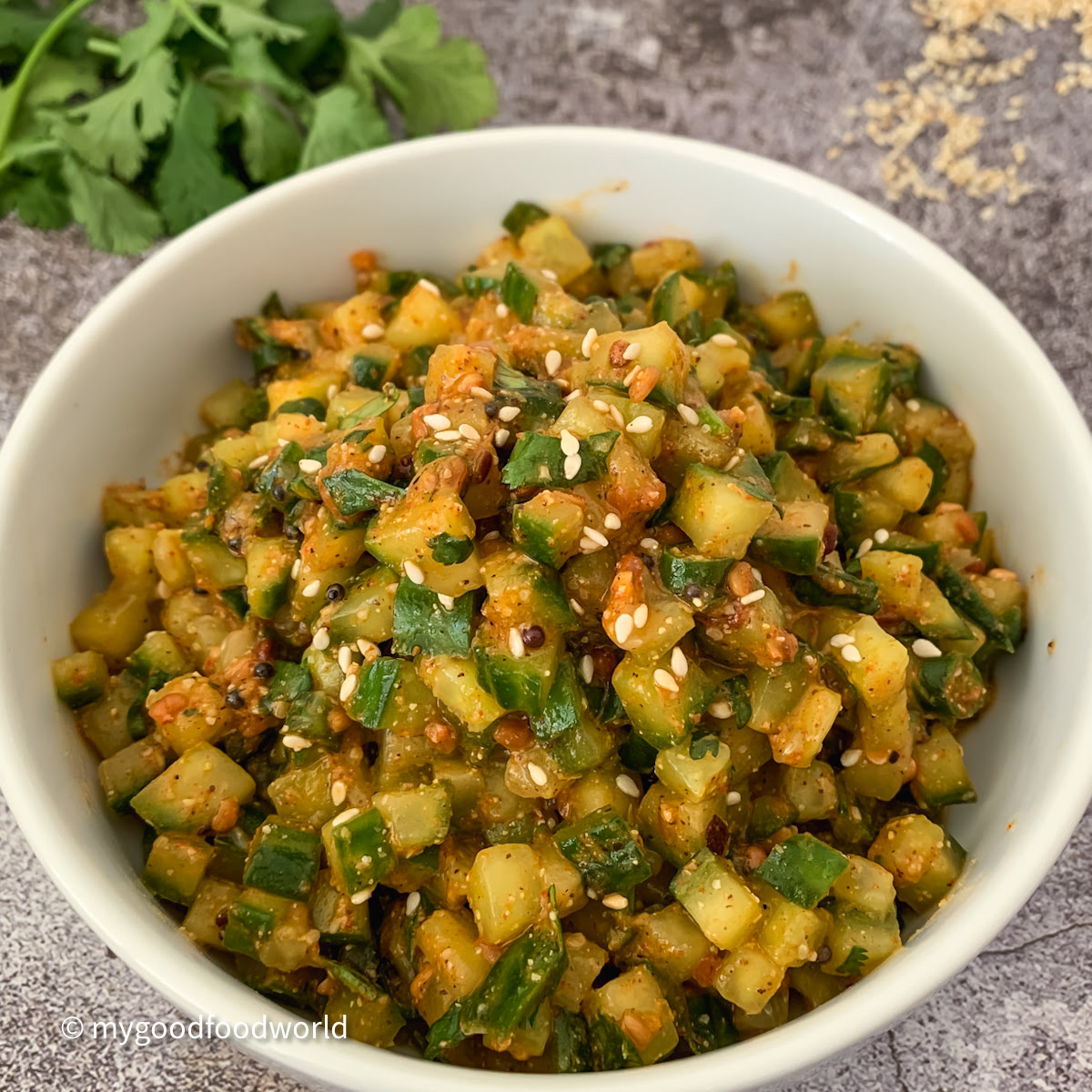
Dosakaya pachadi means cucumber chutney in Telugu. Dosakaya is a small, round, yellow-skinned cucumber, sometimes called sambar cucumber or keera in my mum's kitchen, popular right across Andhra Pradesh and Telangana.
Save This Recipe
Enter your email & I'll send it to your inbox.
By submitting this form, you consent to receive emails from MyGoodFoodWorld
Although called chutney, dosakaya pachadi is more like a salad.
The crunch of the lentils, the spicy hit of green chilies, the heat of mustard powder, and the sweet-tartness of tamarind make this such a moreish condiment!
This recipe reminds me of my mum. She and I are huge fans of spicy food, and I have fond memories of enjoying this dish with her. The meal consisted of this dosakaya chutney, rice, coconut mint chutney, and mukkala pulusu, a sweet and sour stew made with vegetables, tamarind, and jaggery.
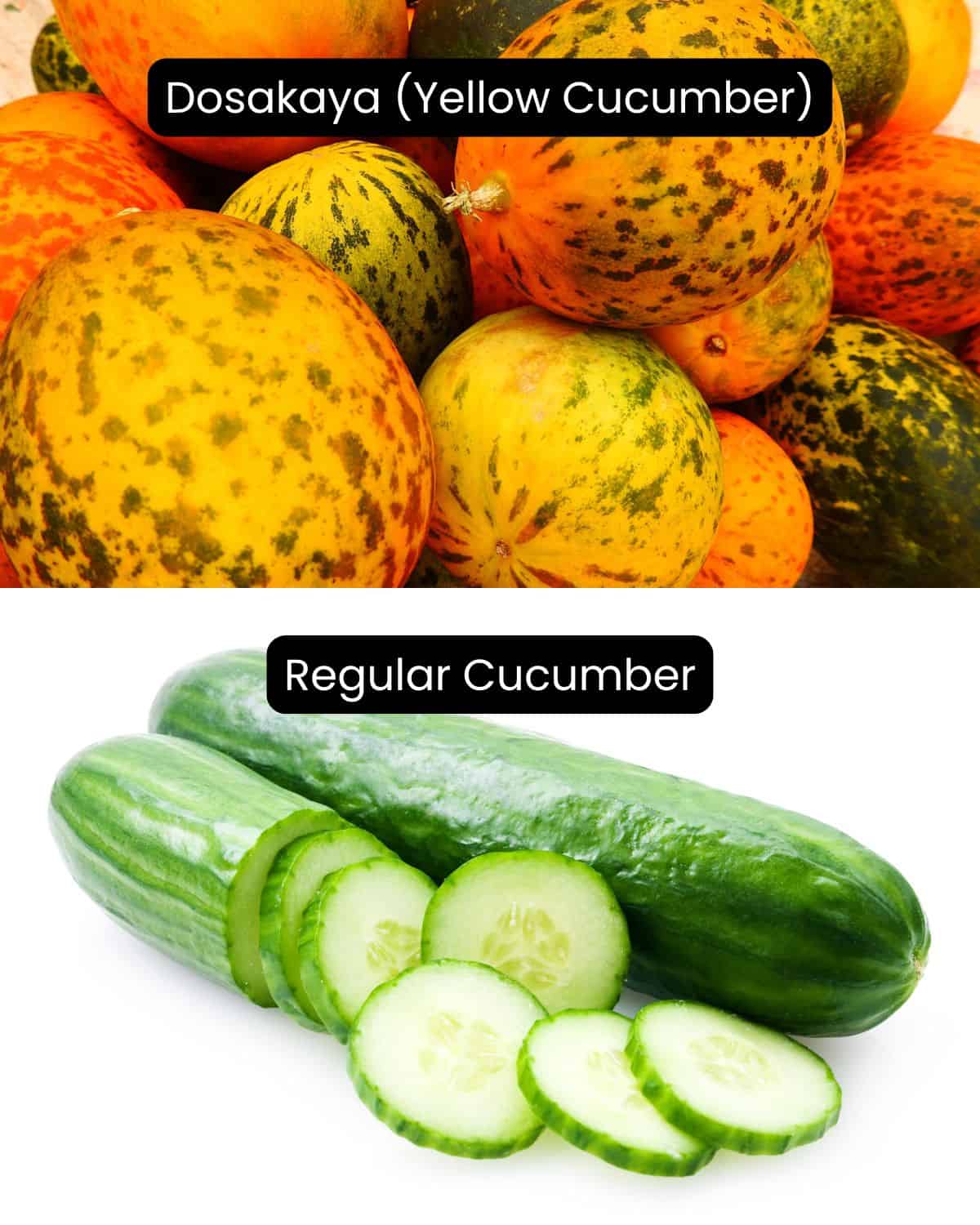
A quick note before we start: traditional dosakaya pachadi uses that yellow cucumber, but it can be tricky to find outside India. I've tested this recipe with regular English cucumber instead, and it works beautifully, so that's what you'll see in the recipe card below.w.
If you do have access to yellow cucumber (or its Western cousin, the lemon cucumber, sometimes found at farmers' markets), feel free to use it instead; just expect a slightly tangier, firmer bite.
This post includes helpful tips, but if you're in a hurry, use the "Jump to Recipe" or section links to skip ahead.
Jump to:
What is dosakaya called in English?
Dosakaya is the Telugu word for a variety of small, round yellow cucumber, also called sambar cucumber or Indian cucumber. It's milder and slightly more tangy than a regular cucumber.
If you can find a Western lemon cucumber at a farmers market, that's the closest substitute; otherwise, regular English or Persian cucumber (what I use here) works just as well.
Mukkala or Roti pachadi?
Mukkala means diced or chopped. This is the dosakaya mukkala pachadi, where the cucumber is left in small, crunchy pieces.
Roti (not to be confused with the Indian flatbread) refers to a chutney or paste that is ground in a mortar and pestle. Some Andhra households make dosakaya roti pachadi instead, grinding all the ingredients into a coarse paste.
Either way, you get the same tangy, spicy flavors. This mukkala version has more texture.
Why you'll love this cucumber chutney
- It is so easy to make!
- You can make it ahead. It keeps well in the fridge and tastes even better the next day.
- It is a salad, condiment, relish, and chutney, all in one.
- It is healthy and so delicious.
- It has real texture, little crunchy bites of cucumber rather than a smooth paste.
- This is a plant-based recipe that is also gluten-, nut-, and allium-free.
If you love cooking without onions and garlic, head over to my collection of allium-free recipes. You will be pleasantly surprised.
What are the Ingredients in dosakaya pachadi?
These are the ingredients for making dosakaya mukkala pachadi. Check the recipe card for the quantities.
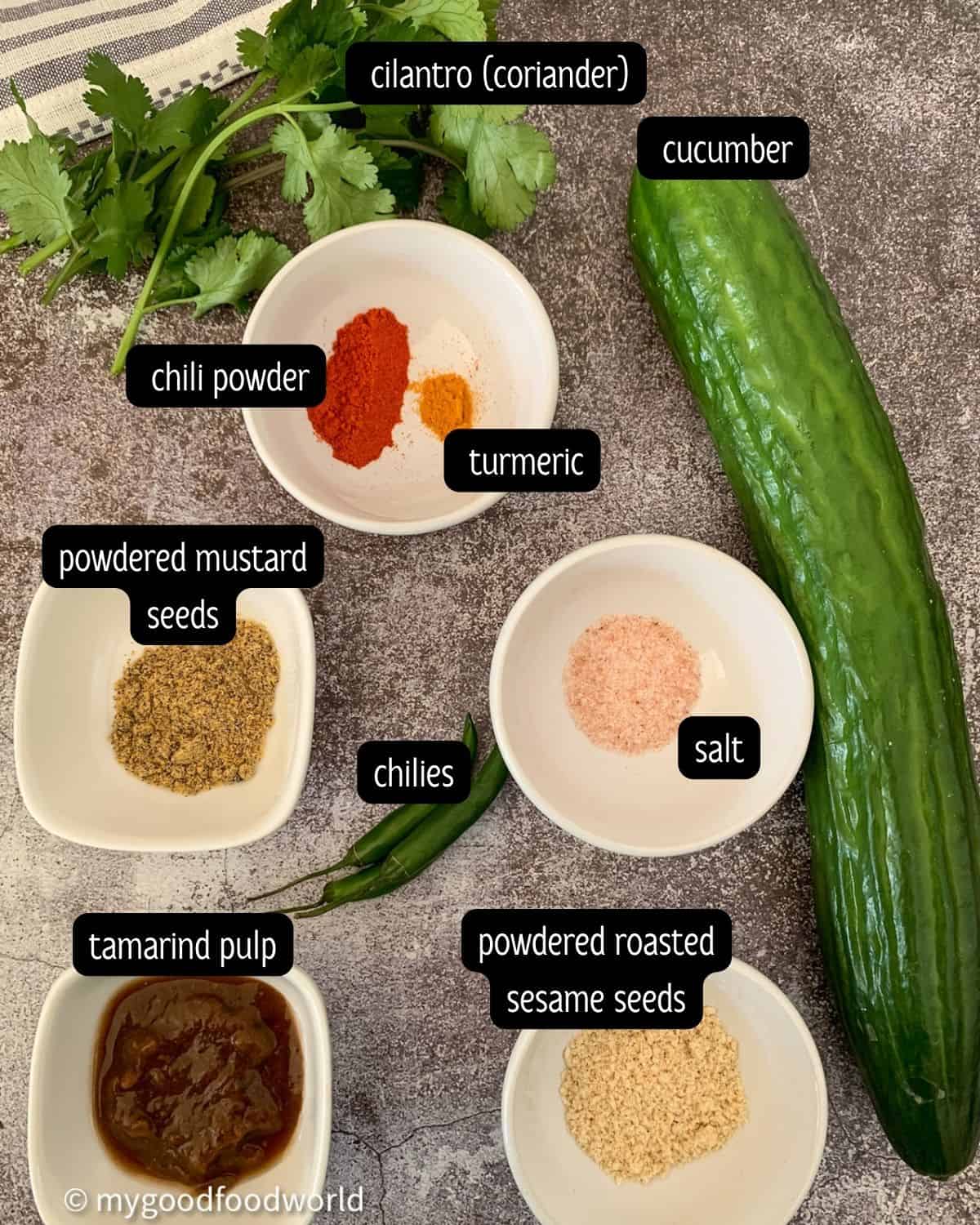
Cucumber (of course!): See the note above on dosakaya and its substitutes. I use regular English cucumbers here, easy to find and just as delicious.
Spice powders: The layers of flavor in this dish come from:
- mustard powder (recipe in the notes section)
- red chili powder
- toasted sesame powder (recipe in the instructions section), and
- turmeric.
Green chili peppers: For the "kick" of heat in this recipe. Feel free to skip them. However, their fresh crunch tastes terrific in this chutney!
Cilantro (coriander): This is optional, but highly recommended.
Tamarind paste: The sweet-tart taste of tamarind is the game-changer in this recipe! Use store-bought pulp or make it at home. Here is the link to make tamarind pulp at home. You can swap it with lemon juice instead.
For the tempering:
As you'll have seen in my zucchini kootu recipe and chana dal chutney recipes, tempering is a simple cooking technique in which whole spices are briefly roasted in hot oil or ghee to release and enhance their flavor.
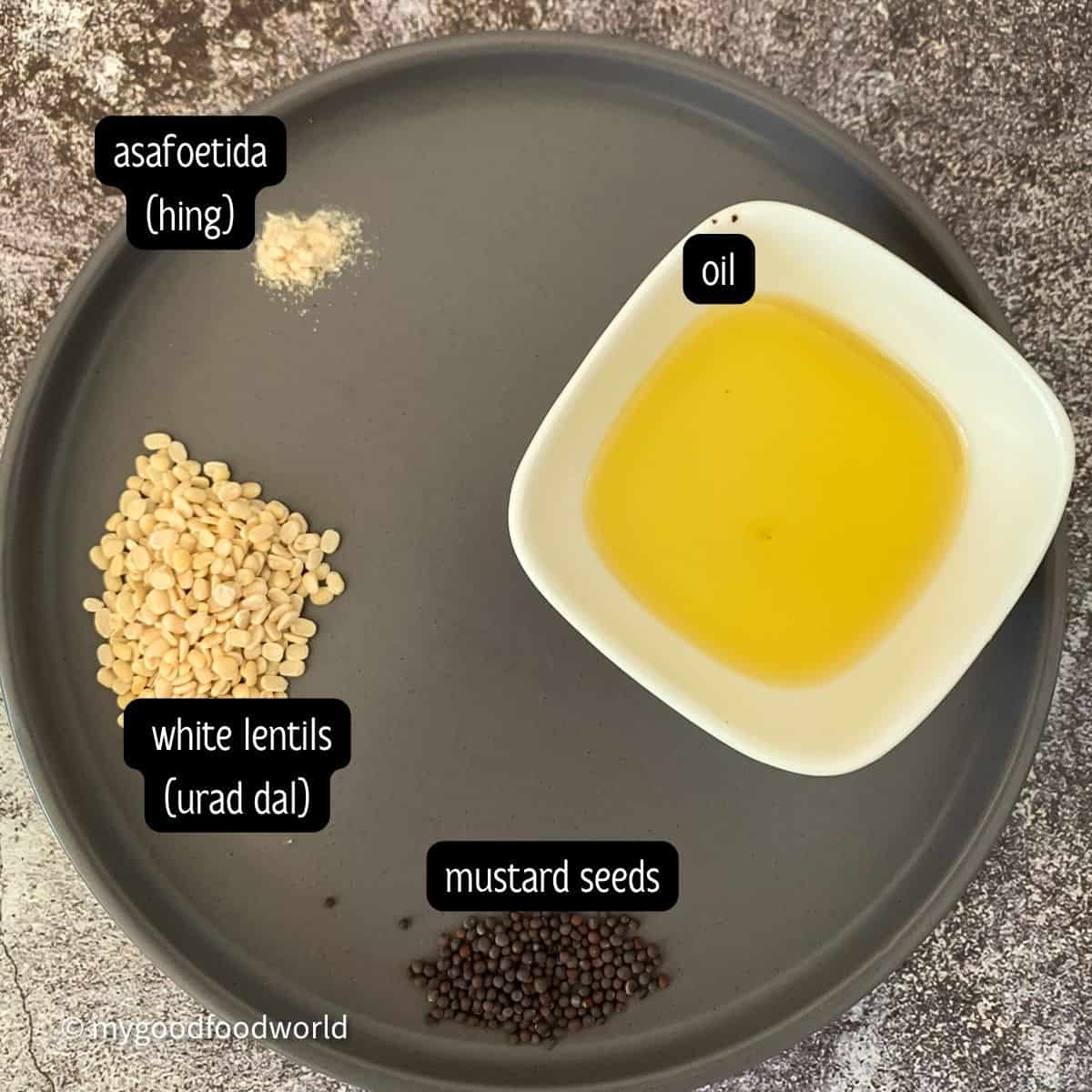
- Sesame oil for its nutty flavor. Swap with any neutral oil.
- White lentils (urad dal) for their crunch and earthy flavor.
- Mustard seeds for their pepperiness.
- Asafoetida adds a deep, umami flavor to no-onion, no-garlic recipes. Be sure to use gluten-free asafoetida.
Instructions
Let's make this easy dosakaya pachadi recipe. Also, see the video at the end of the recipe card.
Step 1: Prep the ingredients.
Dice the cucumber finely, into same-sized pieces. Place them in a large bowl, sprinkle salt, and keep aside for 10 minutes.
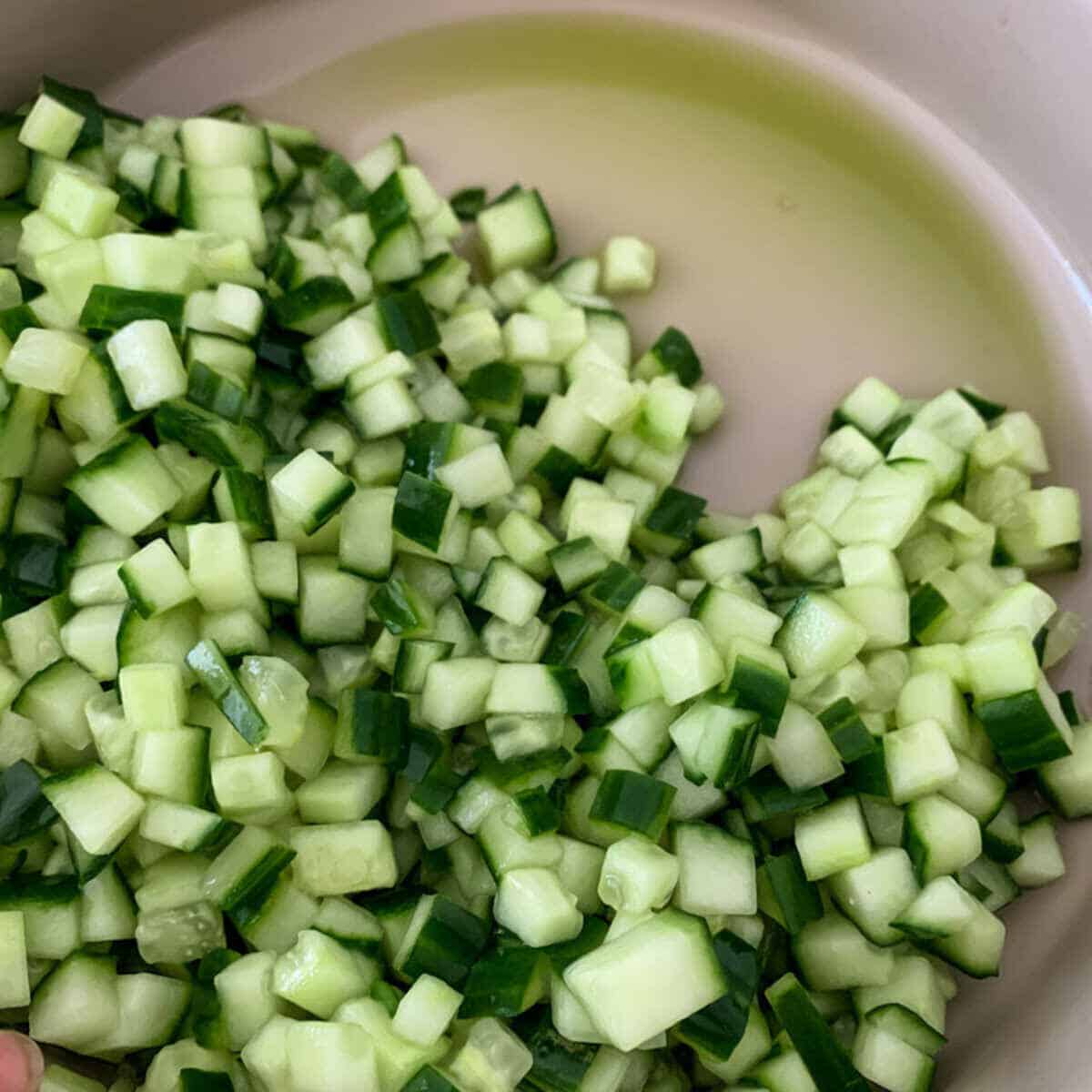
While the salt is doing its work, make the sesame seed powder.
- Place the sesame seeds in a hot skillet on medium heat. Toast them till they begin to change color. Turn off the heat.
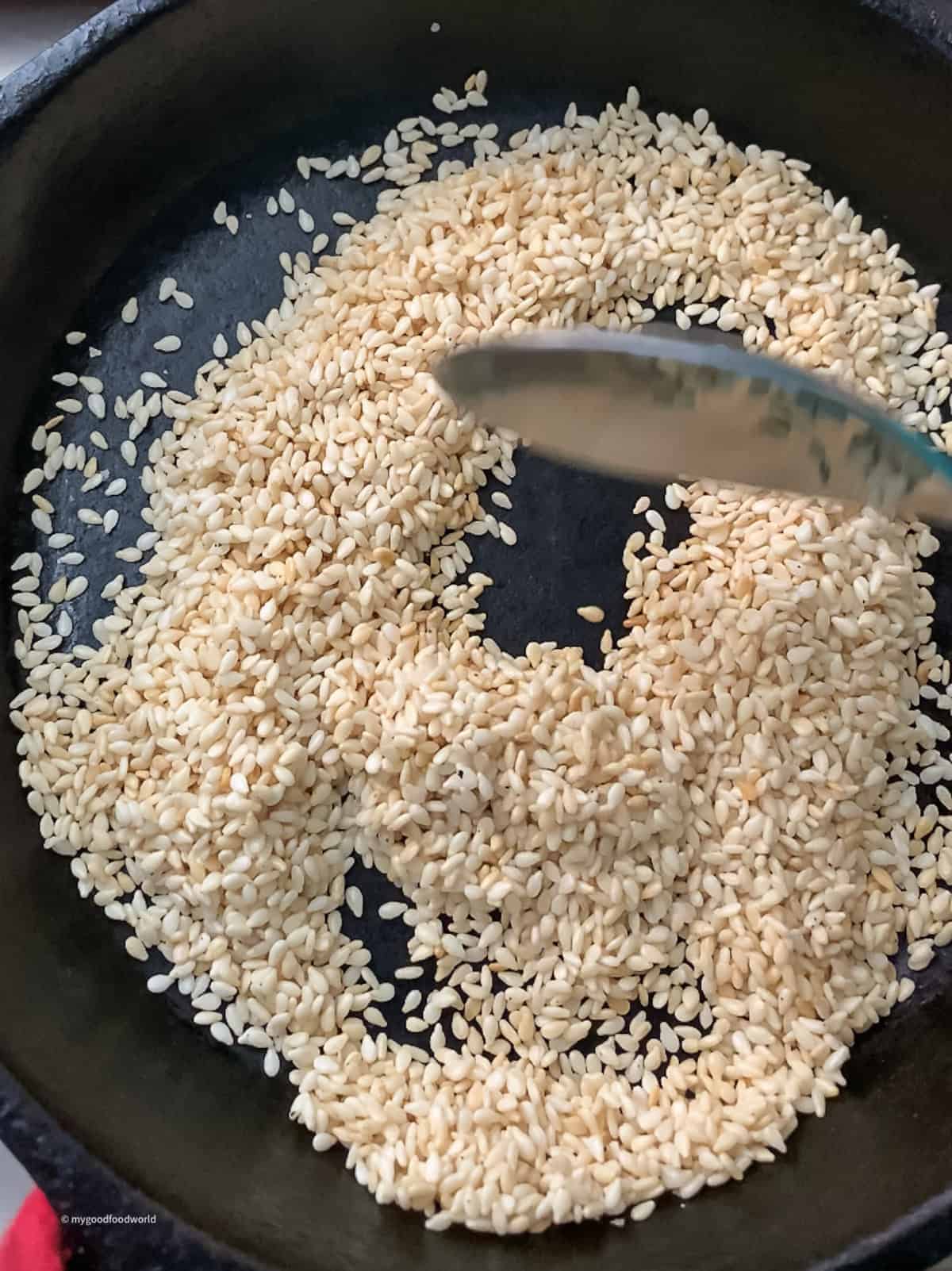
- Let them cool completely and grind to a coarse powder. Feel free to make a big batch of it. Store the powder in an airtight container and use it as needed.
Step 2: Make the tempering.
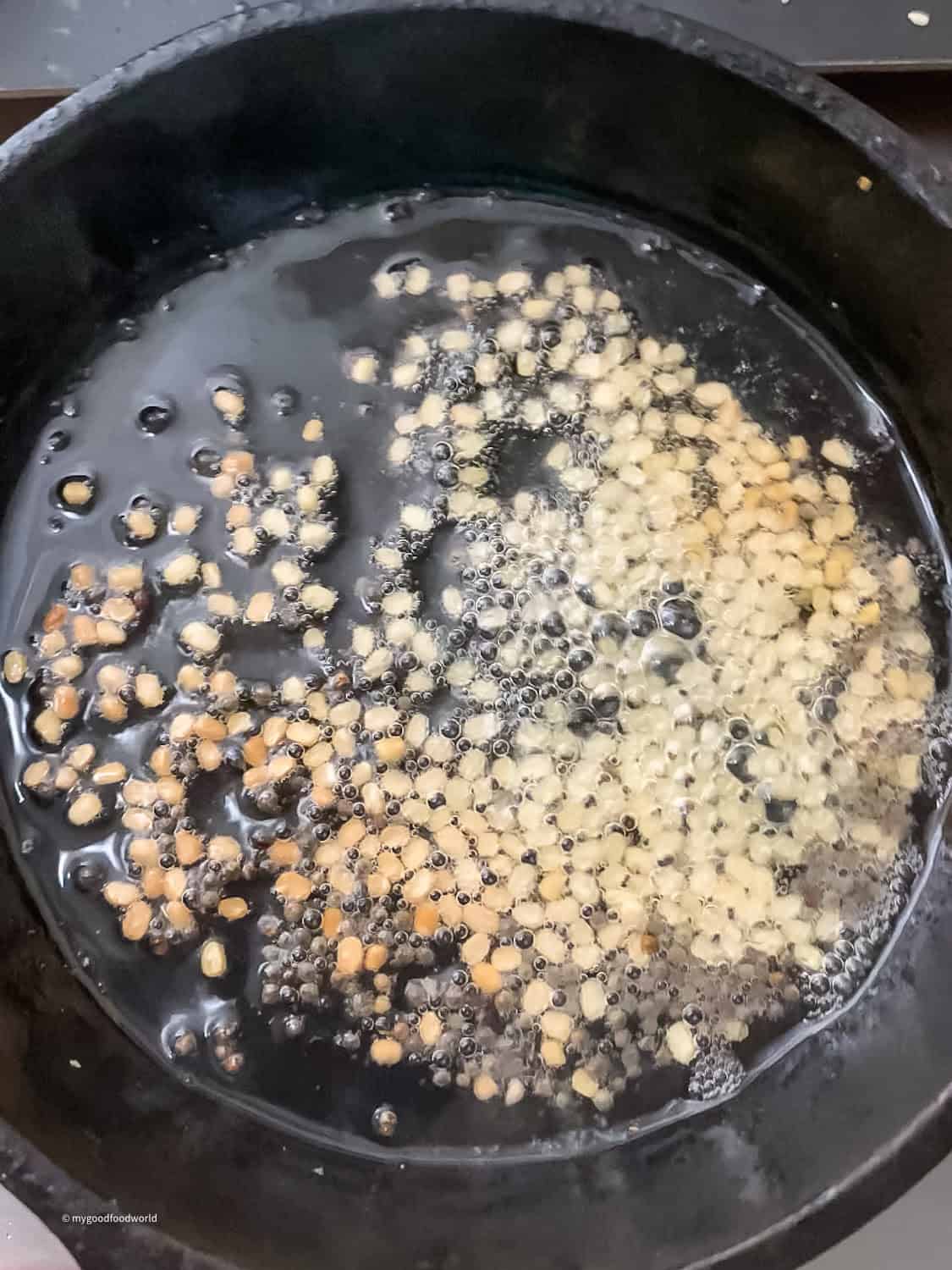
Heat oil in a pan and, when hot, add the urad dal, mustard seeds, and asafoetida.
Wait for the mustard to splutter and the lentils to turn brown. Take it off the heat and keep it aside.
Step 3: Assemble the salad.
Using your hands, squeeze the water from the cucumber. Do not discard this water. Drink it up, or add it to your yellow lentil soup.
Place the chopped cucumber in a mixing bowl. Add the spices, tamarind pulp, and chopped green chilies.
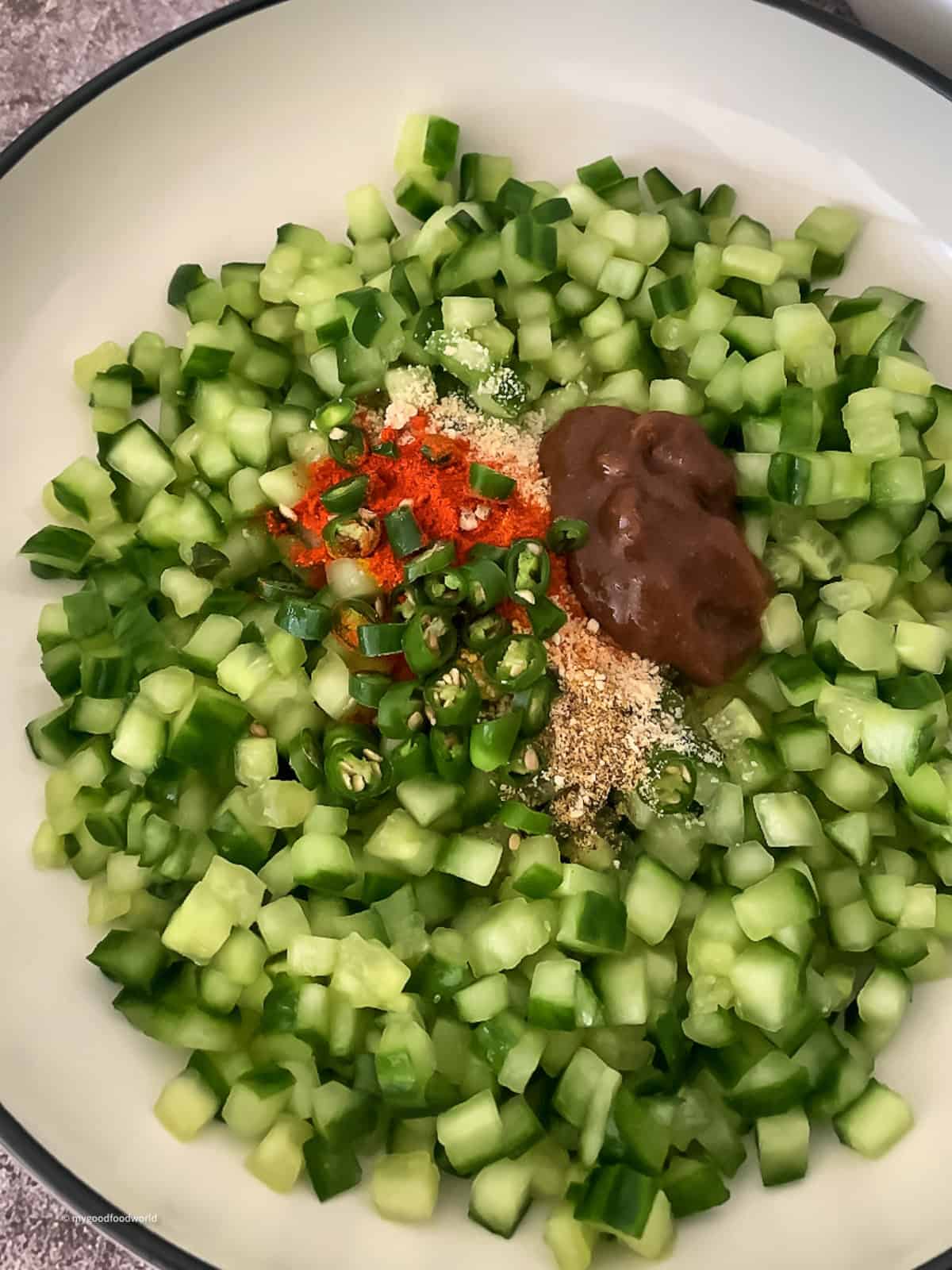
Add the tempered spices and chopped coriander leaves. Mix well.
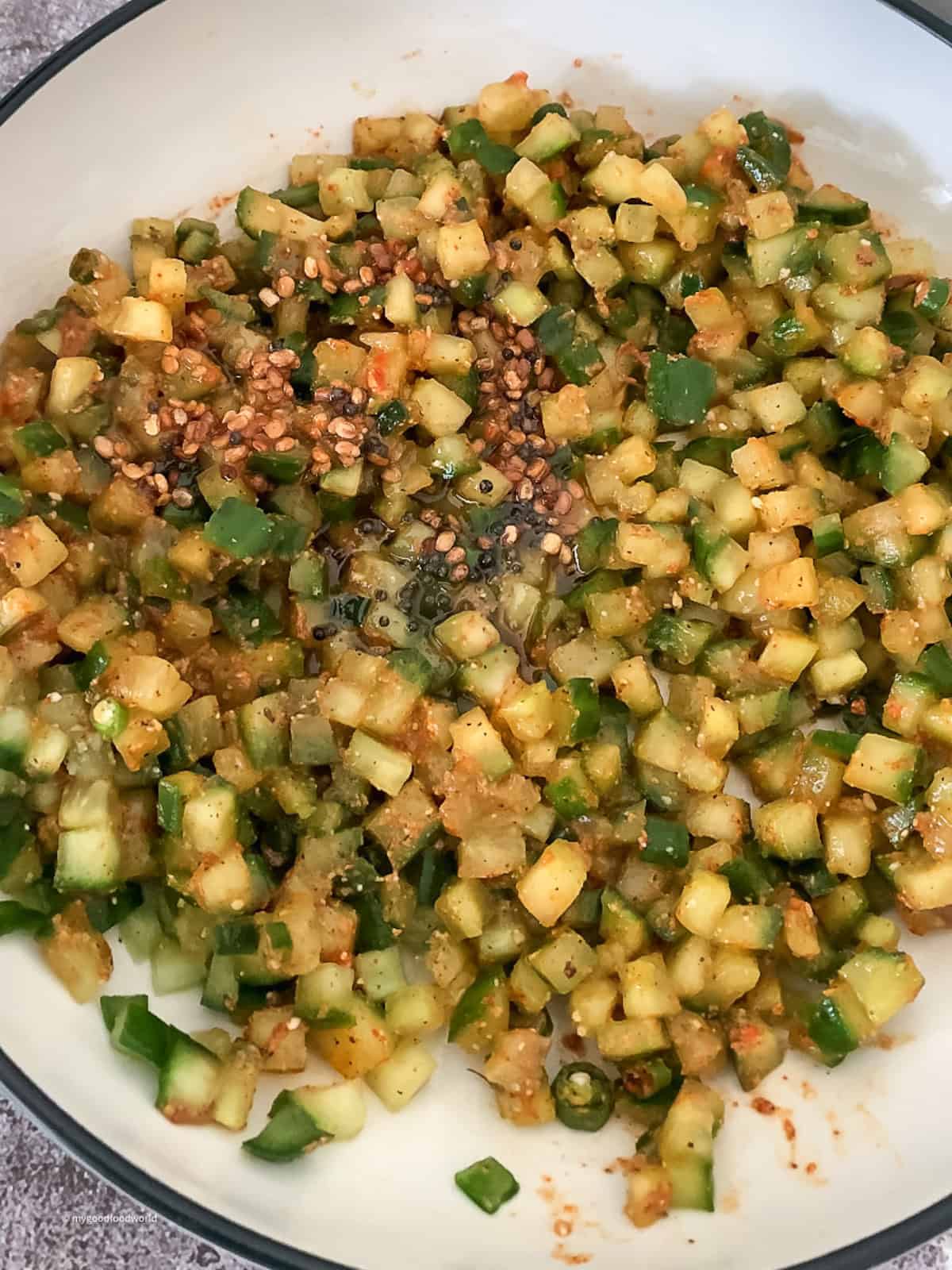
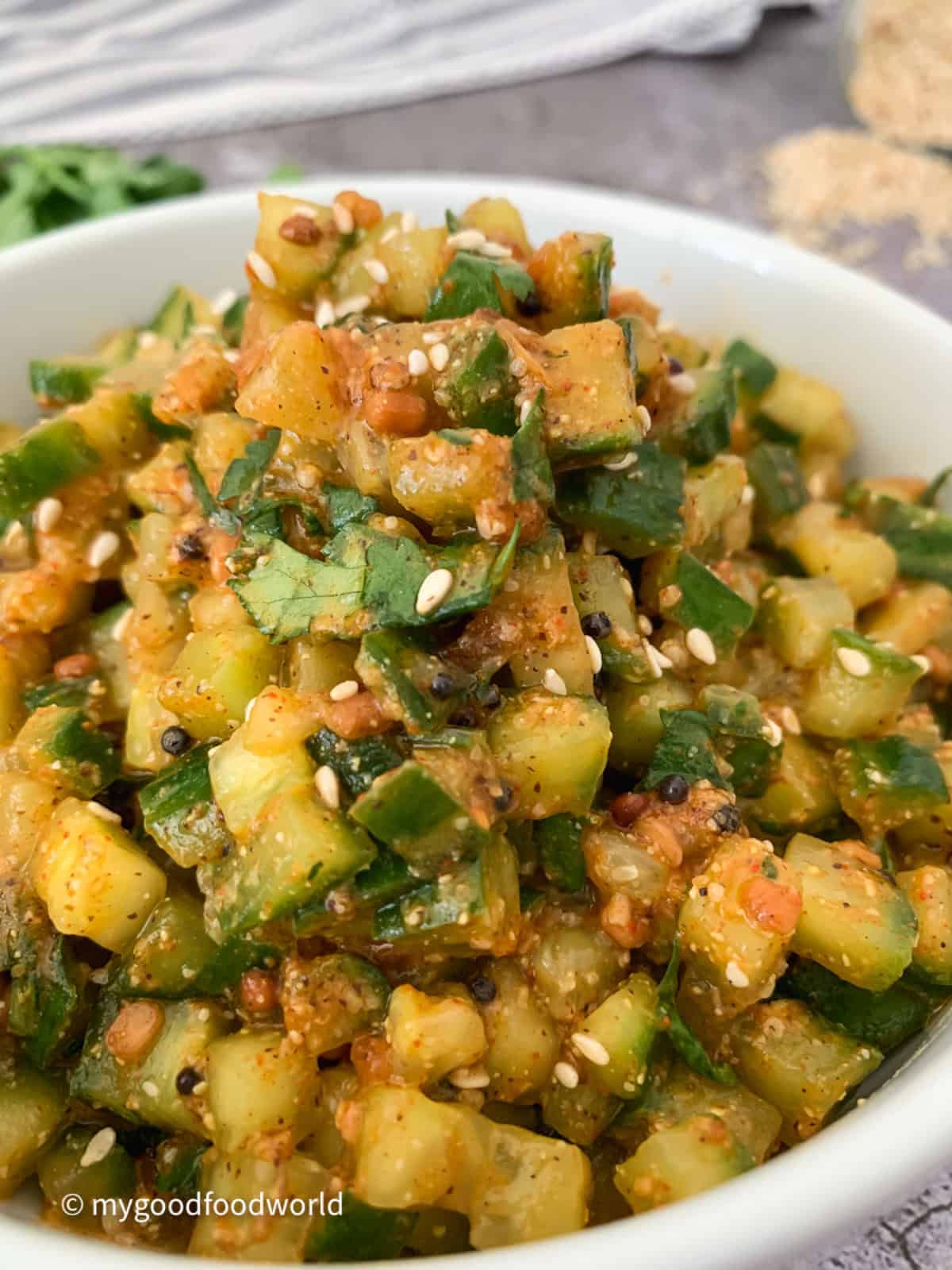
That's it! Spicy and delicious Andhra style dosakaya pachadi is ready to be devoured!
If you have the time, let it rest for 10 to 15 minutes to allow the flavors to mingle.
Love spicy salads that can double up as a relish? Then you must try this quick pickled carrots recipe.
Recipe Notes
Mustard seed powder: I use brown mustard seeds, as I always have them in my pantry. Use yellow mustard if that is what you have.
To make mustard powder, grind some mustard seeds (say, 2 tablespoons) in the grinder along with some salt (½ teaspoon) till smooth. Store it in a glass jar with a tight-fitting lid and it will keep for weeks!
Top tip: Salt will prevent the mustard powder from turning bitter.
Substitute for tamarind pulp: Use lemon juice instead. Start with 2 teaspoons and add it in increments, depending on how tart you like your salad.
Tempering spices: To add more flavor and crunch, add any or all of the following to your cucumber chutney recipe:
- 1 dry red chili (broken into 2 to 3 pieces)
- 3-4 curry leaves
- 1 teaspoon cumin seeds
Serving and storage
Serving: Traditionally, this pachadi is served with freshly cooked rice and a dal dish, like my spinach dal.
It works so well as a relish for your sandwich or burger. I love it as a filling in a wrap made with these Indian tortillas.
Storing: Store the leftover chutney in a glass container with a lid in the refrigerator, and it will keep well for 2 to 3 days. The flavors will get time to mingle, and the pachadi will taste even better.
This dosakaya pachadi is not suitable for freezing.
Any doubts or questions? Feel free to ask via the comments below. I will try my best to answer them for you. - Padma
FAQs
Although used as a vegetable, dosakai (also spelled dosakaya) is botanically a fruit because it develops from the flower of the cucumber plant and contains seeds. Dosakai has a mild, slightly tangy flavor and a crisp texture, making it ideal for chutneys, curries, dal, and salads.
The best way to keep your cucumber chutney from getting watery is to salt the chopped cucumber and let it rest for some time. The salt will extract the water. Drain the water and then squeeze the cucumber to remove most of its water. Now you can add the rest of the ingredients.
It is not necessary to rinse cucumbers after soaking them in salt. Just squeeze out the water and add the seasonings. Remember to check the saltiness before you add any more salt to the salad.
There are lots of different ways in which you can put those cucumbers to good use. Here are some ideas:
1. Dosakaya pachadi, Andhra-style spicy cucumber chutney
2. Cucumber raita, a comforting and cooling summer dish with yogurt.
3. Infused water
4. Smoothie
5. A hearty and healthy beetroot and cucumber salad.
6. Tzatziki
Made this recipe? I'd love to know what you think! Leave a ★★★★★ rating and a review below; it motivates me to create more great content for you. You can also connect with me on Facebook and Instagram. And don't forget to subscribe to my newsletter, where I share free recipes, tips, and more!
📖 Recipe
Dosakaya Pachadi (Diced Cucumber Chutney) Recipe
Save This Recipe
Enter your email & I'll send it to your inbox.
By submitting this form, you consent to receive emails from MyGoodFoodWorld
Ingredients
Equipment
Instructions
- Wash and chop the cucumber into small pieces.
- Place the chopped cucumber in a bowl. Add salt, mix and set aside for 10 minutes.1 large (~350g) cucumber, ¾ teaspoon salt
- Finely chop the green chilies.
- Place the sesame seeds in a hot skillet on medium heat. Toast them till they begin to change color. Turn off the heat.
- Cool them completely and grind them to a not-so-smooth powder.
- Store the powder in an air-tight container and use it as needed.
- While the cucumber is marinating in salt, make the tempering.
- Place the oil in a skillet on medium-high heat. Add the lentils, mustard seeds, and asafetida. Let the mustard seeds splutter and the lentils start turning brown in color. Remove from heat and keep aside. The tempering is ready.1 tablespoon sesame oil, ¾ teaspoon urad dal (white lentils), ¼ teaspoon brown mustard seeds, ¼ teaspoon powdered asafetida (hing), 3-4 curry leaves
- After the cucumber pieces have marinated in salt for 10 minutes, drain out the water. Gently squeeze the pieces with your hand to extract more water. In this way, remove as much water as you can. (see video)
- Place the cucumber pieces in a mixing bowl and add the spices and flavorings. Mix well.1 teaspoon powdered toasted sesame seeds, ¾ teaspoon mustard powder, ½ teaspoon red chili powder, ⅕ teaspoon turmeric, 1 tablespoon tamarind pulp, 2 or 3 green chilies
- Now add the tempered spices. Mix again. Garnish with finely chopped cilantro (optional).
- The salad is ready to be served immediately.A handful fresh cilantro (coriander)
Nutrition
The nutritional information is calculated using an online calculator and is based on available ingredients and preparation. It should not be considered a substitute for a professional nutritionists' advice. Changing the quantities and cooking technique will alter the nutritional calculations.
Video
Notes
- Grate or dice the dosakaya? I prefer to dice because it gives me better control over the texture of the pachadi.
- Toasted sesame seed powder: I highly recommend not skipping this ingredient. It is a real game-changer! To toast the sesame seeds, place them in a hot skillet over medium heat and toss them until they start to turn golden brown. Set them aside to cool, then grind them into a coarse powder. Make a big batch, as it keeps well for a couple of weeks.
- Mustard powder: This is easy to make at home. Simply grind mustard seeds (yellow for a milder flavor or black for a more pungent one) with a little salt into a fine powder. It keeps well for weeks, so feel free to make a big batch.
- Spice and heat: There are three sources of heat in this recipe: green chilies, red chili powder, and mustard powder. This dosakaya pachadi is traditionally served with rice, which balances the spice beautifully. Feel free to adjust the quantities to suit your spice preference.
- Oil: The combination of sesame seeds and sesame oil is the hallmark of this recipe. I use light sesame oil, but if you do not have any or do not enjoy its flavor, you can use any neutral oil instead.
Alternative quantities provided in the recipe card are for 1x only.
Our content aims to be informative and educational, but it should not replace professional medical advice. Since manufacturing processes can vary and cross-contamination is possible, it's essential to verify product labels and allergen information. Make sure all ingredients align with your specific allergies. As readers, you bear the responsibility for ensuring allergen safety when buying or consuming foods.



Comments
No Comments