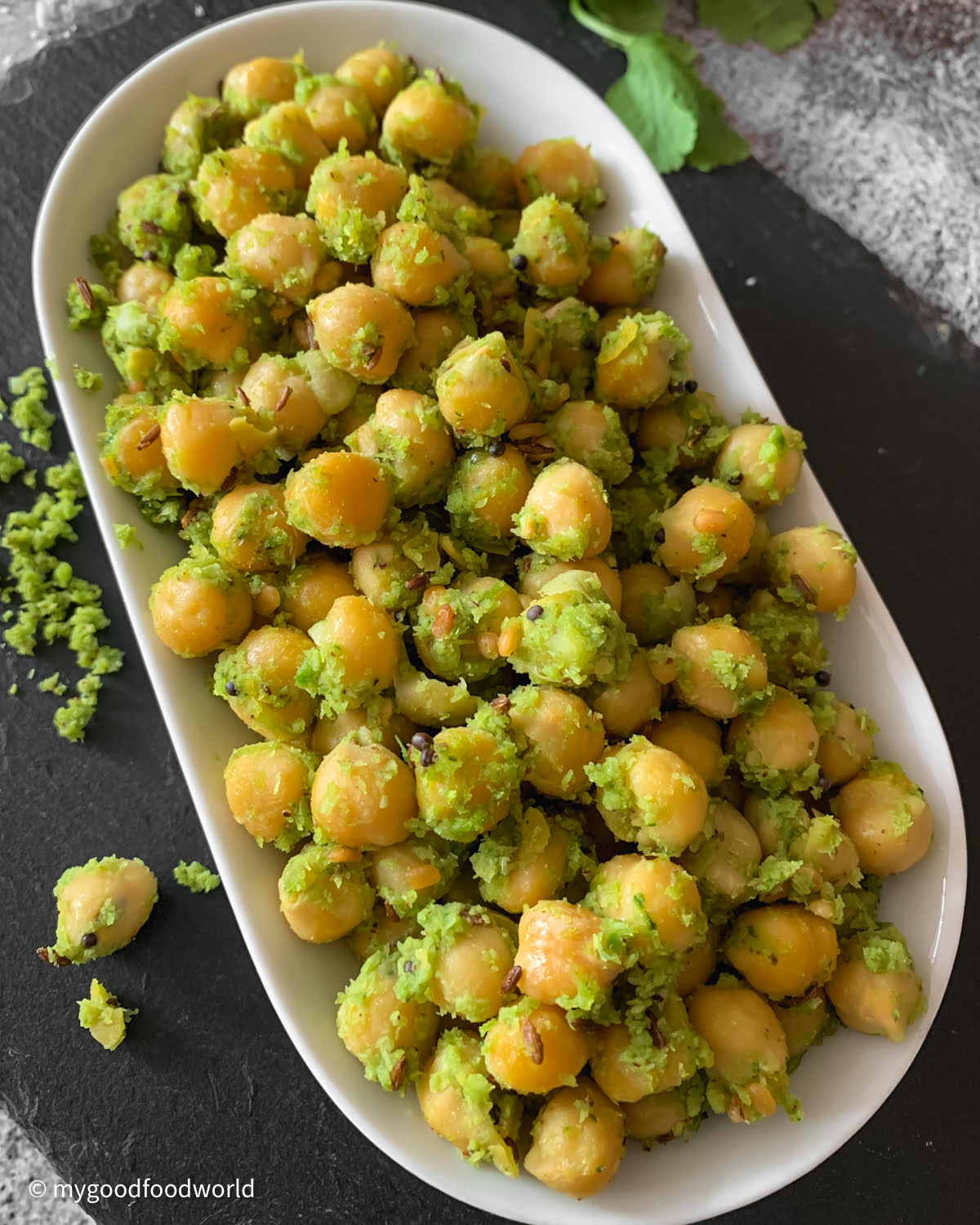
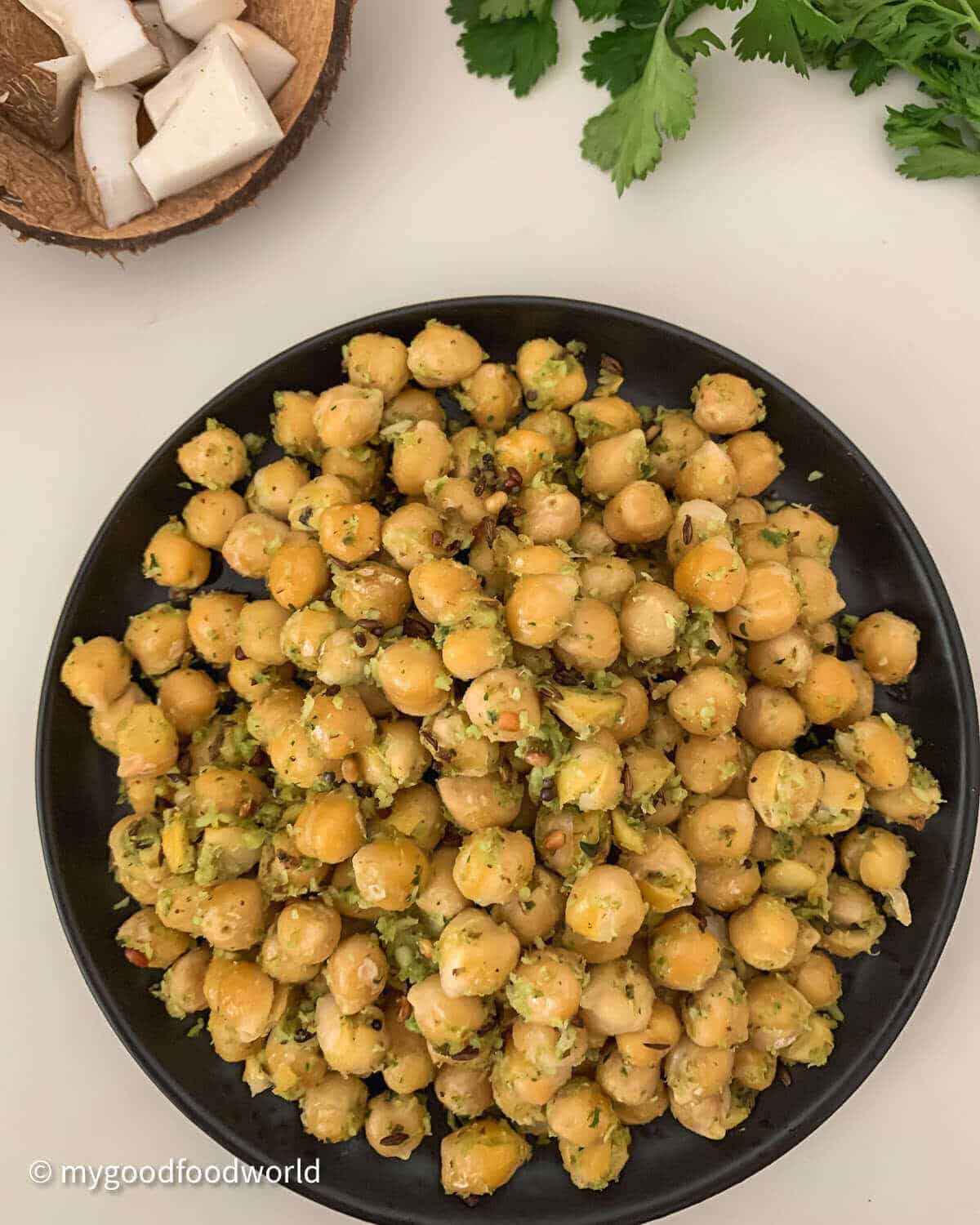
If you have never tried chickpea sundal, you are in for a treat. This is a traditional South Indian dish: a simple, spiced chickpea salad tossed in a fresh coconut paste with mustard seeds, curry leaves, and just enough green chili to wake everything up.
Save This Recipe
Enter your email & I'll send it to your inbox.
By submitting this form, you consent to receive emails from MyGoodFoodWorld
My chickpea sundal is a no onion, no garlic recipe, and that is not a compromise. It is how this dish has always been made. It is also vegan, gluten-free, and comes together quickly once your chickpeas are cooked.
I grew up eating this during Navratri, when it is made as an offering to the goddesses. But honestly, it earns a place on the table any day of the week: at parties, potlucks, and picnics.
Chickpea sundal is one of those recipes that looks simple and tastes like something much more considered went into it. That is the magic of South Indian cooking: a few well-chosen spices and a generous hand with fresh coconut can turn a humble legume into something you want to eat every week.
Once you taste it, you will understand why it shows up at every dinner table in South India.
Do you have a festival food that you love to make? Tell me in the comments; I would love to know. Padma
This post includes helpful tips, but if you're in a hurry, use the "Jump to Recipe" or section links to skip ahead.
Jump to:
What is sundal?
Sundal is a South Indian dish made from cooked legumes, usually chickpeas, but also black-eyed peas, dried yellow peas, chana dal, or brown chickpeas. The legumes are tempered in oil with whole spices and finished with fresh coconut.
It is a staple of Tamil Nadu cuisine, where it is known as kondakadalai sundal when made with chickpeas (kondakadalai is the Tamil word for chickpeas).
Sundal is traditionally served during Navratri as prasadam, which is food offered to the deity and then shared with family and guests. It is almost always made without onion or garlic.
But here is the thing: you do not need a festival to make it. It is an excellent everyday snack or side dish, and it is a genuinely different kind of chickpea salad from the Mediterranean-style versions you find most often online.
Why is sundal made without onion and garlic?
Sundal is traditionally prepared as a temple offering during festivals like Navratri. In many Hindu, Jain, and sattvic culinary traditions, onion and garlic are avoided during religious observances or altogether, as they are considered rajasic (stimulating) foods. Asafoetida (hing) provides a similar depth of flavor without the alliums.
Beyond the religious context, the absence of onion and garlic also means sundal keeps well and reheats cleanly, with no pungent smell the next day.
Why you'll love this chickpea sundal
- The flavor is layered and aromatic. Fresh coconut, green chili, cumin, and mustard seeds - it does not taste like anything else.
- It is allium-free. No onion, no garlic. This is ideal when you are cooking for friends or family with dietary requirements, and for Navratri fasting.
- It works warm or at room temperature. Perfect as a snack, a side dish, or a lunchbox addition.
- It is a genuinely different kind of chickpea salad. If you are tired of the same chickpea-and-feta situation, this is your answer.
Ingredients and substitutions
Just 10 simple ingredients- that is all you need. Fresh coconut is the real star here.
See the recipe card for quantities.
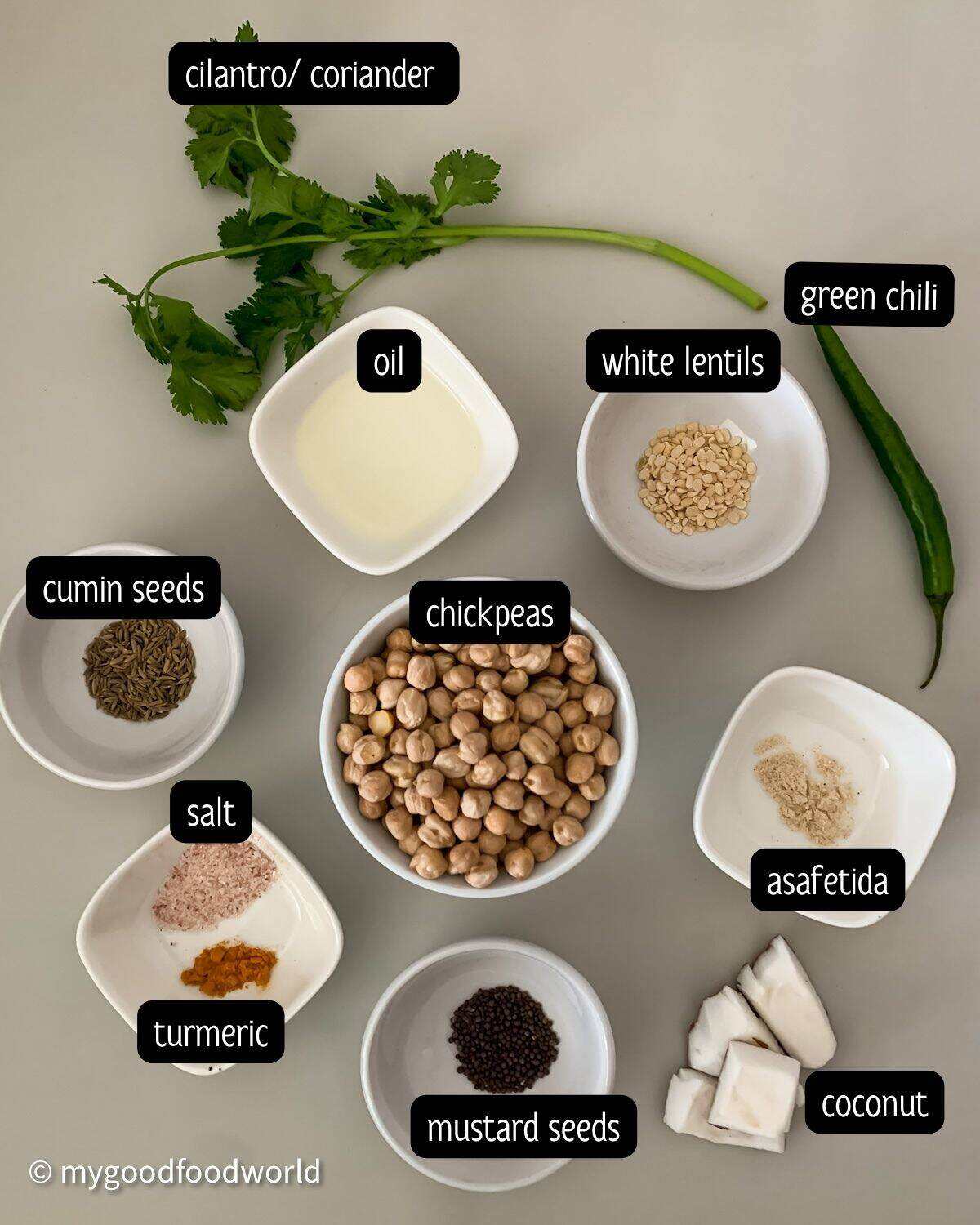
Chickpeas (garbanzo beans): I prefer dried chickpeas that I soak and cook myself; the texture is better, and they hold their shape beautifully. That said, canned chickpeas work perfectly well if you need to save time.
Fresh coconut: This gives the sundal its characteristic flavor. Frozen grated coconut (thawed) is a good substitute. Desiccated coconut will also work in a pinch.
Curry leaves: Do not skip these. Curry leaves give the tempering its distinctive South Indian character. Whenever you can, use fresh leaves, although dried curry leaves are a decent alternative.
White lentils (urad dal): These go into the tempering and add a subtle nuttiness. Find them at an Indian grocery store. If you do not have them, you can leave them out.
Asafoetida (hing): A small amount of asafoetida gives this dish depth and helps with digestion. It is also a traditional substitute for the flavor that onion and garlic would otherwise provide. Make sure your asafoetida is gluten-free.
Green chili: Adjust to your heat preference. One chili gives a mild kick; two will wake you right up. Or swap with half a teaspoon of black peppercorns.
Neutral oil: I use neutral oil here. Traditionally, coconut oil is used, and it adds a lovely flavor. You can see this same technique in my zucchini kootu recipe.
How to cook chickpeas for sundal
I soak dried chickpeas overnight and cook them in a pressure cooker. The result is chickpeas that are tender all the way through but still hold their shape- exactly what you want for sundal.
If you are new to cooking chickpeas from scratch, I have a detailed guide: how to cook garbanzo beans.
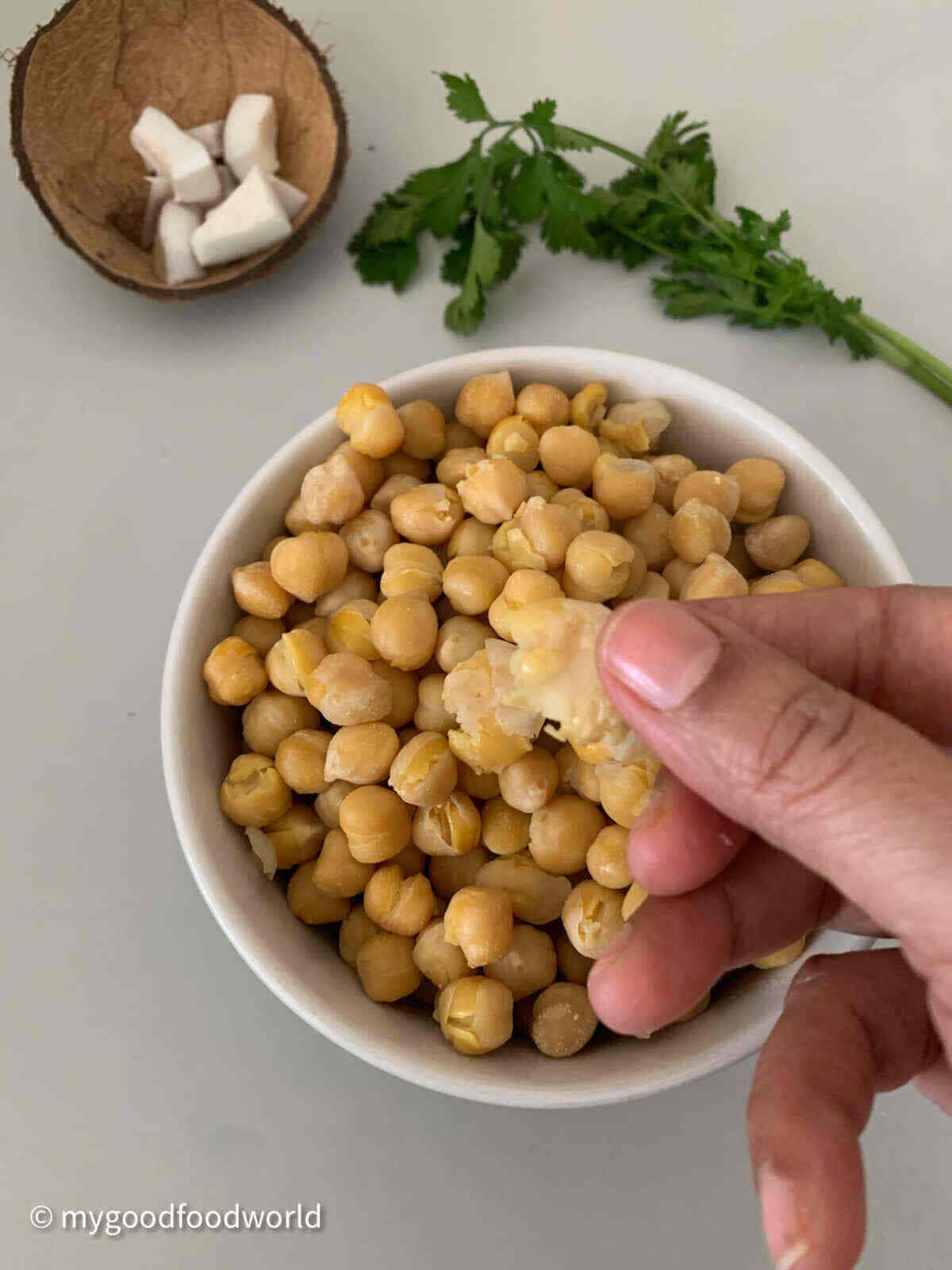
Short on time? Canned chickpeas are a perfectly good shortcut; just drain and rinse them well, and reserve a little of the liquid in case you need it when sautéing. If you often have cans of chickpeas on hand, you might also enjoy this coconut milk curry with chickpeas, a quick weeknight dinner that uses the same pantry staples.
How to make sundal with chickpeas: step-by-step
Detailed instructions and notes are in the recipe card below. The step-by-step photos above will guide you through the process.
Step 1: Soak the chickpeas.
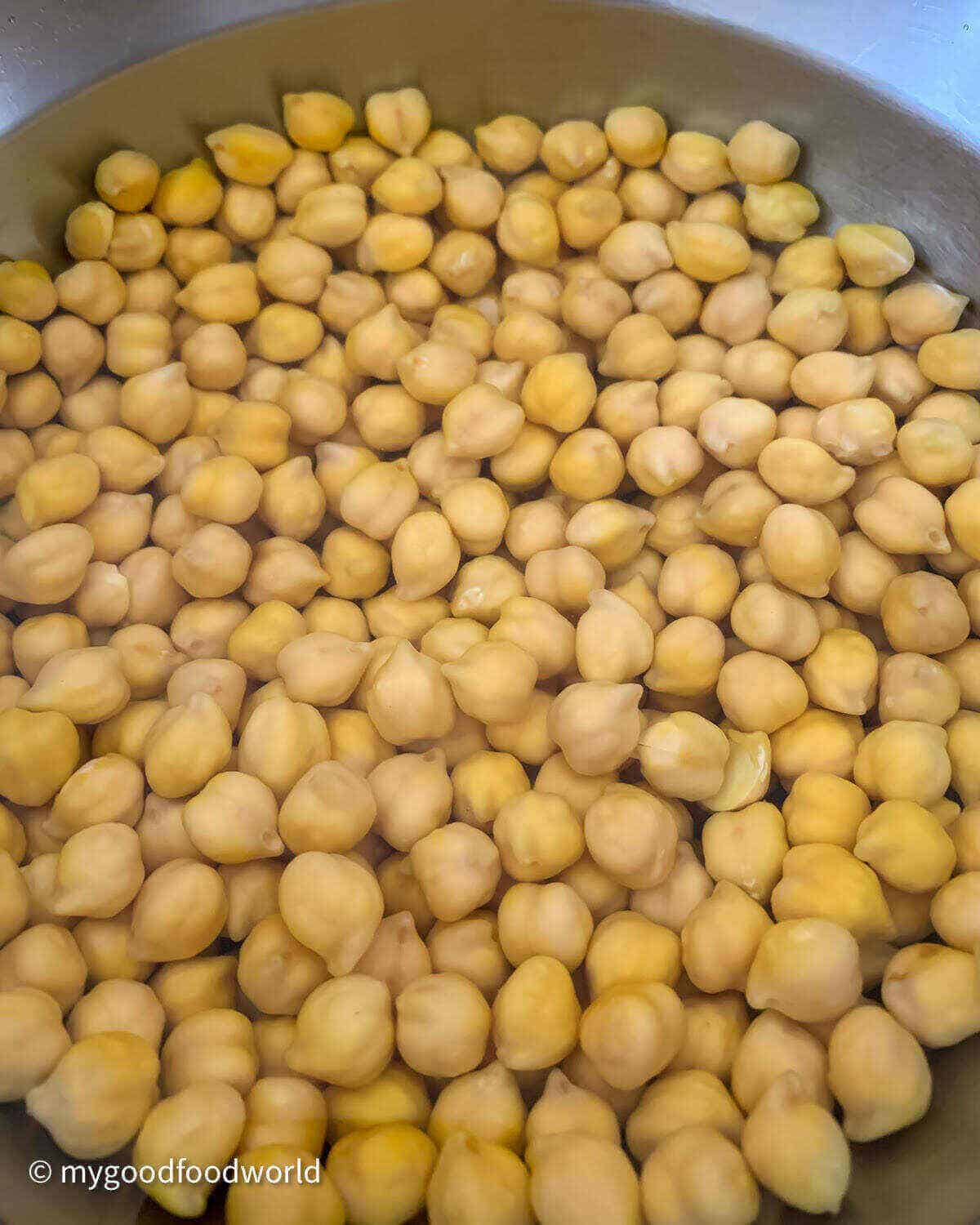
Wash the chickpeas and soak them in water for 6 to 8 hours (or overnight). Add turmeric to the soaking water. This gives the chickpeas an even golden hue.
Step 2: Cook the chickpeas.
Drain the soaking water and rinse the chickpeas well. This step helps reduce any digestive discomfort that chickpeas can cause.
Cook in a pressure cooker with water and salt for 6 to 7 whistles. The chickpeas should be soft but still hold their shape.
Drain the cooked chickpeas and set aside. Do not discard the cooking water; you may need a tablespoon or two during sautéing. The rest can go into soups, stocks, or curries.
Step 3: Grind the spice paste.
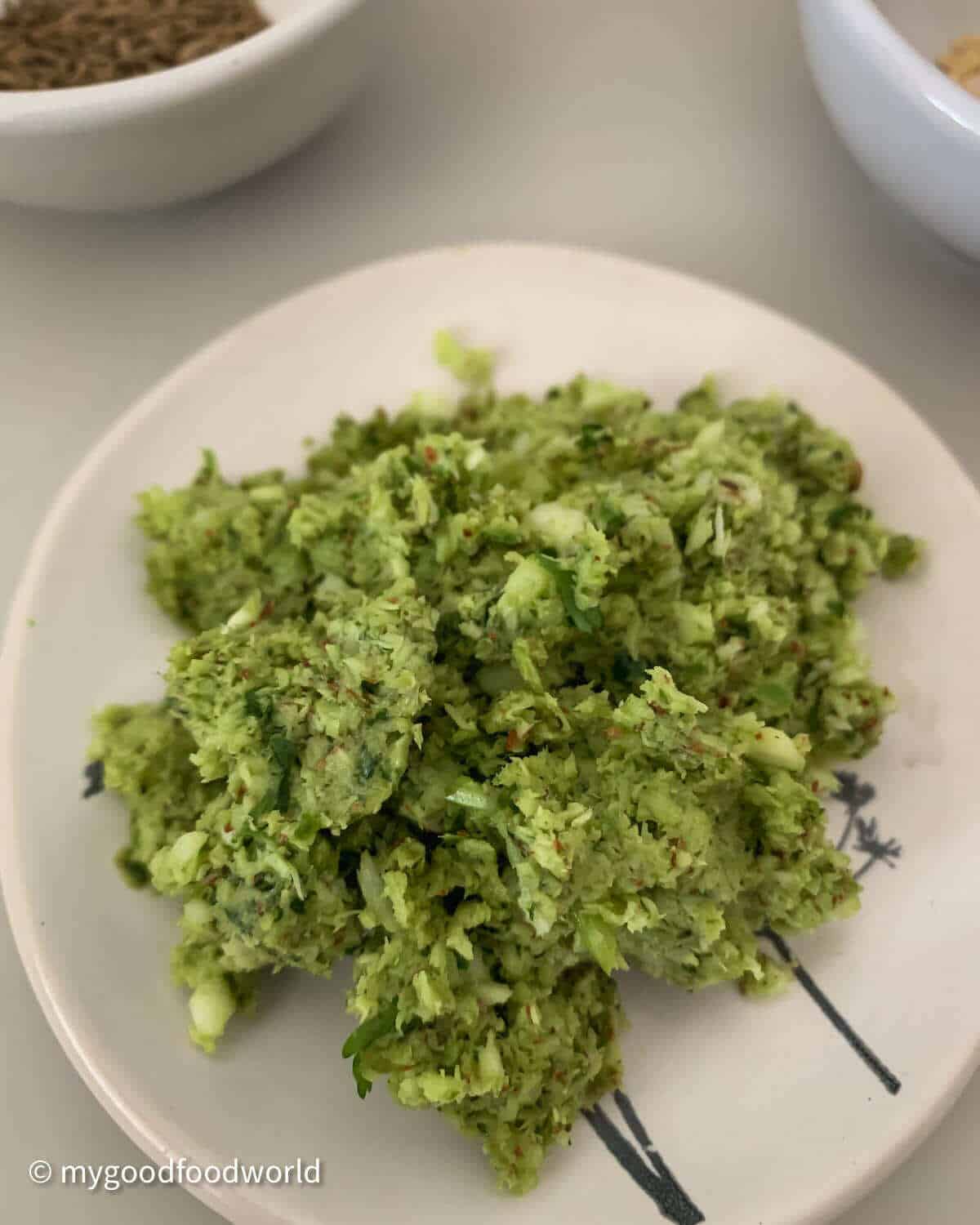
Grind the fresh coconut, cilantro, and green chili to a coarse paste using an electric grinder or mortar and pestle. Set aside.
Step 4: Temper the spices.
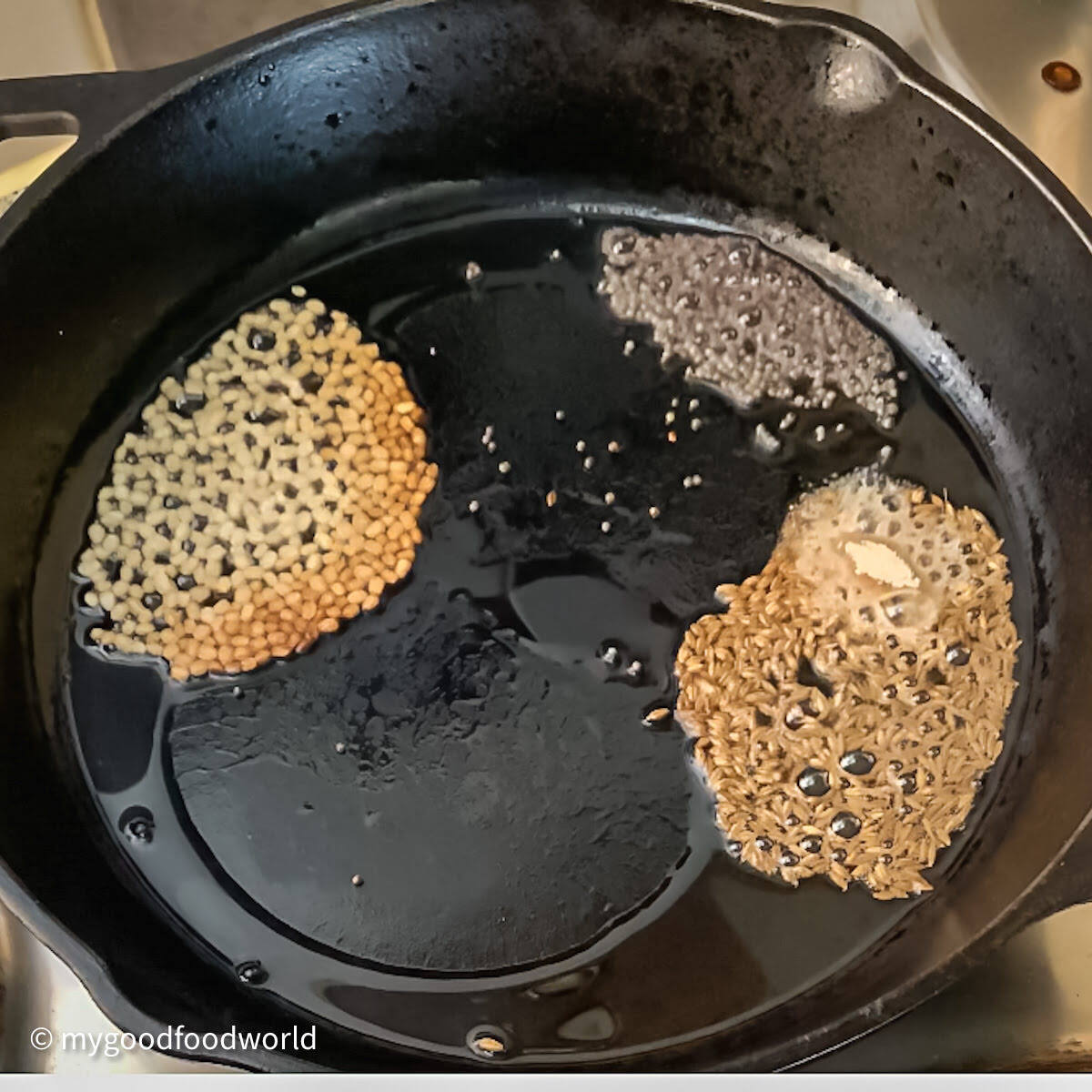
Heat oil in a skillet over medium-high heat. Add the mustard seeds, cumin, urad dal, and asafoetida. Fry until the mustard seeds splutter and the lentils turn golden brown.
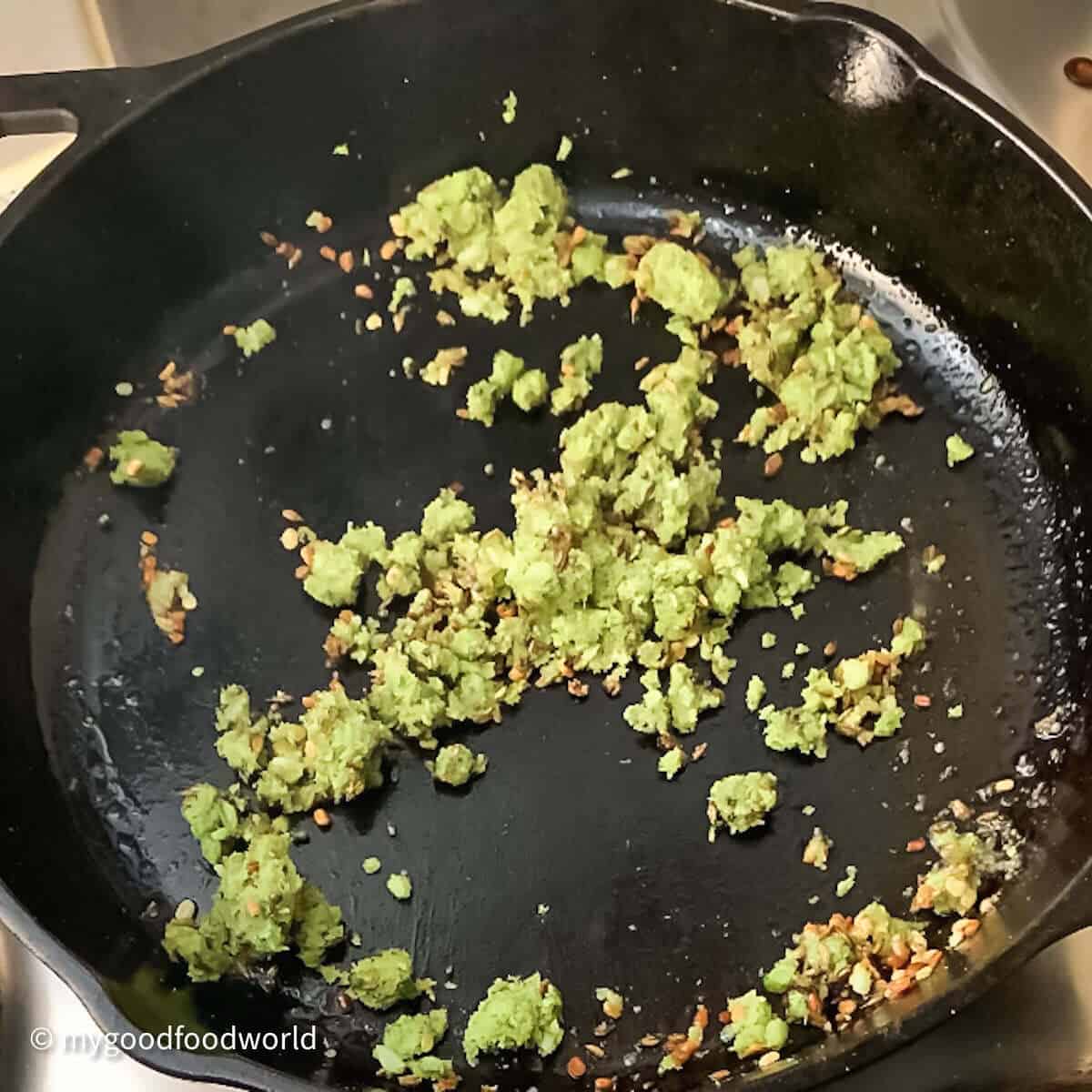
Add the ground coconut-cilantro-chili paste to the pan. Fry for 1 minute. If the mixture looks a little dry, add 1 to 2 tablespoons of the reserved chickpea water.
Step 5: Bring together the chickpea sundal.
Add the cooked chickpeas and sauté for 1 to 2 minutes, gently tossing until every chickpea is coated in the spiced coconut mixture.
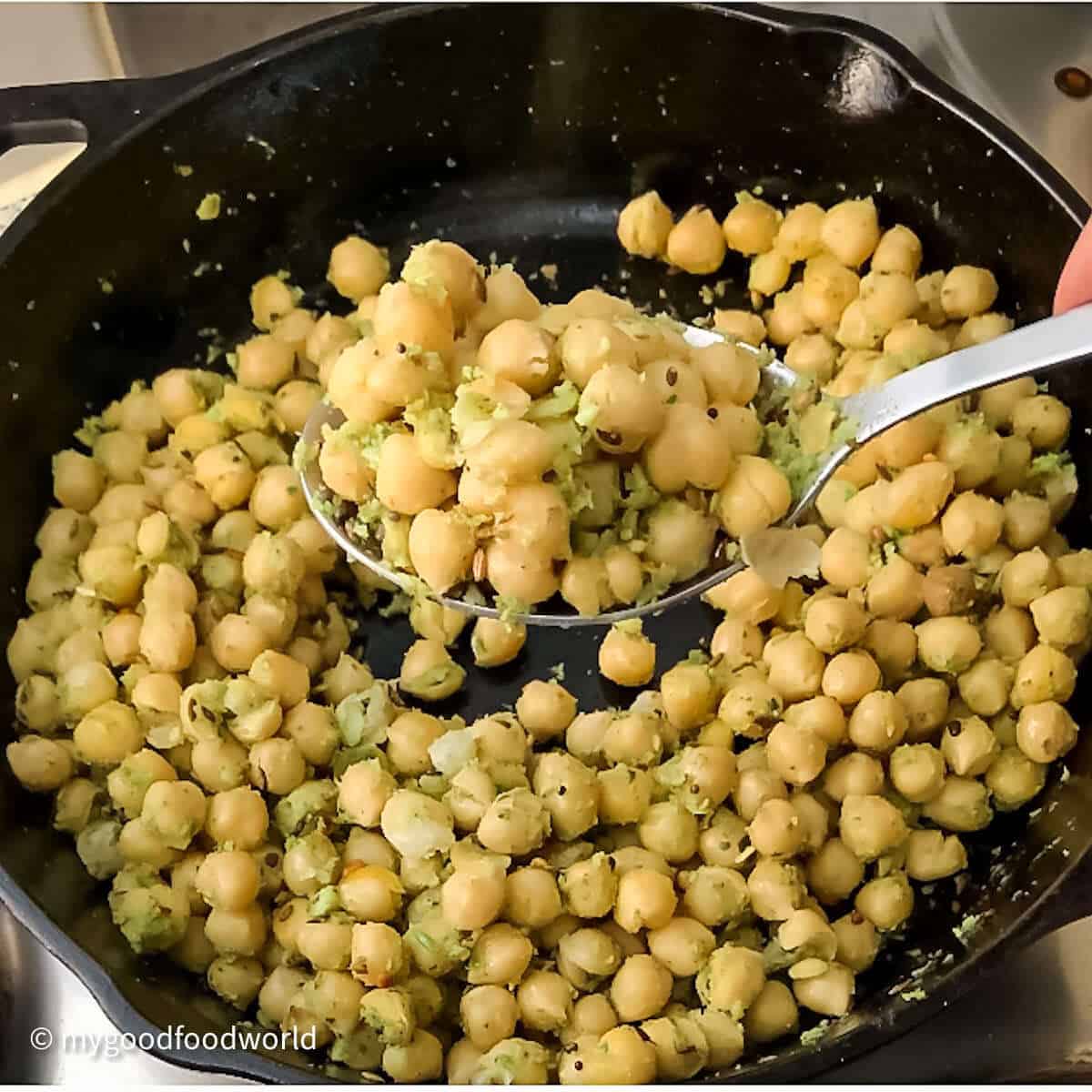
Step 6: Garnish and serve.
Finish with a handful of chopped fresh cilantro, a little extra grated coconut, and a squeeze of lime juice.
Serving suggestions
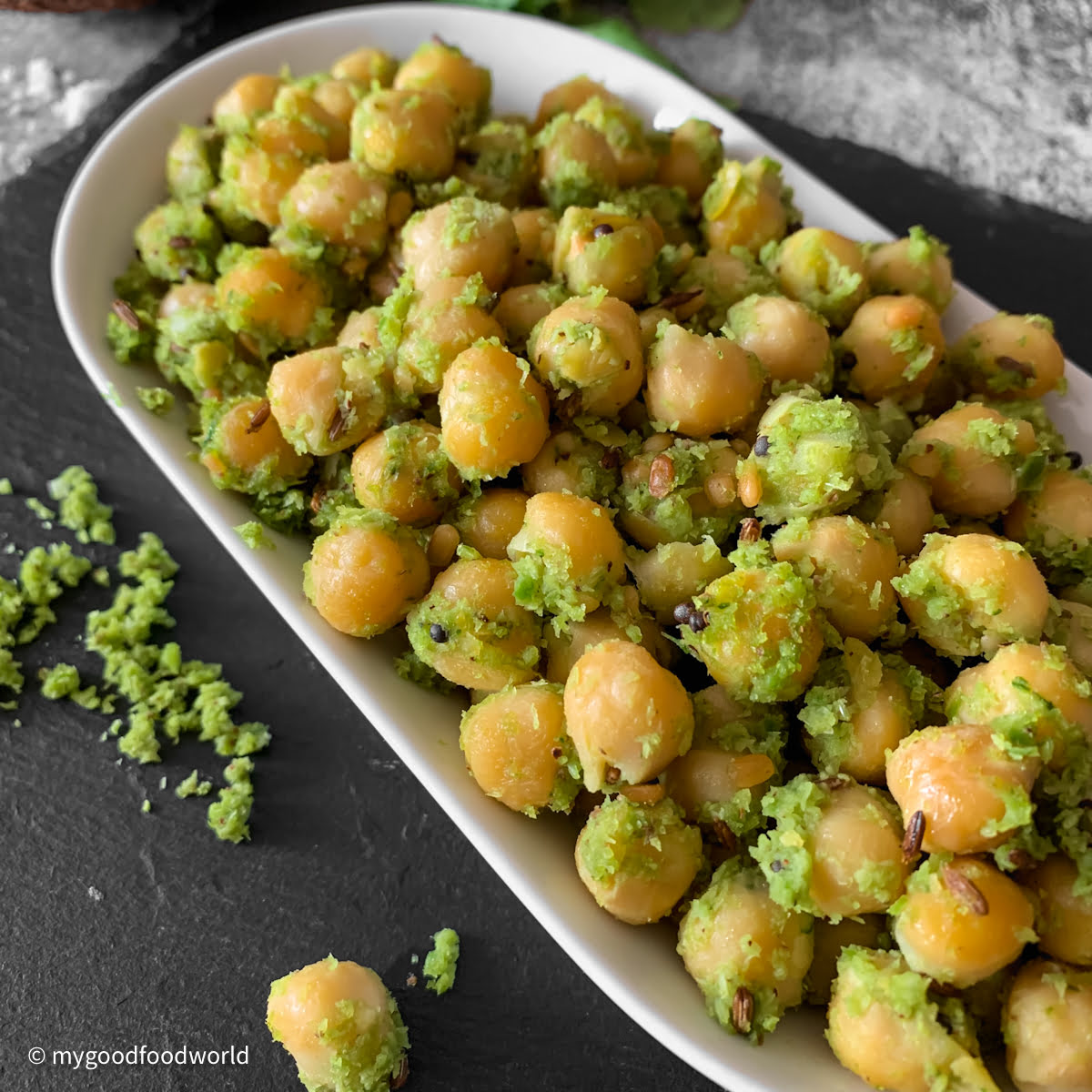
Chickpea sundal is served warm or at room temperature, which makes it very versatile.
- As a snack on its own with a cup of chai or coffee
- Serve it as a side dish alongside rice and zucchini sabji: it makes a delicious allium-free meal.
- It carries well in a lunchbox as it tastes just as good cold.
- As a light grain-free meal with this sweet potato turmeric soup or this mixed vegetable stew.
During Navratri, it is served as prasadam: a small portion offered to guests as blessed food. If you are making it for a festival gathering, double the recipe. It disappears fast.
Storage and make-ahead tips
Store leftovers in a glass container with a tight-fitting lid. Good for 2 to 3 days in the refrigerator.
Meal prep tip: Cook a large batch of chickpeas ahead of time and store them in the fridge for up to 3 to 4 days. The actual sundal comes together in under 10 minutes once your chickpeas are ready.
Variations
Other legumes: My mum's favorite version is with chana dal- the ones that I use to make my homestyle chana dal fry. Having said that, this recipe works beautifully with black-eyed peas, brown chickpeas, and dried yellow peas. Each one makes a slightly different sundal, all delicious.
Kid-friendly version: Lightly smash the chickpeas before tossing them with the spiced paste. The softer texture goes down well with younger kids.
FAQs
Sundal and chaat are very different dishes. Sundal is a South Indian preparation in which legumes are tempered in oil with whole spices and finished with fresh coconut. It is mild, aromatic, and traditionally made without onion or garlic.
Chaat is a North Indian street food category, typically made with chickpeas (chole), tamarind chutney, yogurt, chili, and a mix of toppings like sev and pomegranate. If you search for "Indian chickpea salad" and find yourself looking at chaat recipes, you are looking at a completely different dish.
Yes. Drain and rinse the chickpeas first, and reserve a little of the liquid in case you need it when sautéing. Using canned chickpeas cuts the prep down to about 10 minutes total. The texture of home-cooked dried chickpeas is slightly better, but canned chickpeas produce a perfectly good sundal.
Yes. Chickpea sundal is entirely plant-based. It contains no dairy or eggs. It is also suitable for Jain and sattvic diets when made with asafoetida instead of onion and garlic.
Sundal works well as a snack on its own, as a side dish with rice and sambar, or as part of a light meal. I particularly like it alongside a bowl of mung bean soup or chickpea soup for added protein.
Chickpeas are highly adaptable. For sundal, the key combination is mustard seeds, cumin, turmeric, asafoetida, and fresh coconut with green chili. Beyond this dish, chickpeas also work well with cumin and coriander, garam masala, smoked paprika and lemon, and curry powder.
Made this recipe? I'd love to know what you think! Leave a ★★★★★ rating and a review below; it motivates me to create more great content for you. You can also connect with me on Facebook and Instagram. And don't forget to subscribe to my newsletter, where I share free recipes, tips, and more!
📖 Recipe
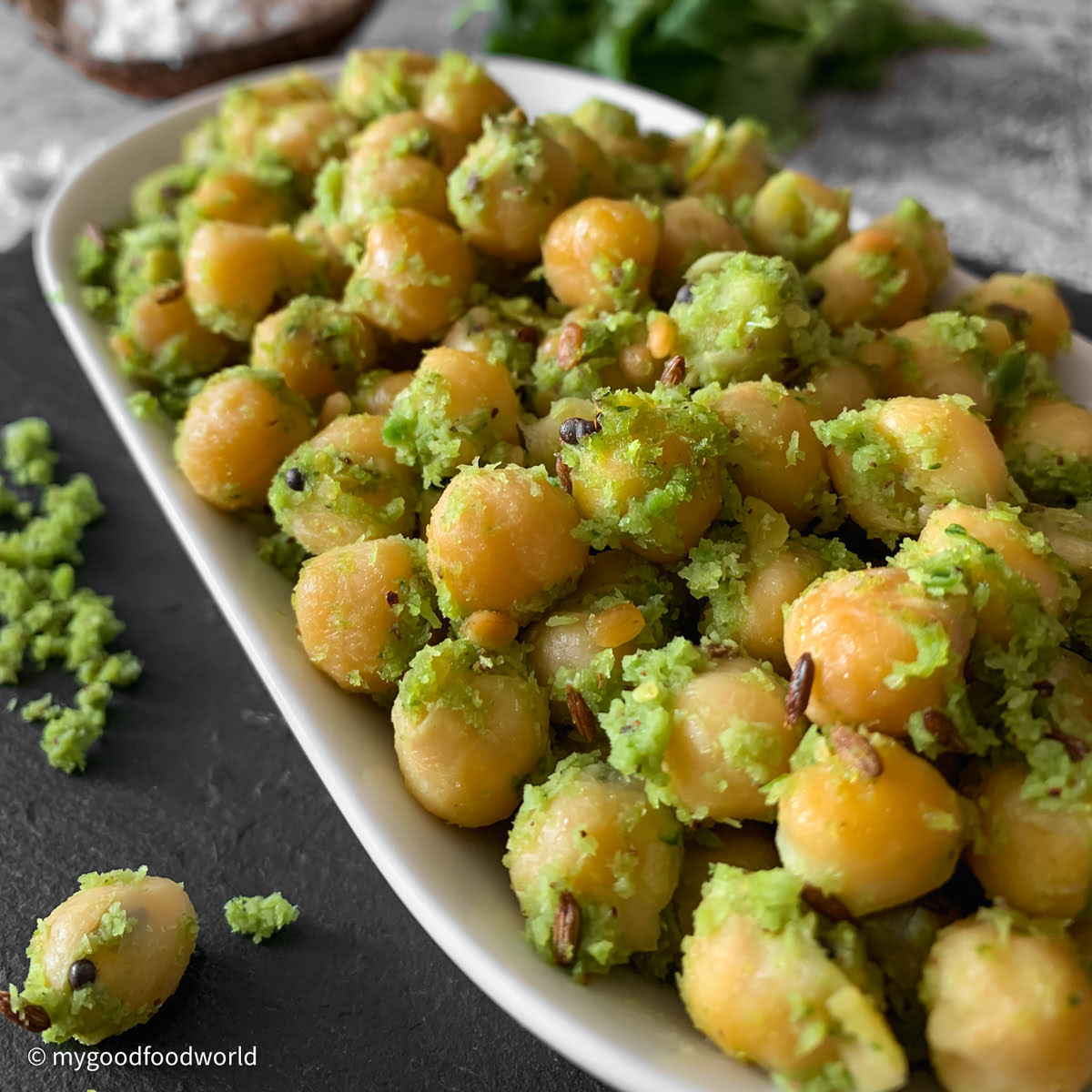
Chickpea Sundal (South Indian Chickpea Salad)
Save This Recipe
Enter your email & I'll send it to your inbox.
By submitting this form, you consent to receive emails from MyGoodFoodWorld
Ingredients
Equipment
Instructions
- Wash the chickpeas and soak them in water for 6-8 hours (or overnight). Add turmeric to the water.1 cup chickpeas (garbanzo beans), ¼ teaspoon turmeric, 4 cups water
- Drain and rinse the chickpeas.
- Place the soaked chickpeas in a pressure cooker with water and salt. Cover and cook for 6 to 7 "whistles". Chickpeas should be cooked soft and still hold their shape.1 cup chickpeas (garbanzo beans), 2 and ½ cups water, 1 and ¼ teaspoons salt
- When the pressure cooker has cooled down and the pressure released, drain the chickpeas. Keep aside.Do not discard the water. We may need some of it when sautéing the chickpeas. Add the rest of it to your soup, stock or curries.
- Make a coarse spice paste and keep it aside.6 teaspoons grated fresh coconut , 1 green chili, 1 stalk fresh cilantro (stem + leaves)
- Place a skillet over medium high heat and add oil to it.1 teaspoon neutral or coconut oil
- Add the spices and fry till they splutter and turn brown in color.1 teaspoons white lentils (urad dal), ¼ teaspoon mustard seeds, ¼ teaspoon powdered asafetida (hing), ½ teaspoon cumin seeds
- Now add the spice paste and fry for 1 minute.1 to 2 tablespoons chickpea or plain water
- Add the cooked chickpeas and fry sauté for 1 to 2 minutes, while gently mixing till the spices coat them well.
- Finish the sundal off with some finely chopped cilantro, grated coconut, and a dash of freshly squeezed lime juice.2 teaspoons chopped fresh cilantro, 1 teaspoon fresh lime juice, 1 teaspoon grated coconut
Nutrition
The nutritional information is calculated using an online calculator and is based on available ingredients and preparation. It should not be considered a substitute for a professional nutritionists' advice. Changing the quantities and cooking technique will alter the nutritional calculations.
Video
Notes
- Chickpeas: Canned chickpeas work perfectly here. Drain and rinse well, and reserve a little of the liquid to use when sautéing. Use the rest in this kala chana recipe - it won't go to waste.
- Turmeric: This recipe adds turmeric to the soaking water. If using canned chickpeas, add it to the oil with the other spices instead. You can skip it altogether if needed; the dish will still taste great.
- Coconut: Fresh coconut gives the best flavor. Frozen grated coconut (thawed before grinding) is a reliable substitute. Desiccated coconut works too; just use a little less, as it is more concentrated and drier than fresh.
Alternative quantities provided in the recipe card are for 1x only.
Our content aims to be informative and educational, but it should not replace professional medical advice. Since manufacturing processes can vary and cross-contamination is possible, it's essential to verify product labels and allergen information. Make sure all ingredients align with your specific allergies. As readers, you bear the responsibility for ensuring allergen safety when buying or consuming foods.
Comments
No Comments