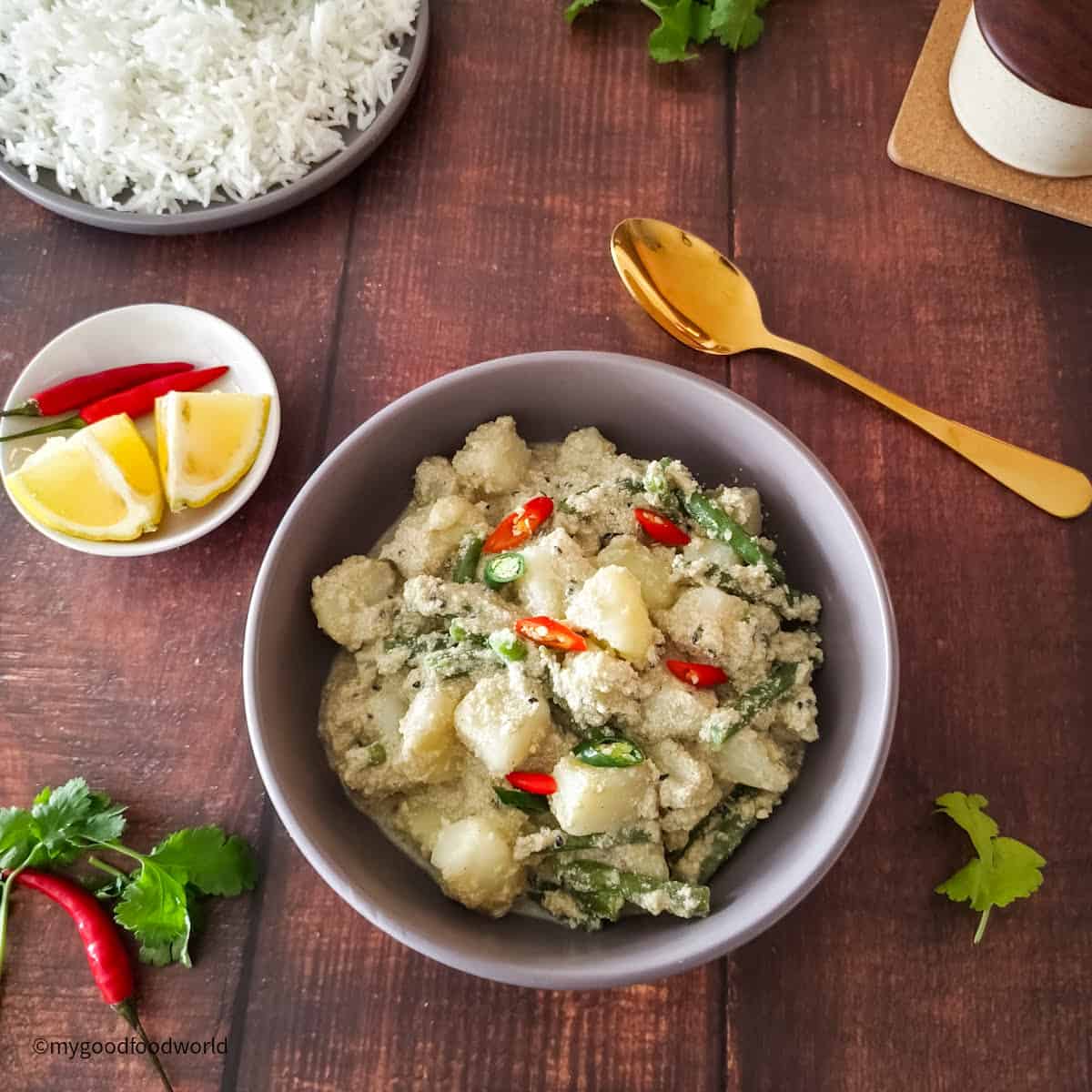
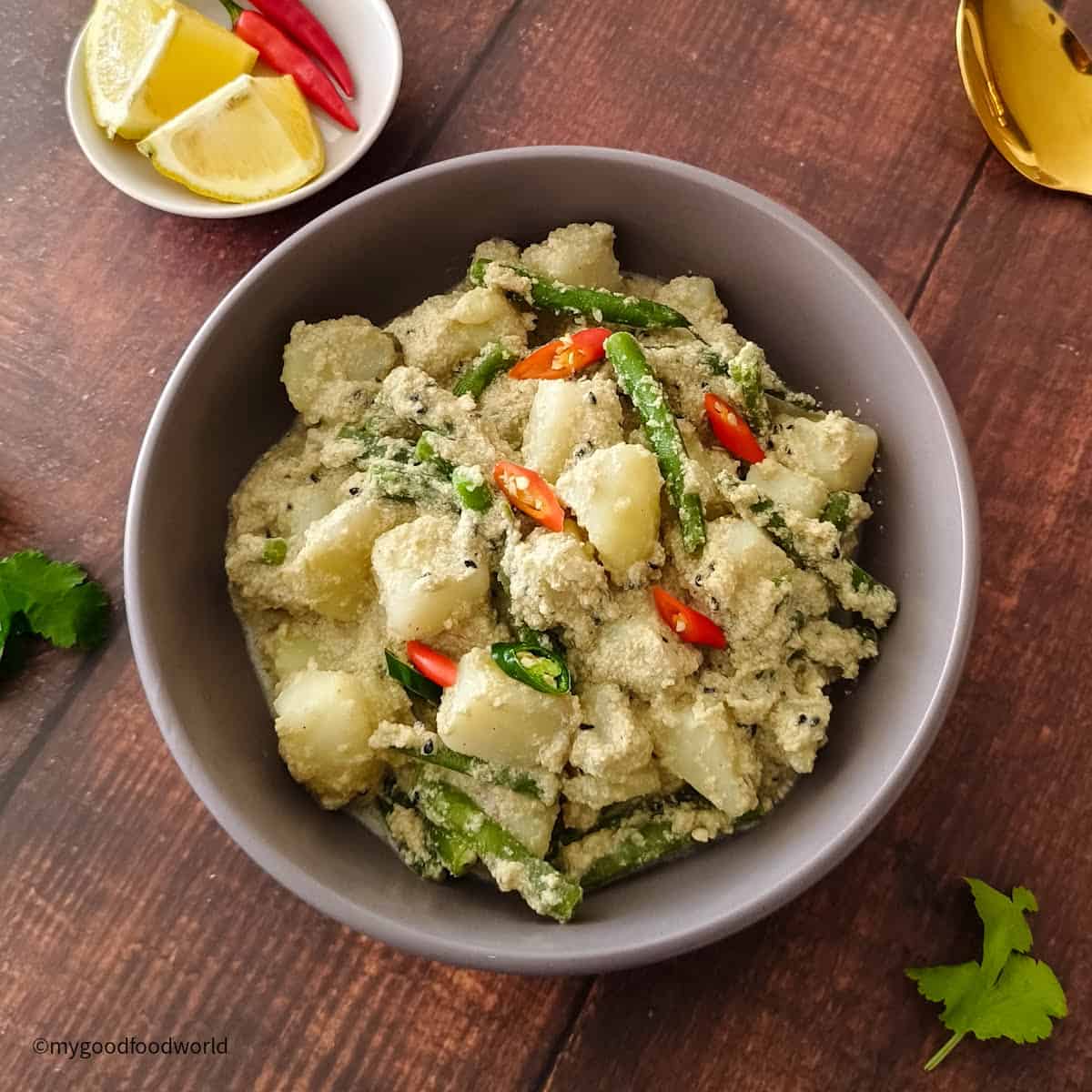
Aloo posto is a simple curry where cubes of potatoes are cooked in a poppy seed paste. It's a classic Bengali dish served with steamed rice (or my buttered rice!). I make my version with green beans for extra color and texture.
Save This Recipe
Enter your email & I'll send it to your inbox.
By submitting this form, you consent to receive emails from MyGoodFoodWorld
I first tasted aloo posto at a friend's home in Kolkata. Her mother and their cheerful house help, Puchki, would lovingly grind a creamy, smooth posto bata (poppy seed paste) in a stone grinder - the secret, she said, to getting the right flavor and texture. She would serve the posto aloo with rice and Bengali dal.
My aloo posto recipe is an ode to the classic version I enjoyed years ago, only with a green bean twist. If you're a fan of potatoes and want to try something unique, this one's for you! There are many reasons to fall in love with this simple dish:
- Made with simple pantry ingredients, yet packed with flavor.
- Naturally vegan, gluten-free, and made without onion and garlic.
- Beautifully creamy and nutty, with subtle, balanced flavors.
- Perfect for easy weekday meals or festive spreads.
If you like, check out my collection of gluten-free vegetarian recipes and no onion, no garlic recipes.
Heads up: I'm here to share helpful info, not medical advice. Always double-check ingredient labels-products can vary, and allergens can sneak in. If you have food allergies, make sure everything you use works for you.
This post includes helpful tips, but if you're in a hurry, use the "Jump to Recipe" or section links to skip ahead.
Jump to:
What is aloo posto?
Aloo posto is a curry made with potatoes (aloo) cooked in a creamy poppy seed (posto) paste.
Flavor: This simple yet flavorful dish is a beloved staple in Bengali homes and is proof that you can create something truly delicious with just a few ingredients.
The authentic recipe is a niramish (made without onion and garlic) dish, with just a handful of ingredients: potatoes (aloo), poppy seed paste (posto bata), nigella seeds (kalo jeere), salt, and mustard oil. The result is a mild, nutty curry with a delicate pungency from the mustard oil that gives it its signature flavor.
Texture: The posto bata should be smooth and creamy, coating the potatoes beautifully. The potatoes (and any other vegetables used) should be tender and well-seasoned.
About posto
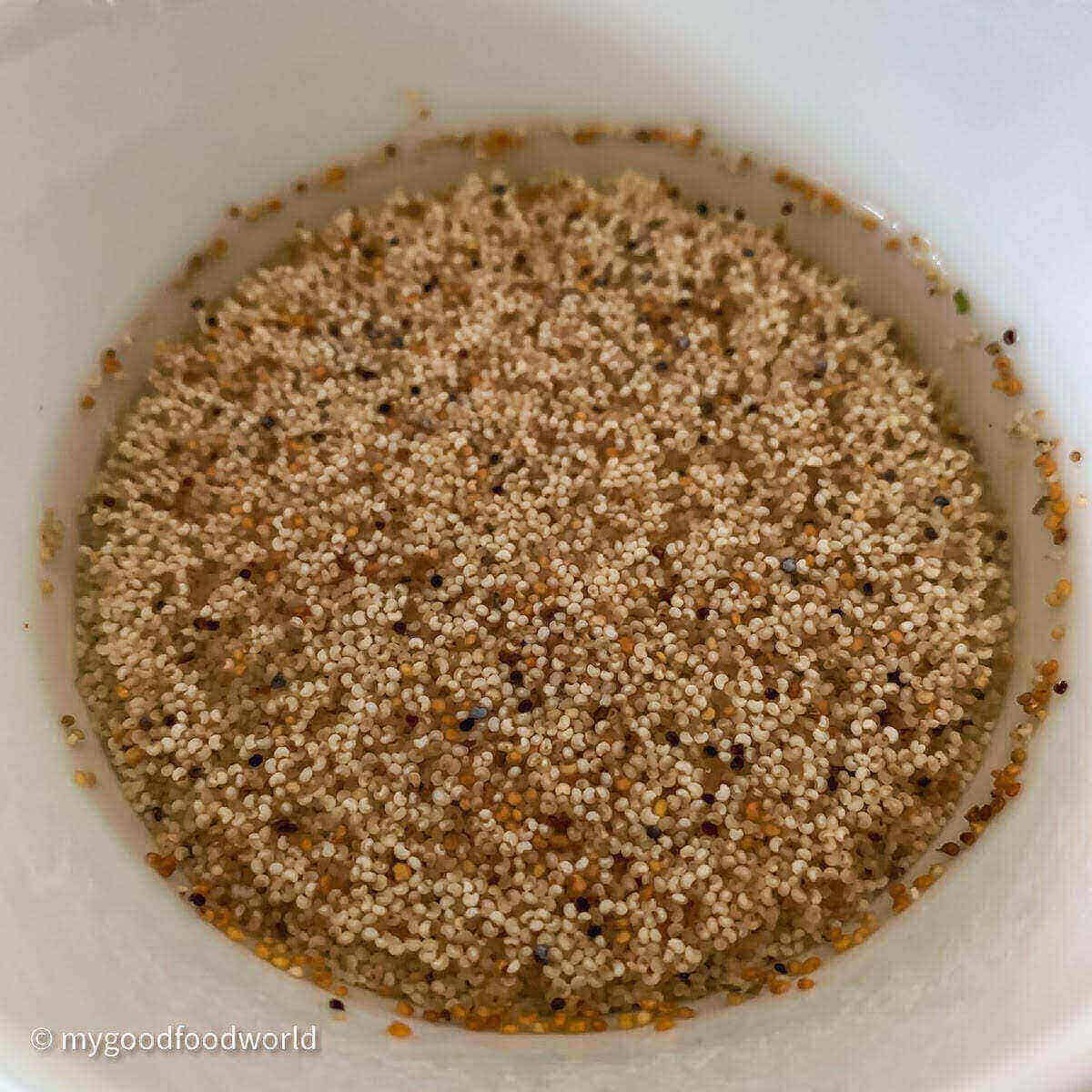
Posto or poppy seeds are tiny, kidney-shaped oilseeds from the poppy flower. They come in two main colors: blue-grey, which you'll often find in European cooking, and ivory, which is more common in Indian cooking.
In India, they go by many names: posto or postu in Bengali, khus khus in Hindi, gasagase in Kannada, and gasagasalu in Telugu. They are soaked and ground into a creamy paste that forms the base for many curries and sweet treats.
In Western cooking, poppy seeds are typically sprinkled on bagels, breads, and muffins for a nutty crunch.
Ingredients
For the complete list of ingredients, their exact quantities, and the full instructions, scroll down to the recipe card below.
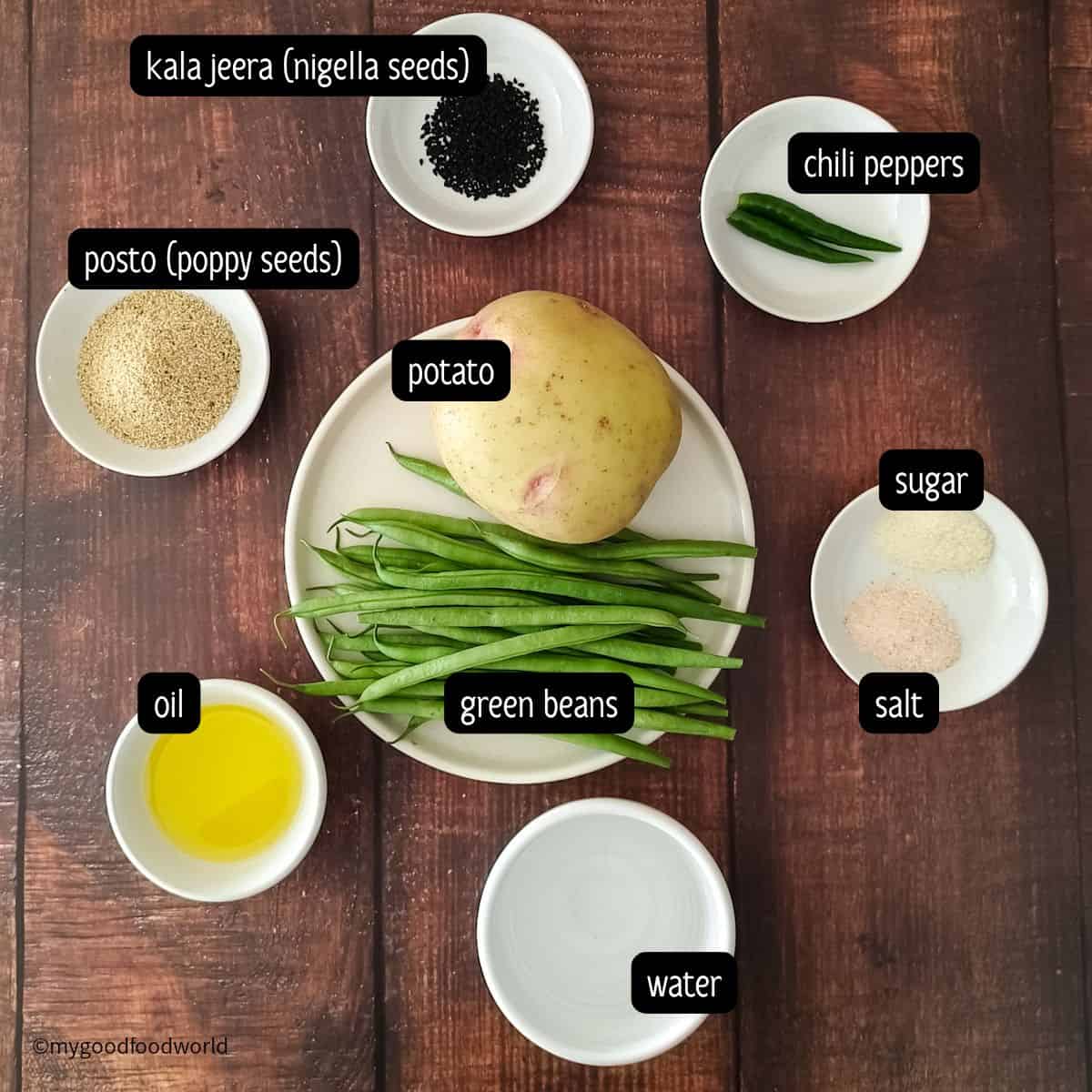
Potatoes: Starchy (baking) potatoes work best for this recipe. They have a light, fluffy texture and a mild flavor that complements the poppy seed sauce.
Poppy seeds: This recipe uses white (actually ivory-colored) poppy seeds. You can find them in most Indian grocery stores.
Green beans: I use tender green beans, but frozen ones work just as well. You can use other vegetables as well; check the section below for variations.
Chili peppers: Use mild green chillies for gentle heat and balance.
Oil: I use mustard oil for an authentic Bengali flavor. You can use any neutral-flavored oil if you prefer a milder taste.
Nigella seeds: Also known as onion seeds, kalonji, or kala jeera. They add a deep, earthy flavor to the dish.
If you have any questions regarding these ingredients, feel free to ask in the comments section below and I will try my best to answer them for you.
Instructions
Check out the video at the end of the recipe card.
I'll show you how to make this simple Bengali potato curry, step by step. Get your pan, ladle, and high-speed blender ready!
Step 1: Make the posto paste
Soak the poppy seeds in warm water for at least 20 minutes, or up to 2 hours. Grind them with the soaking water and chili peppers into a smooth, creamy paste. Your posto bata is ready.
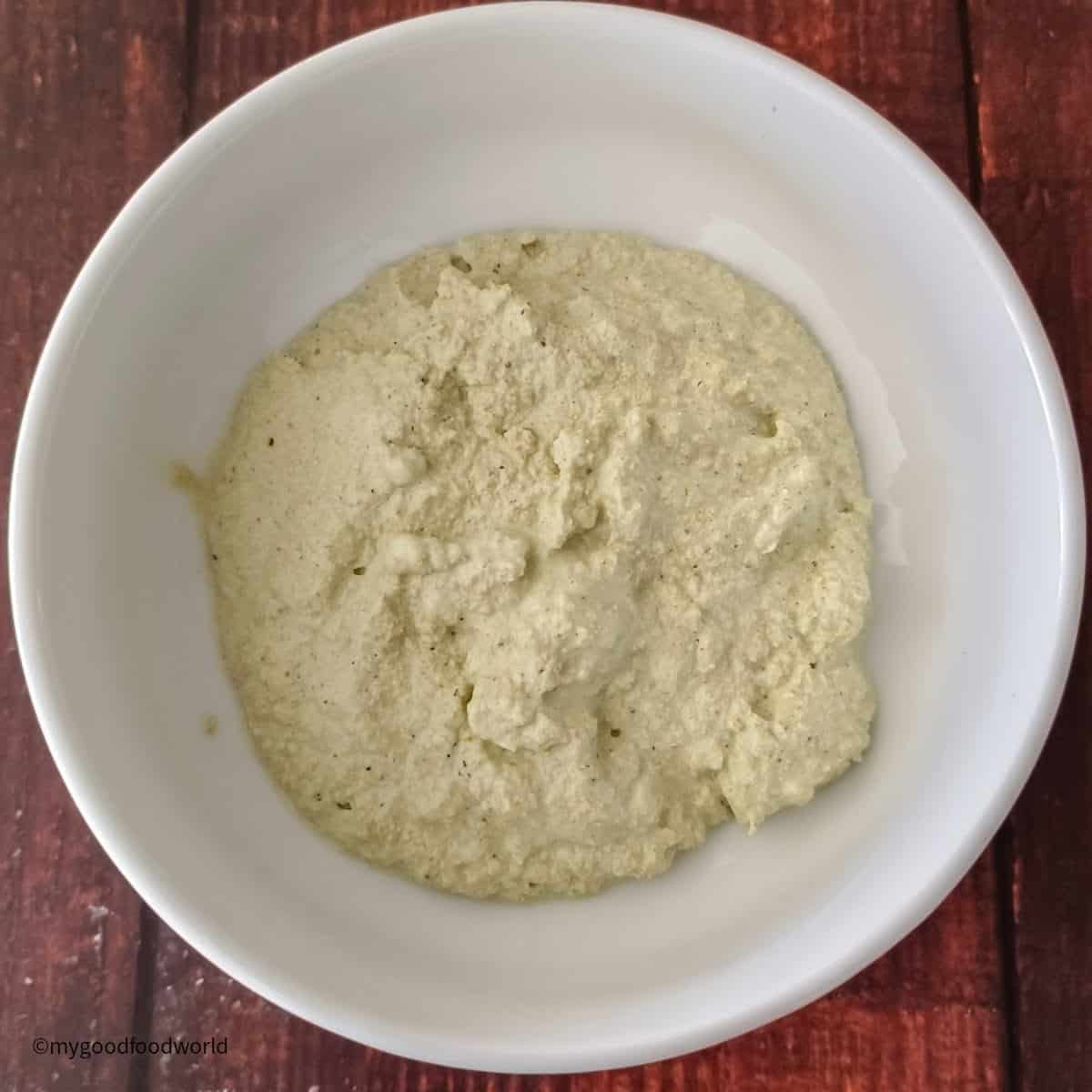
Tip: Soaking the poppy seeds softens them, making it easy to grind. The longer you soak them, the creamier your sauce will be.
Step 2: Prep the other ingredients
Wash, peel, and cube the potatoes into bite-sized pieces. Keep them in water until you need them. Cut the green beans into 2- or 3-inch pieces. Measure the rest of the ingredients.

You can leave the potato skins on, as I do in my aloo matar recipe, if you prefer.
Step 3: Make the poppy seed curry (with green beans)
Heat oil in a pan over medium-high heat and add the kalo jeere. Let them splutter. Add the potatoes and stir for a minute.
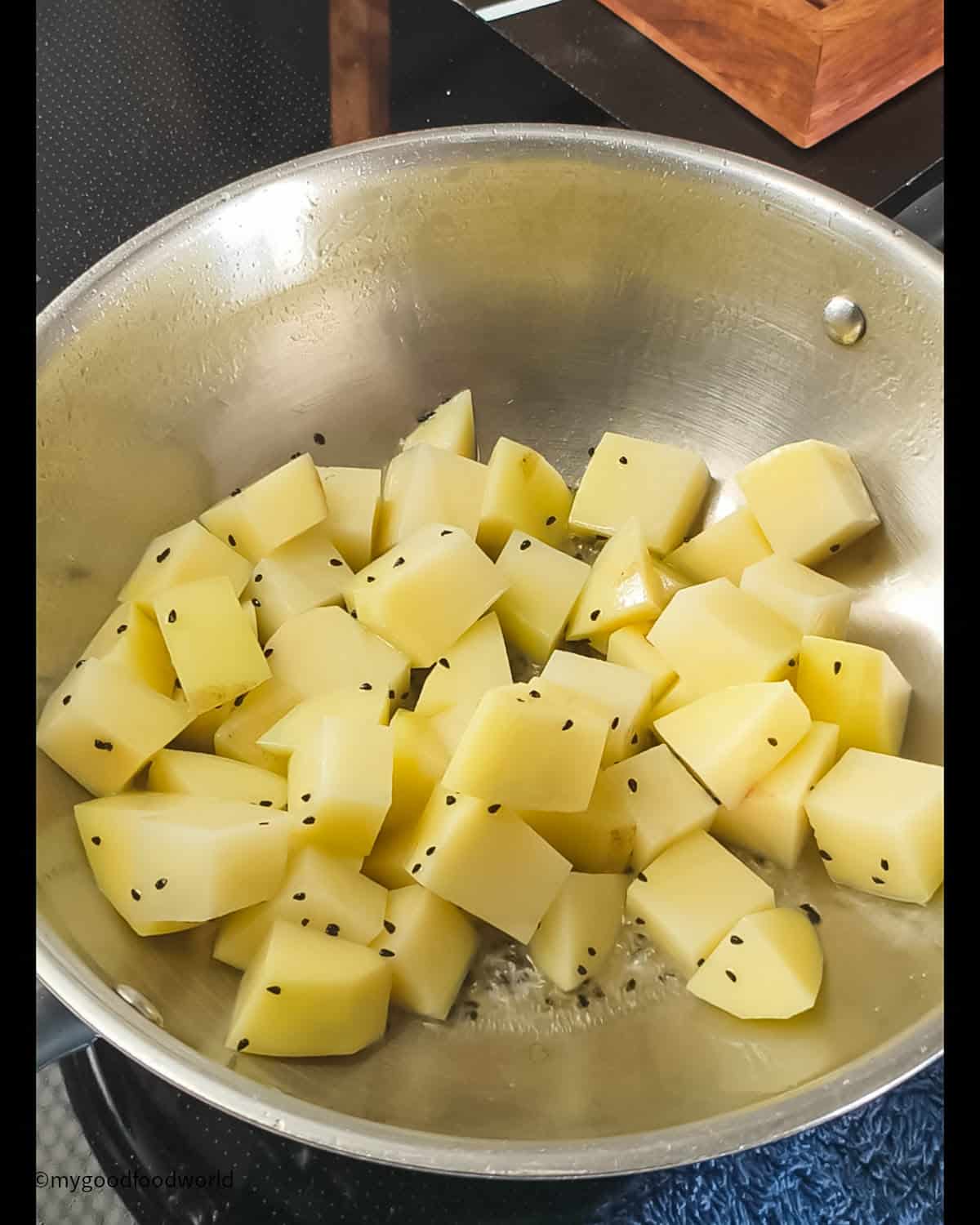
Padma's top tip: If using mustard oil, heat it until it smokes. Doing this mellows its pungency.
Add a splash of water, cover, and cook until the potatoes are almost tender. Add the green beans, a bit more water, cover, and cook until the beans are tender.
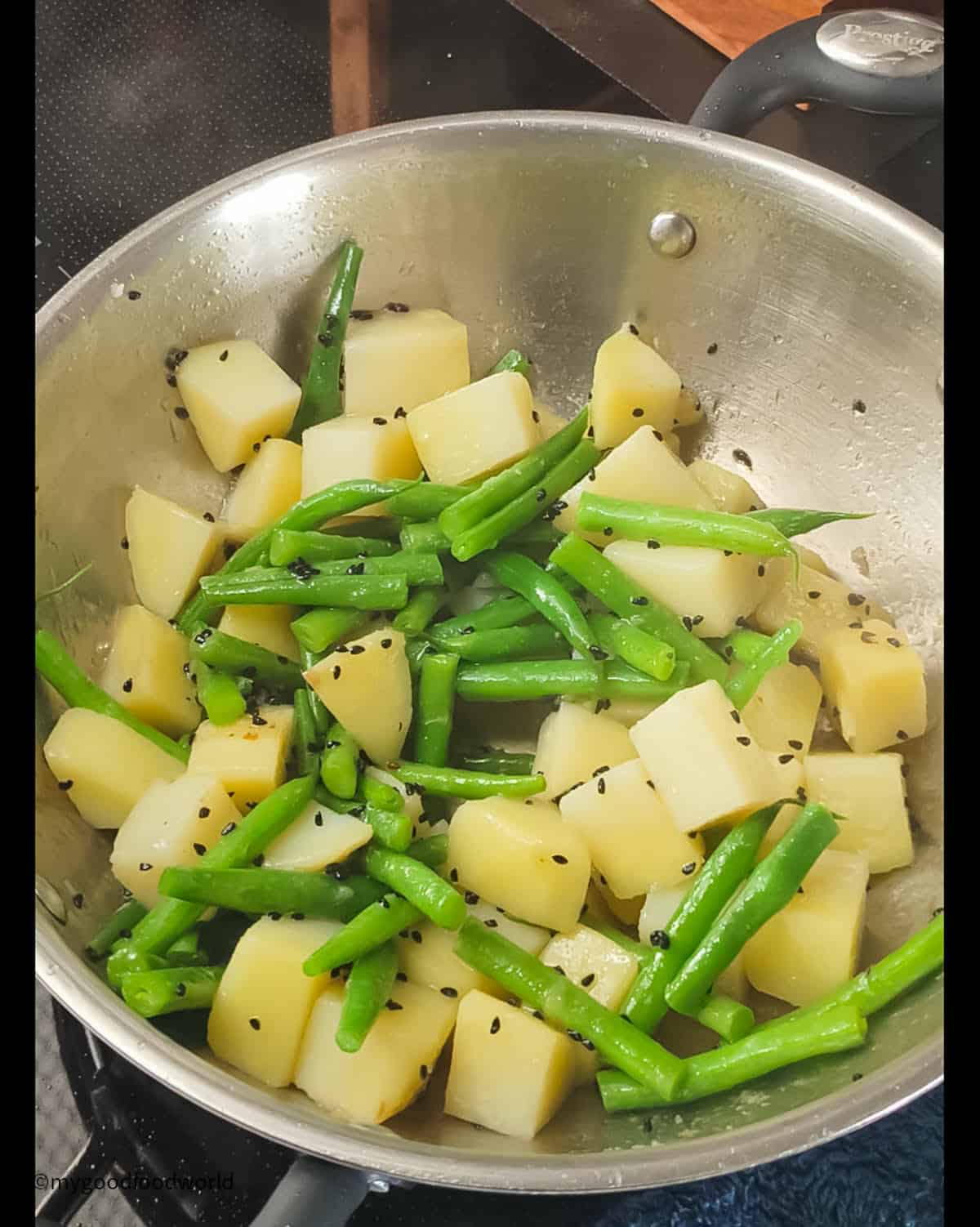
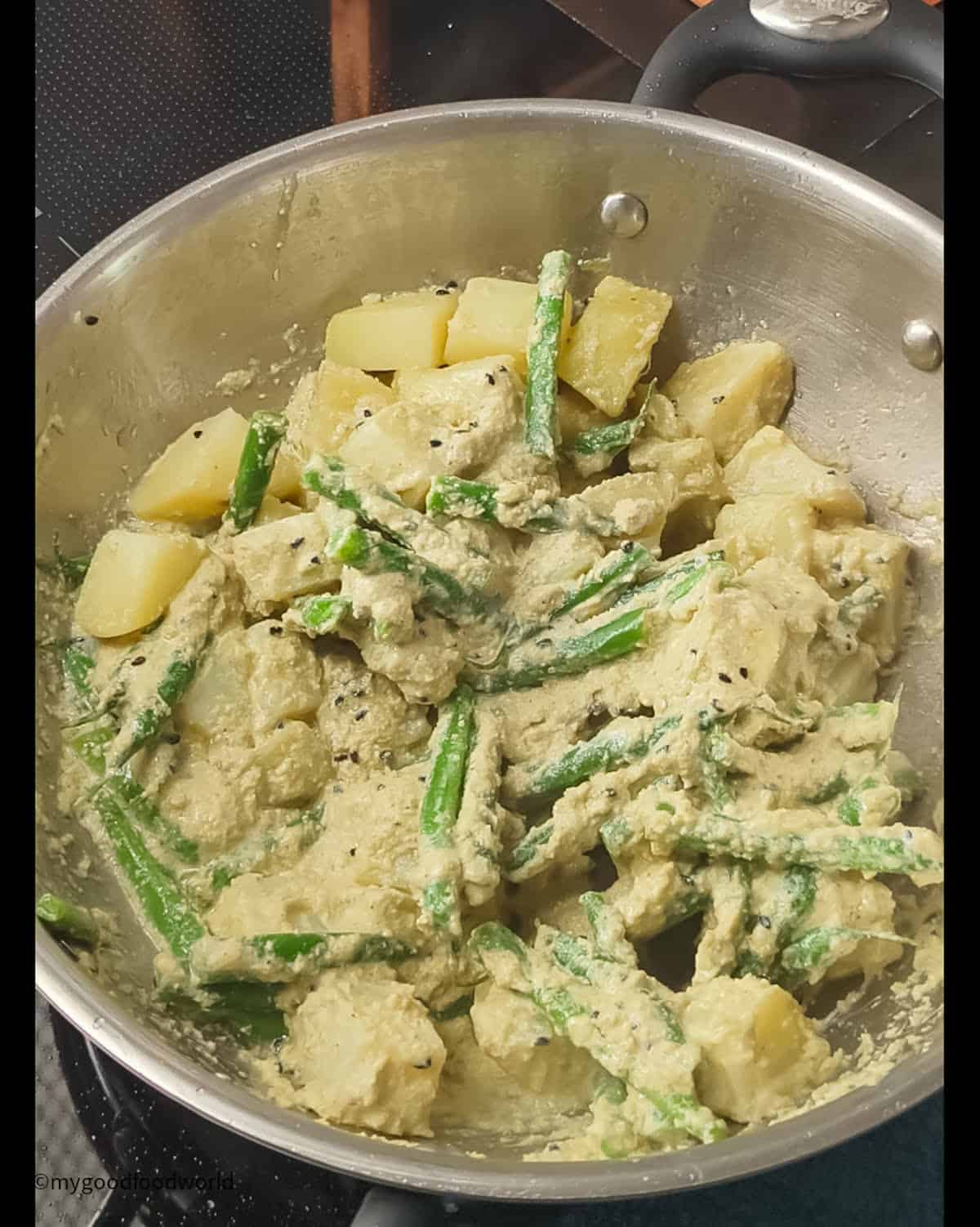
Turn the heat down to medium. Add the posto paste and more water. Mix well, cover, and cook for a few minutes until the potatoes are fully cooked.
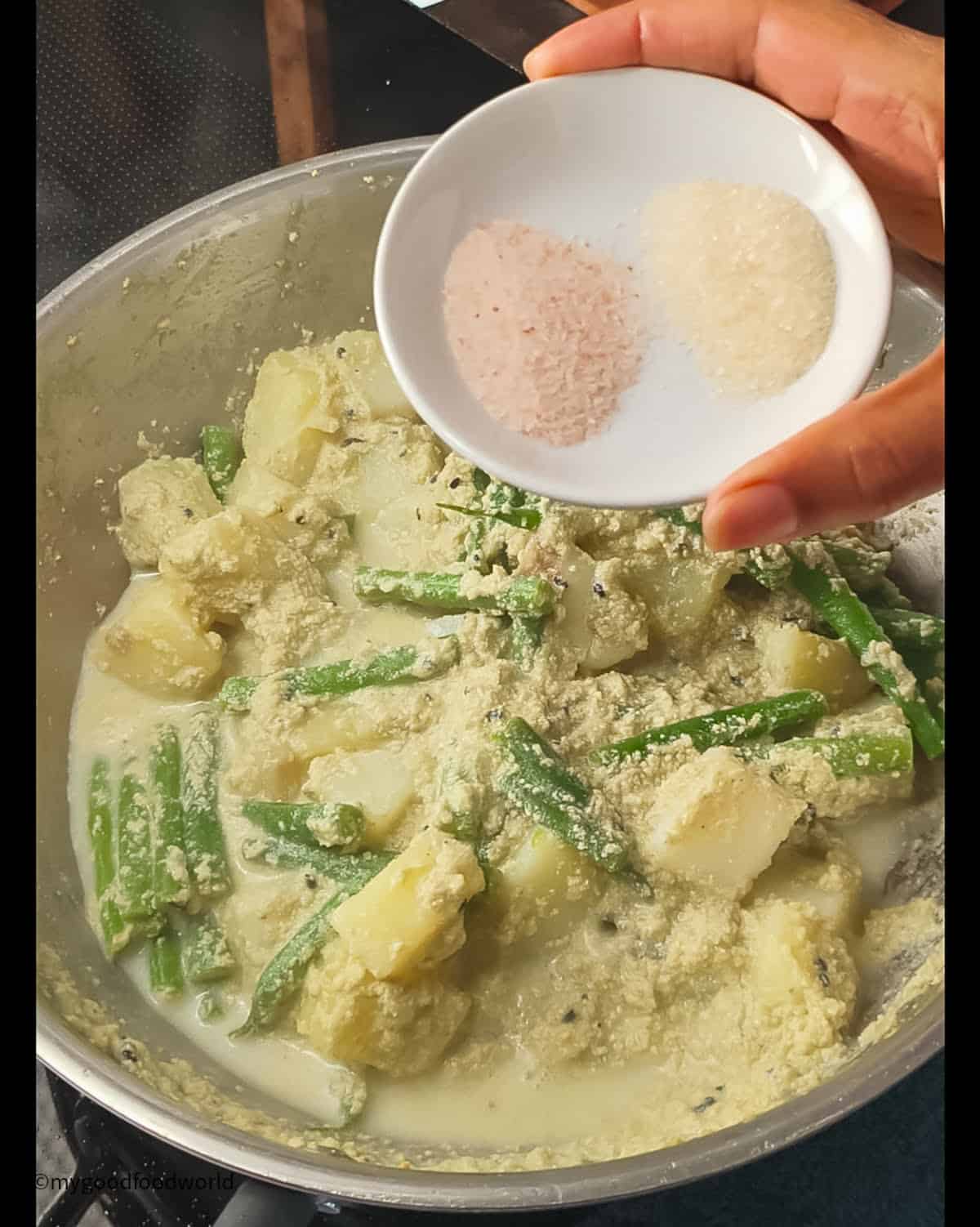
Add the salt and sugar, mix well, and cook uncovered for a couple of minutes.
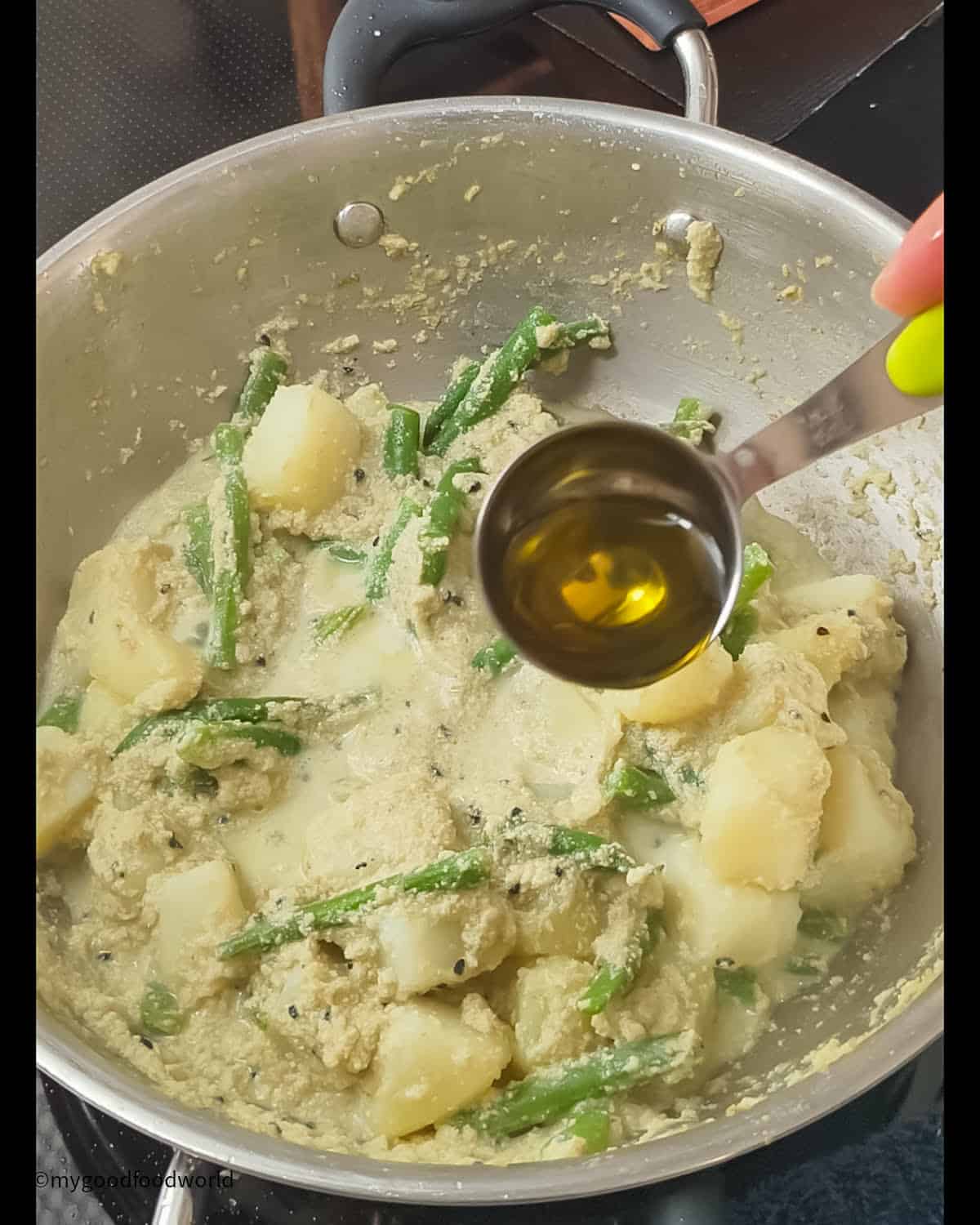
Finish with a drizzle of oil. That's it, your Bengali aloo posto is ready! Serve warm.
Recipe Notes
To make it the classic posto alu, skip the green beans and increase the quantity of potatoes by the same amount.
Water: In addition to the water used for soaking and grinding the poppy seeds, I use about 1 cup of water in total, added in stages. I also rinse the grinder jar with a bit of water and include that in the count so that no flavor goes to waste!
Should I roast poppy seeds? No. You don't need to roast the poppy seeds for this recipe.
When to add salt and sugar: I add the salt toward the end of cooking because adding it earlier can dull the bright green color of the beans. You can add the sugar earlier.
Texture and consistency: The potatoes should be soft and tender, while the green beans should retain a slight crunch. The sauce should be thick enough to coat the vegetables nicely.
Time-saving ideas:
- Prepare the poppy seed paste a day or two in advance and store it in the fridge.
- Use pre-boiled potatoes instead of raw ones, as I do in my aloo jeera recipe.
Any doubts or questions? Feel free to ask via the comments below. I will try my best to answer them for you. - Padma
Variations
Alu posto holds a special place in the Bengali cuisine. Each region, and even each household, has its own version. Here are some popular variations:
Sheem aloo posto: Broad beans, or hyacinth beans, are cooked with potatoes.
Potol posto: Pointed gourds are peeled and cooked in the poppy seed paste.
Jhinge aloo posto: Cubes of ridge gourd are cooked with the potatoes. This version has a delightful texture thanks to the ridge gourd.
My twist, aloo beans posto: I use tender green beans, which are available year-round here in the UK, to add color and texture.
With onion and garlic: Add a clove or two of garlic while grinding the poppy seeds. Add finely sliced onion to the hot oil right after the kalo jeere. Sauté for a minute until lightly golden, then add the potatoes and continue with the recipe.
Serving and storage
Traditionally served with steamed rice, luchi, and a simple dal, this aloo beans posto is the kind of dish that turns an everyday meal into something quite elegant.
To enjoy it as part of a hearty gluten-free meal, serve it with my jeera rice and chana dal fry.
Ask any Bengali, and they'll tell you that posto aloo with masoor dal (red lentils) and a green chilli on the side is a match made in heaven. If you'd like to try it too, here's my detailed guide on how to cook red lentils.
Storage and reheating: Store alu posto in a clean, dry container in the fridge for up to 2 days. To reheat, warm it in a pan over medium heat and add a splash of water to loosen the consistency if needed.
FAQ
Aloo posto is typically eaten with steamed rice, luchi, or roti. To make a wholesome meal, it's usually accompanied by a jhol (gravy) and a simple dal.
Aloo posto is popular in Bengal because it's deeply rooted in the region's history and culture. During the British era, vast areas of Bengal were used to cultivate poppy plants, making poppy seeds widely available. With limited vegetables on hand, it's believed that a farmer's wife created this dish using potatoes, mustard oil, and poppy seeds. And aloo posto was born! Over time, it became a beloved Bengali classic, celebrated for its simplicity and comforting flavor.
Yes, you can add other vegetables to aloo posto. Common additions include ridge gourd, pointed gourd, broad beans, or runner beans.
Made this recipe? I'd love to know what you think! Leave a ★★★★★ rating and a review below; it motivates me to create more great content for you. You can also connect with me on Facebook and Instagram. And don't forget to subscribe to my newsletter, where I share free recipes, tips, and more!
📖 Recipe
Aloo Posto Recipe | Bengali Potato Curry In Poppy Seeds Sauce
Save This Recipe
Enter your email & I'll send it to your inbox.
By submitting this form, you consent to receive emails from MyGoodFoodWorld
Ingredients
Equipment
Instructions
- Soak the poppy seeds in warm water for at least 20 minutes. Grind them with the water and chili peppers into a fine paste. See note 64 tablespoons (~40g) posto (white poppy seeds), ⅓ cup warm water, 3 (~10g) green chili peppers
- Chop the green beans into roughly 2-inch pieces. Peel and cut the potato into bite-sized cubes. Measure the rest of the ingredients and keep them ready.
- Heat the oil in a skillet over medium-high heat. Add the kala jeera and let them splutter.2 tablespoon oil, ½ teaspoon kala jeera (kalonji or nigella seeds)
- Add the cubed potatoes and stir for a minute. Add a splash of water and cook until they are almost tender.1 large (12 oz. ~350g) potato
- Add the green beans, stir, and add another splash of water. Cover and cook for 3 to 4 minutes.See note 73 and ¾ oz. (~100g) green beans
- Now add the posto bata and a little more water. Mix well, cover, and cook until the potatoes are fully done and the green beans are cooked to your liking. I like them with a bit of crunch.
- Add the salt and sugar, and stir to combine. Add the remaining water and cook uncovered for a few minutes to let the flavors come together.See note 81 teaspoon salt, 1 teaspoon sugar, upto 1 cup water
- Finish with a drizzle of oil (optional) and serve warm.1 tablespoon oil
Nutrition
The nutritional information is calculated using an online calculator and is based on available ingredients and preparation. It should not be considered a substitute for a professional nutritionists' advice. Changing the quantities and cooking technique will alter the nutritional calculations.
Video
Notes
- Poppy seeds: This recipe calls for white (actually ivory-colored) poppy seeds. You can find them in most Indian grocery stores.
- Potatoes: Starchy (baking) potatoes work best for this recipe. They have a light, fluffy texture and a mild flavor that pairs perfectly with the poppy seed sauce.
- Green beans: I use tender green beans, but frozen ones work just as well. You can also use broad beans or runner beans - just remember to adjust the cooking time accordingly.
- Oil: Traditionally, this dish is made with mustard oil, which gives it a distinctive, pungent flavor. You can substitute with any neutral-flavored oil if you prefer a milder taste.
- Water: In addition to the water used for soaking and grinding the poppy seeds, I use about 1 cup of water in total, added in stages. I also rinse the grinder jar with a bit of water and include that in the count - no flavor goes to waste!
- Posto bata (poppy seed paste): Soak the poppy seeds for at least 20 minutes, or longer if you can - up to 1 hour. The longer soak helps them grind more easily and gives the sauce a beautifully creamy texture.
- Texture and consistency: The potatoes should be soft and tender, while the green beans (or any other beans you use) should retain a slight crunch. The sauce should be thick enough to coat the vegetables nicely.
- When to add salt and sugar: I add the salt toward the end of cooking because adding it earlier can dull the bright color of the beans. For the same reason, the final cooking should be done uncovered. You can add the sugar earlier - that's perfectly fine.
Alternative quantities provided in the recipe card are for 1x only.
Our content aims to be informative and educational, but it should not replace professional medical advice. Since manufacturing processes can vary and cross-contamination is possible, it's essential to verify product labels and allergen information. Make sure all ingredients align with your specific allergies. As readers, you bear the responsibility for ensuring allergen safety when buying or consuming foods.




Karlie says
I served this over rice with some simple tofu and it was so flavorful!
Cindy says
Soaking the poppy seeds a little longer was a great tip! So delicious!
Erin says
Your recipes are so amazing! We loved this green bean curry and the posto paste and nigella seeds were new-to-us ingredients that we enjoyed trying.
Sam says
This is such a delicious recipe! The flavors are wonderful. Yum!!
Holly says
Very good - and easy! Served over rice and the whole family loved it. Thanks for another great recipe!
Padma Kumar says
Thank you Holly!
Delaney says
I am excited to try this recipe, these flavors sound wonderful!