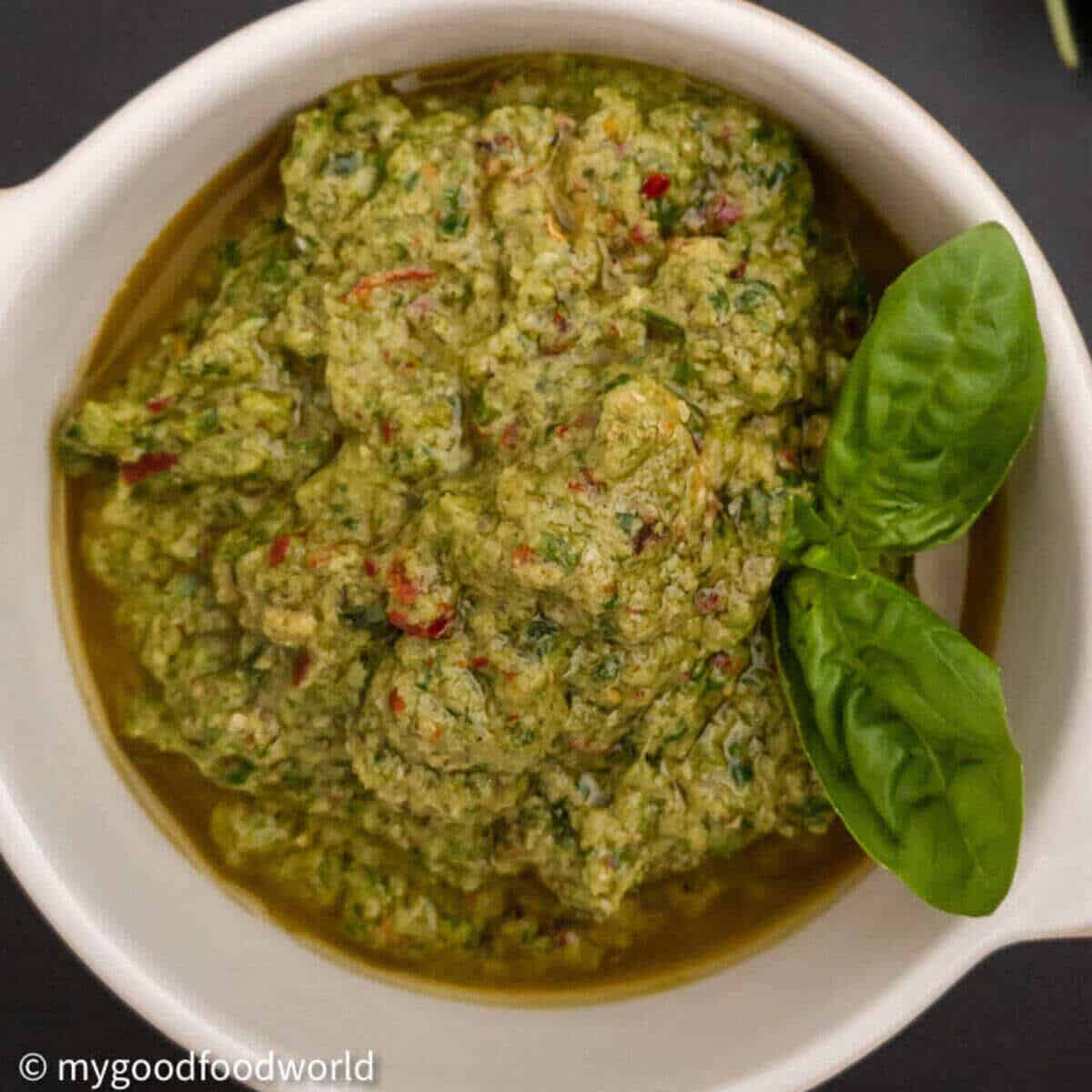
A traditional basil pesto recipe, made with basil, pine nuts, garlic, Parmesan, and olive oil, is a timeless Italian favorite. My vegan basil pesto keeps all that fresh, vibrant flavor but skips the cheese, and there is no nutritional yeast either. The result? A creamy, lush pesto that's 100% plant-based and just as satisfying as the original.
Save This Recipe
Enter your email & I'll send it to your inbox.
By submitting this form, you consent to receive emails from MyGoodFoodWorld
I have used store-bought pesto a few times, and trust me, nothing beats a good homemade pesto sauce that is made from scratch. Especially when the recipe is as easy as this one and comes together in just 10 minutes!
What I also love about this dairy-free basil pesto recipe is its versatility. I use it not only to make my pasta al pesto, but also as a dip for chickpea patties, and spread for paninis and sandwiches.
It has the depth and body of a classic basil pesto, thanks to the olive oil and nuts, with an extra kick from the spices. Like my pasta sauce with passata, having a jar of this pesto in the fridge makes weeknight dinners a breeze.
This fresh basil pesto recipe was actually born by accident. It was a busy weeknight, and we were all in the mood for some no-cheese pesto pasta. I had some basil in the fridge, tossed in a bit of this and a bit of that, and the rest, as they say, is history.
This post includes helpful tips, but if you're in a hurry, use the "Jump to Recipe" or section links to skip ahead.
Jump to:
About this basil pesto recipe
While I love the traditional Italian version, this vegan basil pesto celebrates the same classic flavors with a few fun swaps.
Instead of pine nuts, I use a mix of almonds and Brazil nuts. They add a rich texture and a beautiful nutty flavor that pairs perfectly with fresh basil. To bring in that umami note that cheese usually gives, I add a few green olives. It's a small change that makes a big difference.
The flavor gets even better with a touch of heat. Black pepper, red pepper flakes, and jalapeños give this pesto a little kick without overpowering the basil. The result is a pesto that's bold, vibrant, and utterly delicious.
There's always a debate about the best method to make pesto sauce: mortar and pestle or food processor. For the sake of ease and to save time, I make mine in a food processor, and yes, it's absolutely possible to achieve the same texture and flavor of traditional pesto-just follow my instructions and tips.
My homemade basil pesto is vegan, gluten-free, soy-free, and grain-free.
Heads up: I'm here to share helpful info, not medical advice. Always double-check ingredient labels-products can vary, and allergens can sneak in. If you have food allergies, make sure everything you use works for you.
Ingredients
See recipe card for quantities.
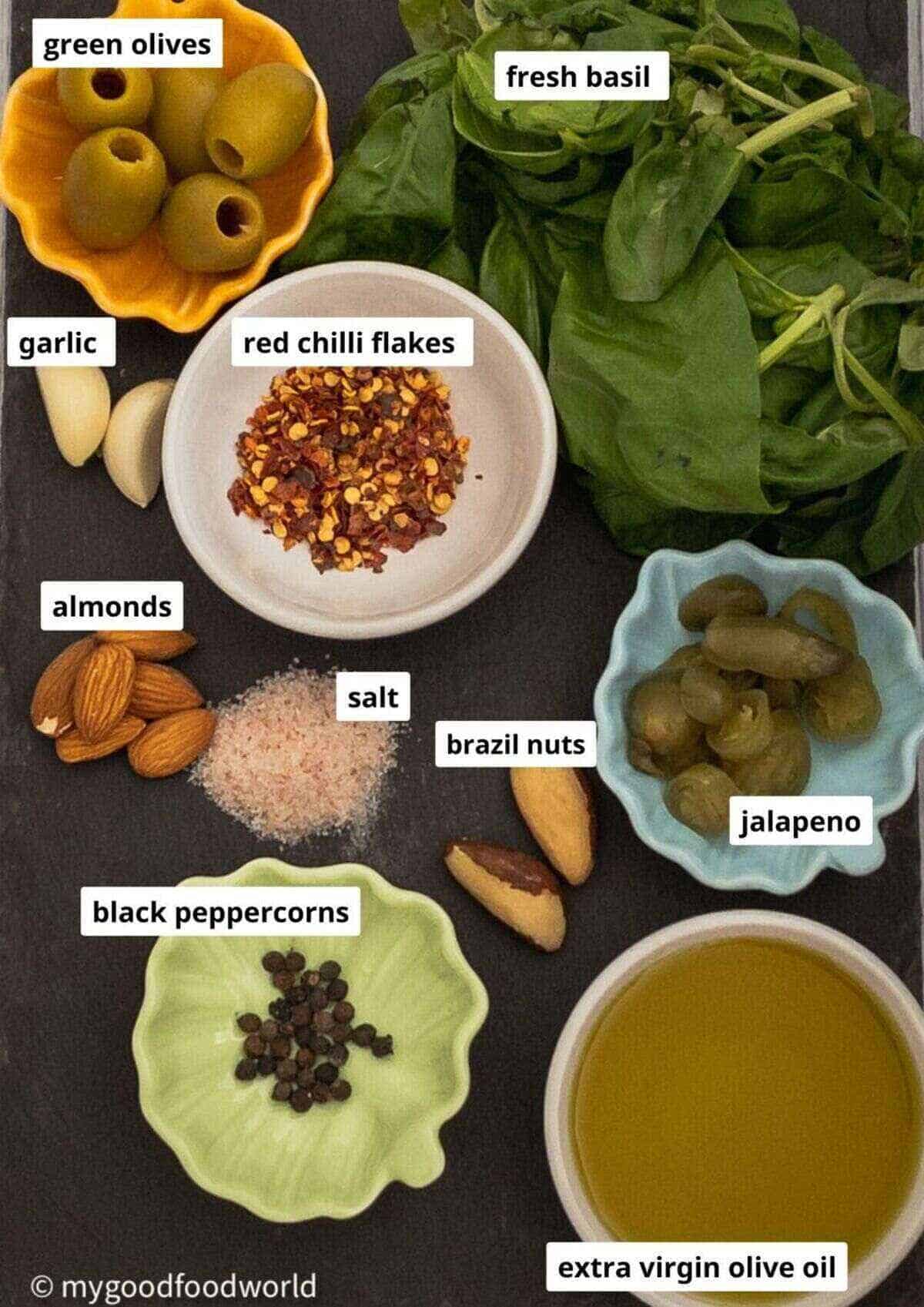
Basil: I use Italian large leaf fresh basil leaves and stems. The stems have so much flavor, so please don't discard them!
Oil: Extra virgin olive oil, please. It gives this basil pesto its rich, smooth texture and that unmistakable Italian aroma.
Green olives: Since this recipe is made without cheese or lemon juice, green olives add a tangy, umami depth. They balance the flavors beautifully.
Nuts: I use both almonds and Brazil nuts in this recipe. See the section below for ideas on what other nuts or seeds you can use instead.
Spice: I use red chili flakes, black peppercorns, and jalapeño for a balance of heat. If you're not a fan of too much spice, feel free to skip or reduce the quantities. I use jalapeño slices from a jar, but fresh jalapeño works just as well.
Garlic: I use it in moderation, but you can adjust the quantity to your taste.
If you have any questions regarding these ingredients, feel free to ask in the comments section below and I will try my best to answer them for you.
Instructions
Here I'll show you how to make my basil pesto recipe, step by step. I make it in a food processor, but you can use a mortar and pestle if you have the time and patience.
Step 1: Gather all the ingredients
Measure all the ingredients before you start.
Roughly chop the nuts, olives, and jalapeño (if using a fresh one). Separate the basil leaves from their stems and roughly chop the stems only.
Tip: Chopping the nuts helps them grind more easily.
Step 2: Make the pesto
Place the chopped nuts, garlic, and black peppercorns in the food processor jar. Grind until they are finely powdered.
Add the olives, jalapeños, and salt, and grind to a smooth paste.
Tip: If needed, add a little olive oil to help the paste come together smoothly.
Next, add the basil stems (not the leaves yet) and olive oil. Grind until smooth. Then add the basil leaves and chili flakes. Pulse in short bursts until everything is well combined.
The goal is not to grind the basil and chili flakes fully. The little flecks of green and red make your pesto look so fresh and vibrant.
And that's it! You've just made yourself a delicious homemade basil pesto sauce with fresh basil.
Tips for the best basil pesto
Even the simplest basil pesto recipe can go wrong if a few key details are missed. Here's how to get it right every time.
Texture matters: I like my pesto smooth, yet still have visible specks of green and red. To achieve that, I grind all the ingredients well first, then add the basil leaves and chili flakes and pulse in short, one-second bursts.
Why does my pesto taste bitter? If your pesto tastes bitter, a few things could be the cause. The basil may not be fresh, the olive oil may not be of good quality, or the nuts may have turned rancid.
Another reason could be the heat generated during grinding. When the food processor runs too long, the friction can warm up the oil and nuts, making them bitter. Use fresh, good-quality ingredients and a high-speed food processor to avoid this.
Follow the sequence: For the best texture and color, grind the nuts first, then the basil stems, and finally the basil leaves. Add olive oil gradually to bring it all together.
Why isn't my pesto bright green? Pesto can lose its vibrant color if it's ground for too long or if the basil leaves are chopped before blending. Always add the basil leaves toward the end and blend in short bursts to preserve their fresh green color.
Padma's top tip: Do not chop the basil leaves; add them whole.
Recipe Notes
The good thing about this pesto is that it's a forgiving condiment. You can add a bit of this and tweak a bit of that, and it will still taste wonderful.
Can you substitute spinach for basil in pesto recipe?
Yes, you can substitute spinach for basil in a pesto recipe. Spinach has a milder flavor, so the pesto will be less aromatic, but it still blends beautifully with nuts, olive oil, and spices. You can also mix spinach with a little basil to retain some classic pesto flavor.
Add cheese or nutritional yeast: For extra flavor, if you like, add a couple of teaspoons of grated vegan cheese or nutritional yeast when grinding.
Can you make pesto without pine nuts?
Yes, you can make pesto without pine nuts. Simply replace them with other nuts such as almonds, cashews, walnuts, or Brazil nuts. You can use one type of nut or mix a few for a richer, creamier flavor.
Yield: These measurements make enough pesto for about 150 grams of pasta plus 100 grams of vegetables of your choice.
How to use basil pesto in recipes
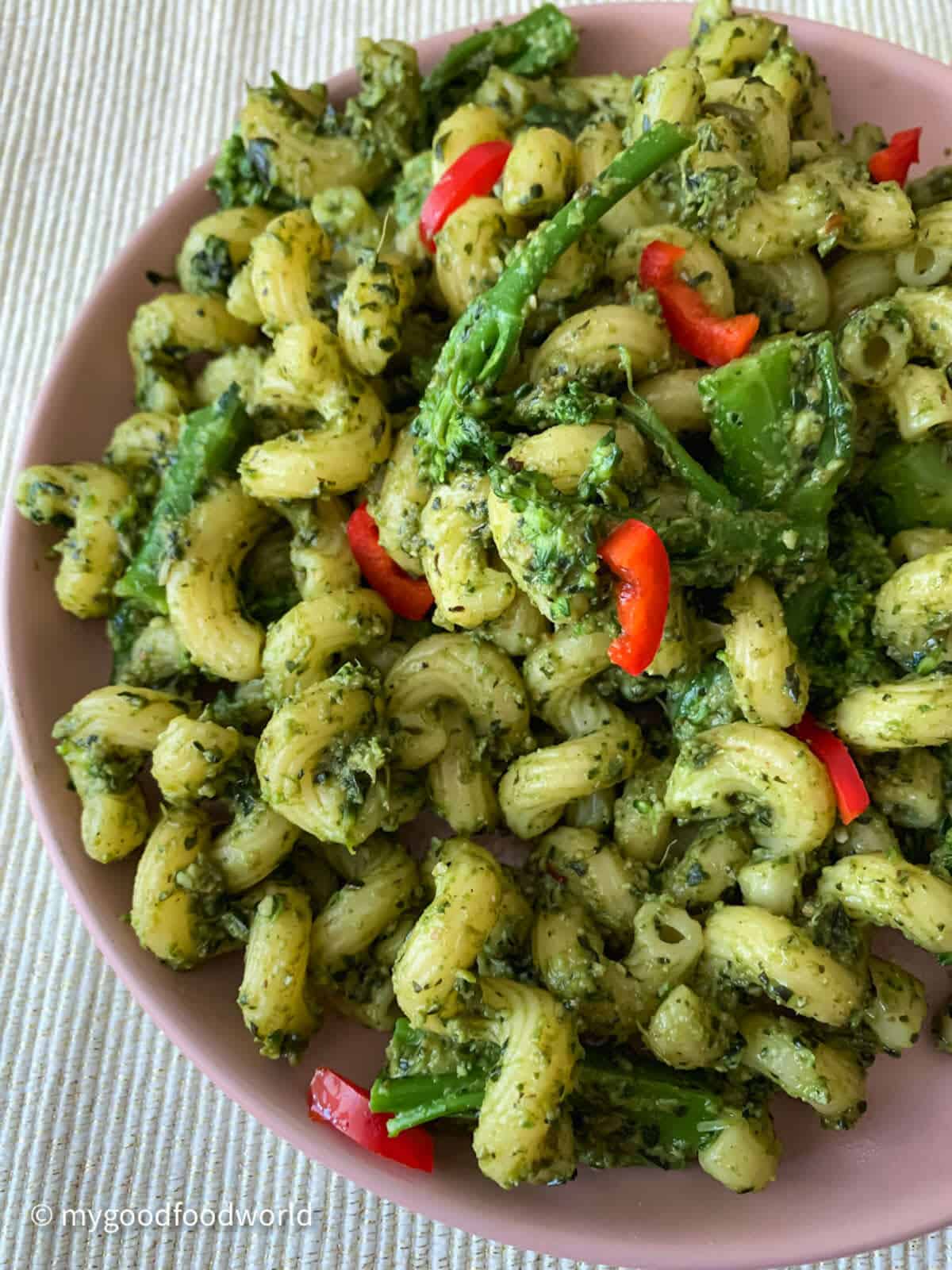
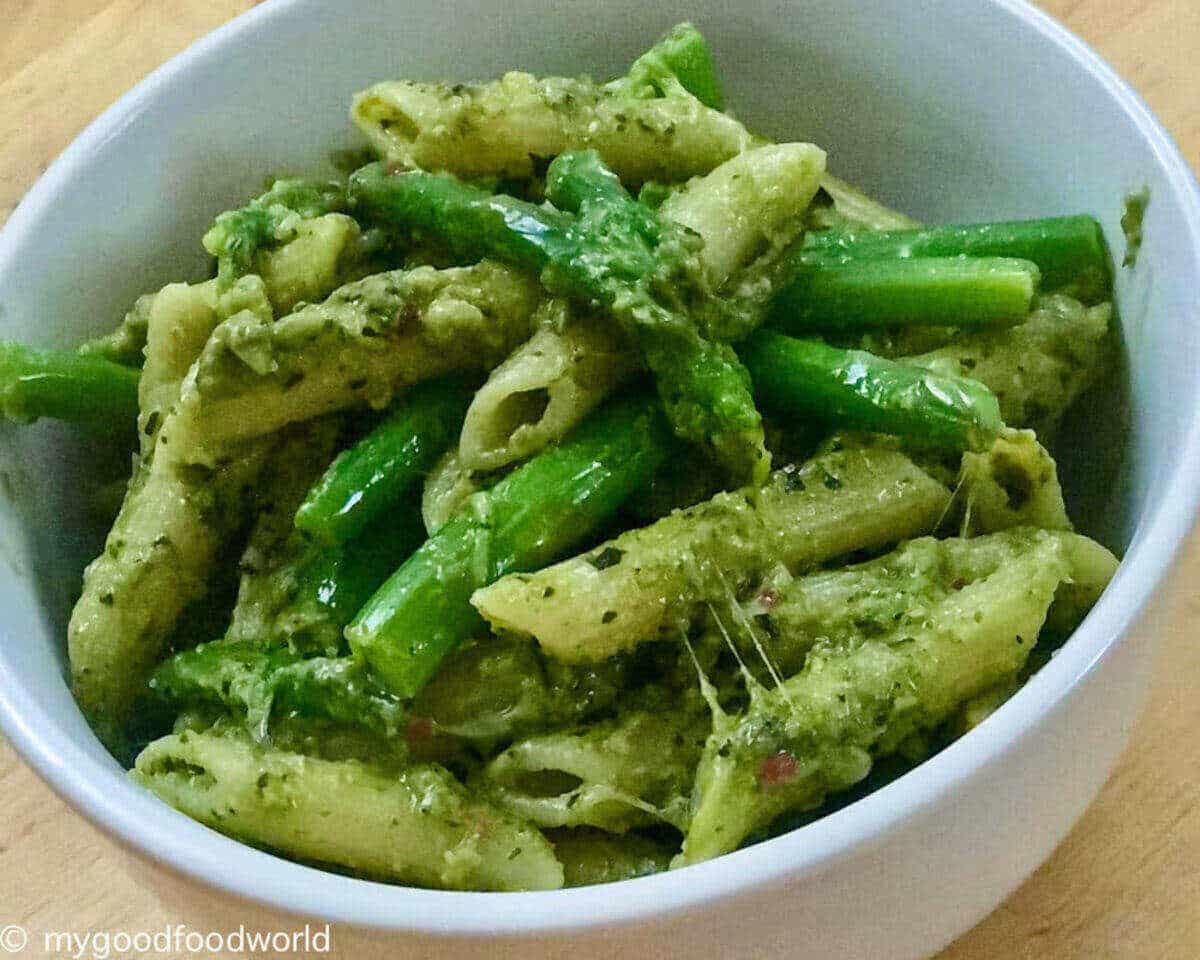
When most people think of pesto, they picture it as a pasta sauce, which, of course, is a great way to use it. But basil pesto adds wonderful flavor and richness to a variety of dishes.
- Spread it on your favorite sandwich or panini for an aromatic lunch. I absolutely love it on sourdough toast.
- Salad dressing: Thin it with a little olive oil or lemon juice to make a delicious basil pesto salad dressing. It works beautifully with my light and crunchy carrot cucumber salad.
- Pizza sauce: Use it on homemade pizza or turn leftover bullet naan into a quick, flavorful pizza.
- Filling: Mix it with paneer in vegetarian zucchini boats for a herby, flavorful twist.
- Topping for soup: Add a dollop to sweet potato turmeric soup for extra depth and richness.
How do you like using pesto in your recipes? Do let me know in the comments. I would love to hear from you!
Storage and Shelf Life
Proper storage is key to keeping your basil pesto fresh, flavorful, and vibrant.
In the fridge: Add a thin layer of oil to the pesto and store it in an airtight container. It will keep for up to two weeks. Always use a clean, dry spoon when scooping out pesto. Take only what you need and return the jar to the fridge immediately to keep it fresh.
Pro tip: After blending, stir in a little extra olive oil if you like. This boosts the flavor and helps maintain the bright green color.
Can I freeze pesto? Yes, for longer storage, pesto freezes beautifully. Spoon it into an ice cube tray or small freezer-safe containers. Once frozen, transfer the cubes to a freezer bag. Frozen pesto can last up to three months and can be added directly to pasta, soups, or sauces without thawing.
FAQs
Pesto is a classic Italian sauce made from fresh basil, garlic, pine nuts, Parmesan cheese, and olive oil. It is most commonly used as a pasta sauce but can also be enjoyed as a spread, dip, or topping to add rich flavor to many dishes.
Extra virgin olive oil is the best choice for pesto. It has a rich, fruity flavor and smooth texture that enhances the taste of the basil and other ingredients. Using high-quality extra virgin olive oil ensures your pesto is fresh, vibrant, and flavorful.
No, you do not need to blanch basil for pesto. Using fresh, raw basil preserves its vibrant green color, bright flavor, and natural aroma. Blanching is unnecessary and can cause the leaves to lose some of their delicate taste.
Sweet basil, also known as Genovese basil, is the best choice for pesto. It has a mild, aromatic flavor and tender leaves that blend beautifully into a creamy sauce. You want to experiment with different flavors, add other fresh herbs such as cilantro, mint, parsley, or carrot greens.
Made this recipe? I'd love to know what you think! Leave a ★★★★★ rating and a review below; it motivates me to create more great content for you. You can also connect with me on Facebook and Instagram. And don't forget to subscribe to my newsletter, where I share free recipes, tips, and more!
📖 Recipe

Basil Pesto Recipe (No Nutritional Yeast, Vegan)
Save This Recipe
Enter your email & I'll send it to your inbox.
By submitting this form, you consent to receive emails from MyGoodFoodWorld
Ingredients
Instructions
- Wash basil and keep aside to let the water drain. Peel the garlic and chop it into pieces. Chop the nuts and jalapeno, if using a fresh one.
- Add the chopped nuts, garlic, and black pepper to a food processor. Grind until finely powdered.1 clove (~4g) garlic, 6-7 almonds, 2 brazil nuts, ½ teaspoon (~25) black peppercorns
- Add the olives, jalapeños, and salt, and grind into a smooth paste.1 fresh jalapeno, 5-6 large green olives, ½ teaspoon salt
- Add the basil leaves and stems, chili flakes, and olive oil. Grind in short bursts.1 small bunch (~30g) fresh basil, ½ teaspoon red chili flakes, 4 tablespoons extra virgin olive oil
- And that's it! Your delicious pesto is ready.
Nutrition
The nutritional information is calculated using an online calculator and is based on available ingredients and preparation. It should not be considered a substitute for a professional nutritionists' advice. Changing the quantities and cooking technique will alter the nutritional calculations.
Notes
- Yield: Enough for 150g pasta + 100g vegetables.
- Nuts: Use Brazil nuts, almonds, pine nuts, cashews, or walnuts-any combination works.
- Basil: Use fresh leaves and stems for full flavor.
- Spices: Black pepper, jalapeños, and red pepper flakes add balanced heat. Reduce or skip jalapeños/pepper flakes if you prefer milder pesto.
- Top tip: Do not grind the basil and chili flakes completely smooth-you want to see little specks of green and red. This gives the pesto a lovely texture.
- Storage: Transfer to a clean glass jar with a tight-fitting lid. Keep it in the fridge, where it will stay fresh for up to two weeks.
Alternative quantities provided in the recipe card are for 1x only.
Our content aims to be informative and educational, but it should not replace professional medical advice. Since manufacturing processes can vary and cross-contamination is possible, it's essential to verify product labels and allergen information. Make sure all ingredients align with your specific allergies. As readers, you bear the responsibility for ensuring allergen safety when buying or consuming foods.


Dusty says
This recipe looks delicious! Saving to make this for later!
Devaki says
Absolutely love this pesto. It has become a family favourite 😍 Just to let you know Padma that it stayed good in the fridge for 3 weeks!
Padma Kumar says
Ah, thank you so much! Valuable feedback x
readandreviewit says
Ooh this looks absolutely amazing! My sister's actually recently turned vegetarian and is looking for new dishes to try so I'll have to send this her way, this looks like something she'd really enjoy. Thanks for sharing x
mygoodfoodworld says
Thank you so much! Wising your sister good luck on her vegetarian journey and hoping that she likes this one. xx