My paneer bhurji recipe, where I toss crumbled paneer (Indian cottage cheese) in a spicy, ghee-flavored tomato gravy, is as perfect for weeknight dinners as it is for packed lunches. This paneer bhurji has a lovely texture that does not become dry or tough, and is therefore also perfect as a filling for sandwiches and wraps.

Save This Recipe
Enter your email & I'll send it to your inbox.
By submitting this form, you consent to receive emails from MyGoodFoodWorld
Basically, this paneer bhurji recipe is the upgraded version of the filling that I make for my stuffed zucchini boats: it has more oomph because of the spices and the ghee.
Growing up, paneer was not something that featured in our house. I grew up on foods such as spinach dal and dosakaya pachadi: simple food that was rooted in our culture.
Fast forward a decade or so, and I met my husband, who I found out was a mad fan of paneer!
Initially, I struggled to enjoy the texture of paneer (it can become tough and rubbery if not cooked properly). But after many attempts, I finally nailed the correct way to handle paneer (more on that later), and then there was no looking back!
Soon, I started whipping out restaurant-style shahi paneer and better-than-dhaba palak paneer! Paneer bhurji is a firm favorite in our house, and we can quite happily have it for breakfast, lunch, or dinner!
What I love about this paneer bhurji recipe is that it is ready before the roti even finishes puffing up. It's the kind of recipe that shows up on a busy Tuesday and somehow still feels like a treat.

This post includes helpful tips, but if you're in a hurry, use the "Jump to Recipe" or section links to skip ahead.
Jump to:
What is paneer bhurji?
"Bhurji" means scrambled in Hindi. Think of this as Indian cottage cheese doing what scrambled eggs do, minus the eggs.
In this recipe, crumbled paneer is cooked down with tomatoes, ginger, and a few simple spices until it's soft, slightly juicy, and clings together in loose curds rather than firm cubes.
Paneer bhurji is traditionally made with onion, tomato, and ginger-garlic paste as the base; in my version, I skip the onion and garlic and make a base with ginger and tomatoes that are cooked down to a mush.
If you like to cook without onion and garlic, I have some really good ones in my allium-free recipes collection.
Why you'll love this recipe of paneer bhurji
If you've been searching for a paneer bhurji recipe without onion and garlic and mostly finding the same handful of tomato-onion versions, this one's for you.
📌 Ready in 15 minutes, start to finish
📌 Naturally gluten-free and vegetarian
📌 It makes a filling and protein-packed vegetarian breakfast, lunch, or dinner
📌 No onion, no garlic, and vrat/Navratri-friendly with one small swap (see note below)
📌 Only one pan, minimal cleanup
Ingredients and Substitutions
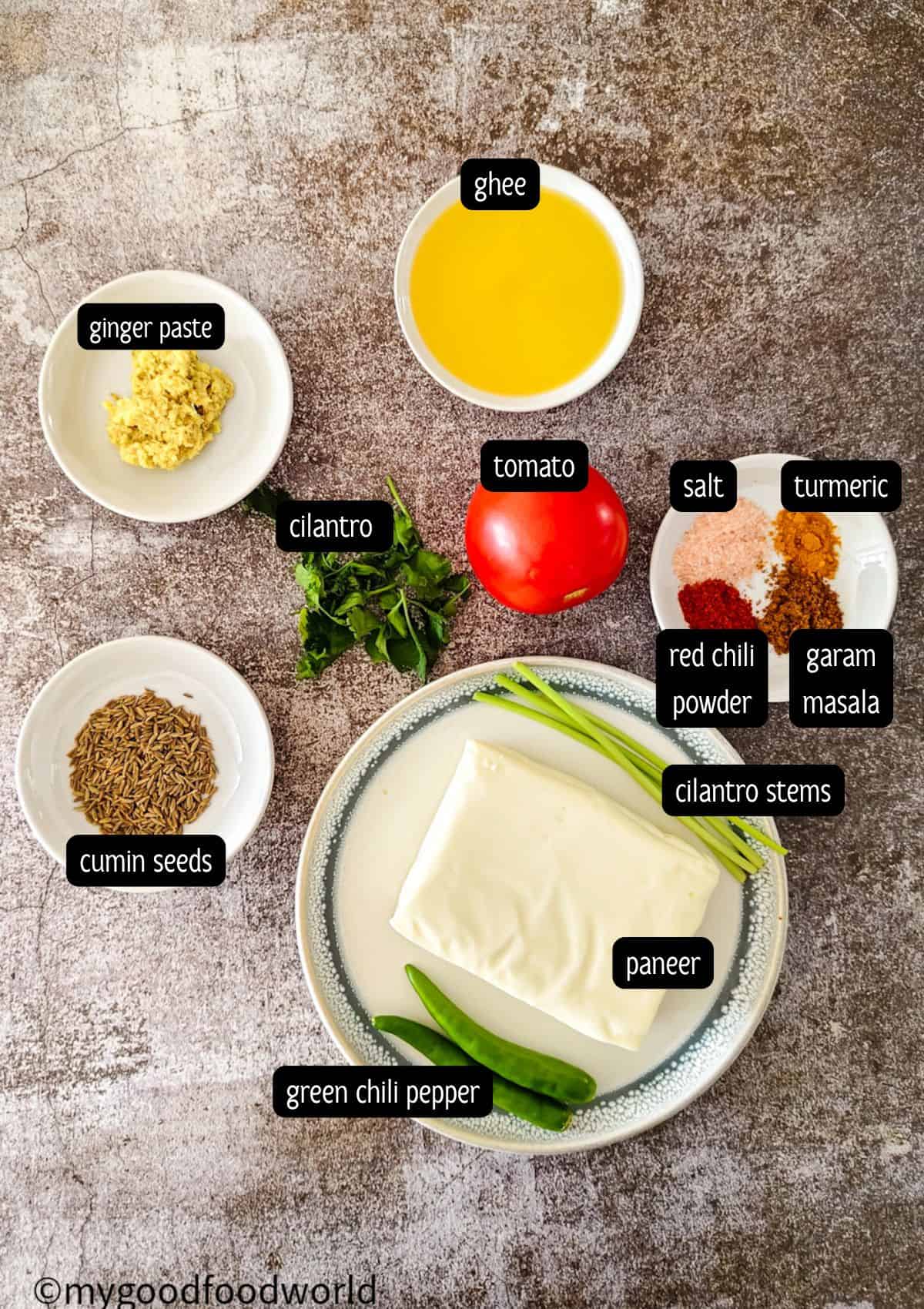
Paneer: It is a non-melting, soft Indian cheese. I use full-fat, fresh, store-bought paneer. You can use homemade paneer if you have it.
Ghee: gives the most authentic flavor here, but butter works, and if you are calorie-conscious, any neutral oil will do.
Ginger: Use fresh ginger for better flavor. I use homemade ginger paste.
Tomatoes: I use fresh tomatoes, seeds and all. Tomato paste or canned tomatoes will also work (see notes below for quantities).
Garam masala: Use your favorite blend, or if you have some curry powder, use it.
Cilantro (coriander): I use the leaves (for garnish) and the stems (in the base sauce). The stems are truly the game-changer, so don't skip them.
If you have any questions regarding these ingredients, feel free to ask in the comments section below and I will try my best to answer them for you.
Instructions
Here I'll show you how to make my easy allium-free paneer bhurji recipe. There is also a detailed video at the end of the recipe card below.
Step 1: Prep the ingredients.
Crumble it with your fingers or a fork into small, uneven pieces. You want texture, not a paste.
You can grate it if you prefer, but grated paneer works best with the gravy-style version (recipe in the variations section).
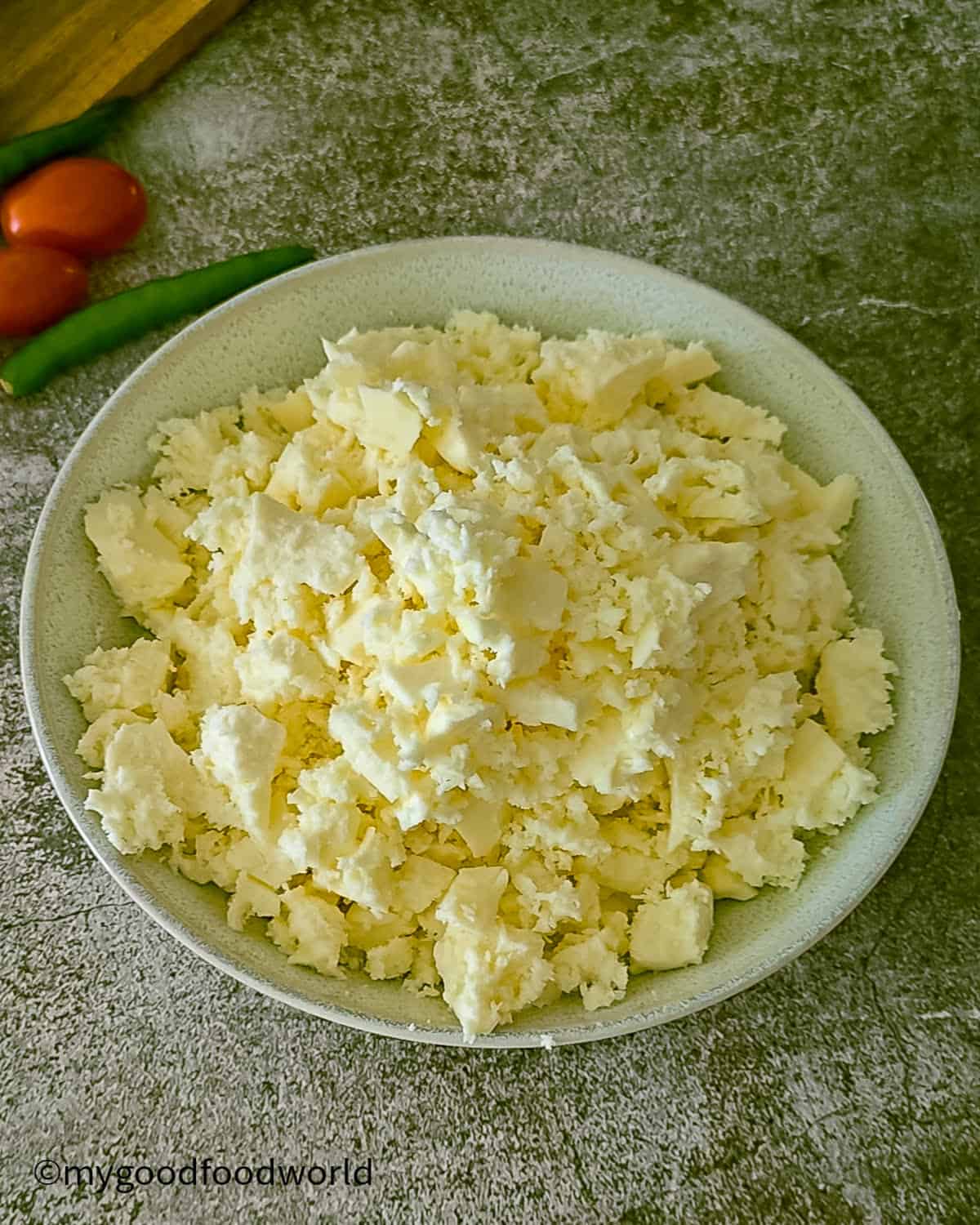
Padma's top tip: For the best texture, make sure the paneer is at room temperature. Take it out of the refrigerator ahead of time. If that is not possible, soak it in warm water for 10 to 15 minutes before using.
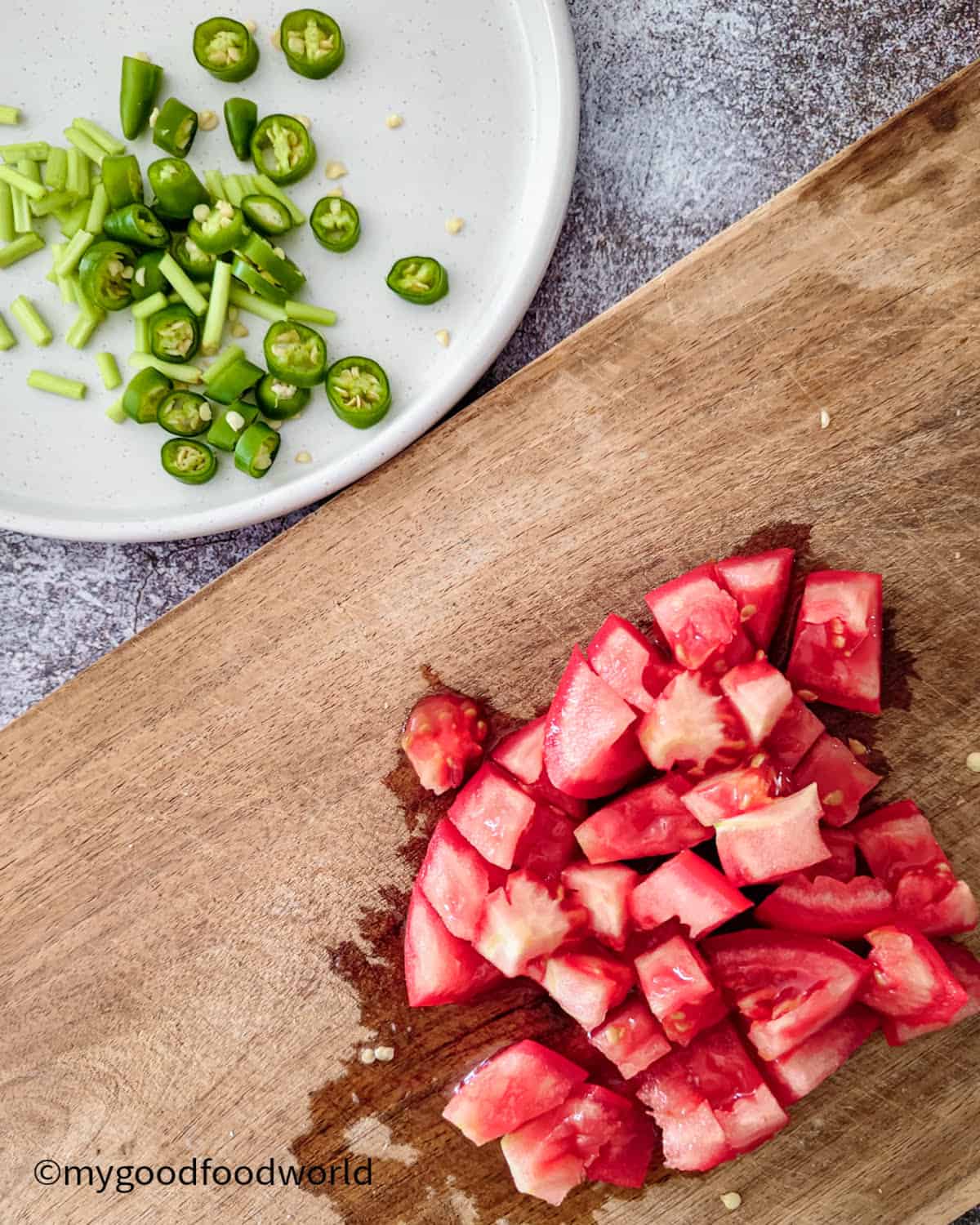
Dice the tomatoes. Chop the chili peppers and cilantro stems.
Step 2: Bloom the cumin.
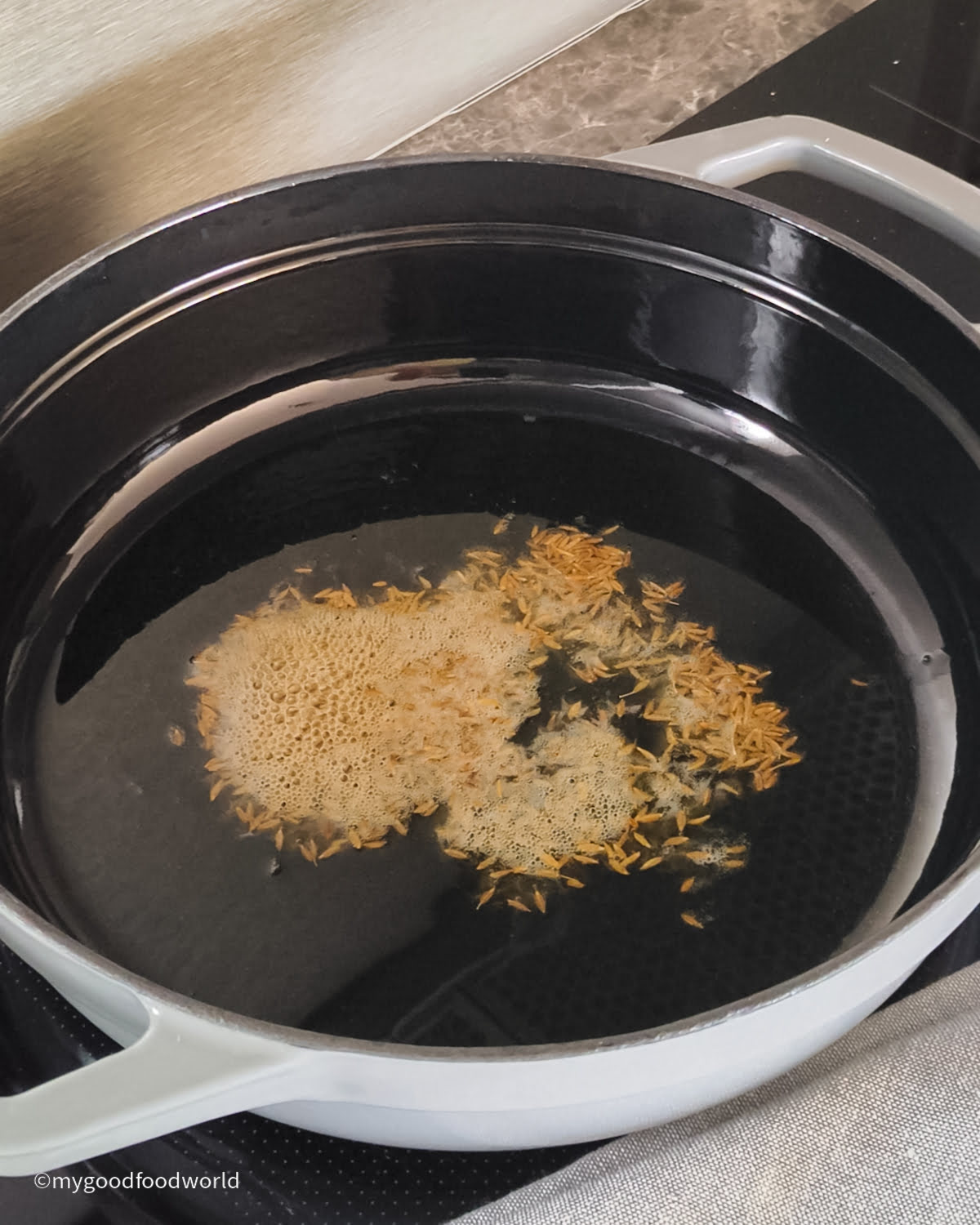
Heat ghee in a wide pan over medium heat. Add cumin seeds and let them sizzle for a few seconds until fragrant.
Step 3: Build the base sauce.
Add the ginger paste, chopped green chilies, and cilantro stems. Sauté for a minute. Add the spice powders and the salt. Sauté for a few seconds.
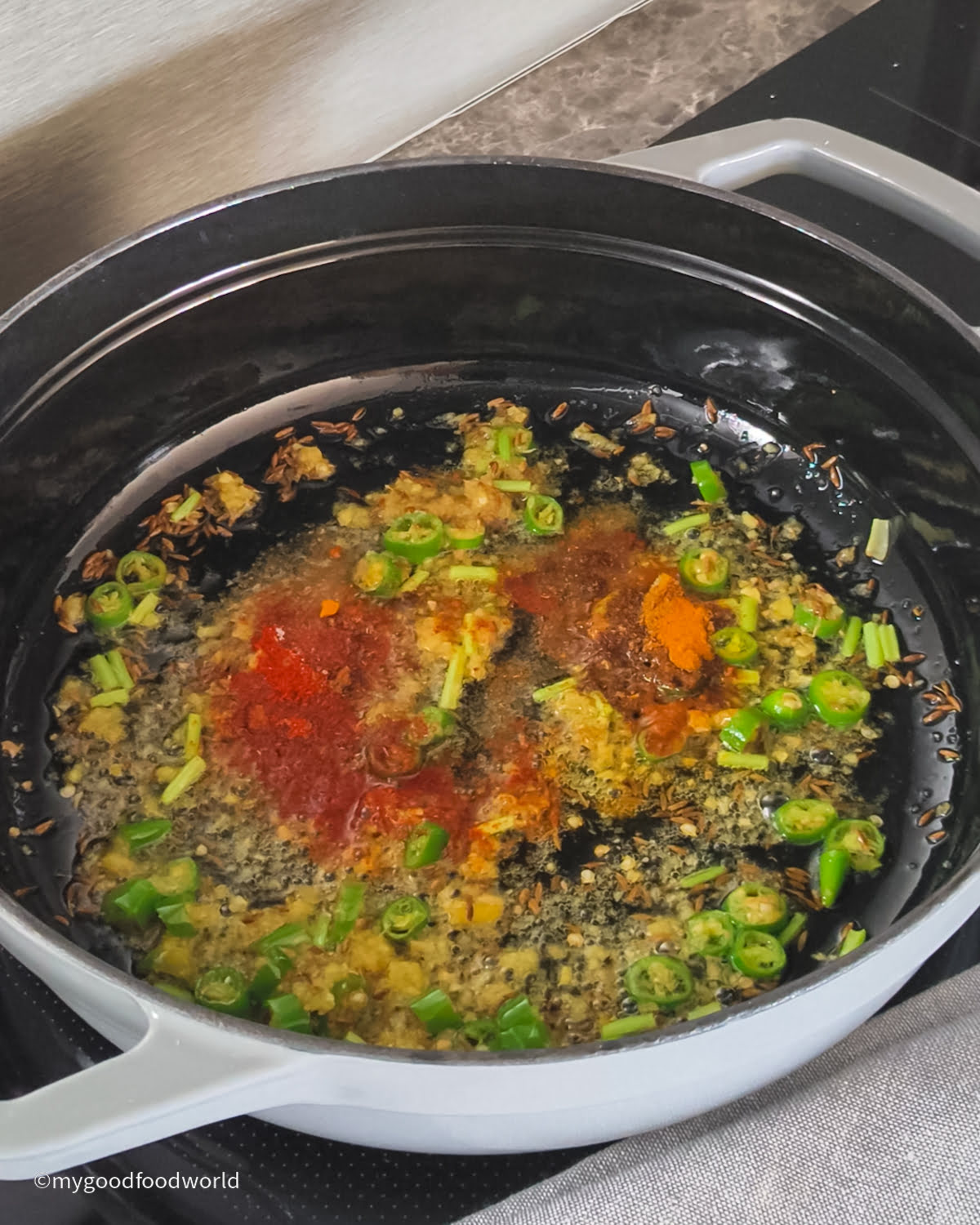
Add the tomatoes. Cover and cook, stirring occasionally, until the tomatoes cook down to a mushy mixture.
Tip: This step is important, so don't rush it. On medium heat, this step will take about 5 to 6 minutes. If required, use the back of the spoon to help crush the tomatoes.
Step 4: Add the paneer and the finishing touches.
Gently fold in the crumbled paneer. Use the edge of the spoon to break down some of the larger chunks. Mix well until the paneer and the sauce are combined. Cover and cook for a minute, or until the paneer is evenly heated through.
Garnish with finely chopped coriander leaves.
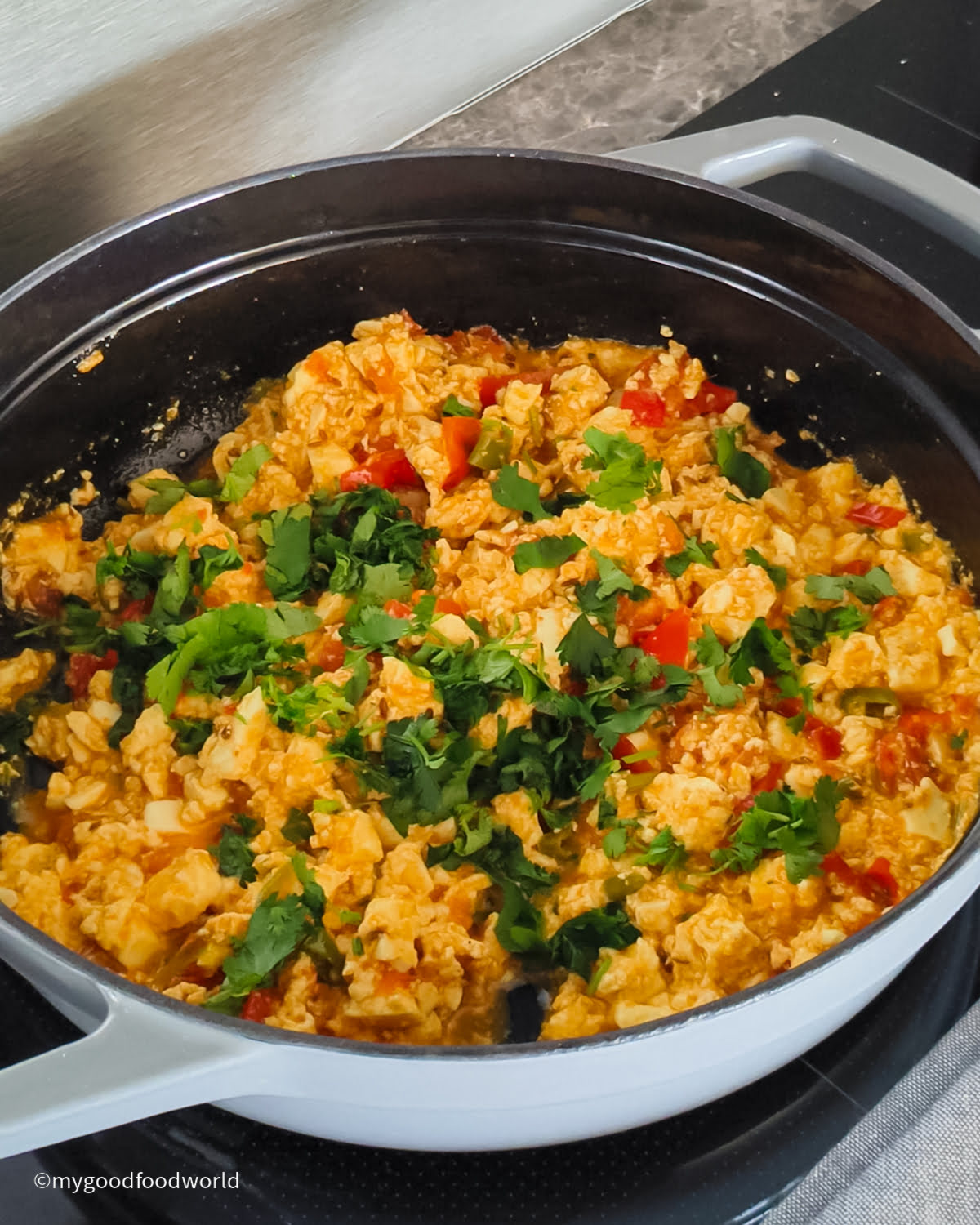
Top tip: Paneer turns rubbery fast, so pull it off the heat as soon as it's warmed through rather than letting it sit and cook longer.
Recipe Notes
Servings: The quantities used in this recipe are enough for 4 people as a main. And if you serve it alongside dishes such as butter rice, rajma curry, and roti or naan, this will serve 5 to 6 people.
Tomatoes: I use fresh tomatoes for this recipe. Tomato paste or canned tomatoes will also work. If using tomato paste, add 1 teaspoon. If using canned tomatoes, use 2 tablespoons.
Base sauce: Remember to allow the tomatoes to cook until they are soft and mushy, and you see the ghee separate from the sides. Properly cooked tomato masala adds a deep umami flavor to the dish.
Consistency: I like my bhurji to be thick and juicy enough for wraps and sandwiches. If you like yours with a bit more gravy, add ¼ cup of water.
Adjusting spice levels: Adjust the spices to suit your taste. If you like yours spicy, increase the quantity of red chili powder and garam masala.
Paneer: Remember not to overcook the paneer. Overcooked paneer can be rubbery and chewy. And make sure the paneer is soft and fresh.
Navratri/Vrat: This recipe is already onion- and garlic-free, but if you're making it for a strict fast, swap the regular salt for sendha namak (rock salt) and check that your garam masala powder doesn't contain any restricted spices for your tradition.
Last-mile freshness: This recipe is perfect for meal prep. Make the tomato gravy/sauce ahead of time and store it in the fridge for up to 1 week. When ready to make paneer bhurji, bring the sauce to a gentle simmer, add the scrambled paneer, toss, and your bhurji is ready!
Variations
Jain paneer bhurji: If you are on a strict Jain diet, skip the fresh ginger paste and use ½ teaspoon of ginger powder instead.
Methi paneer bhurji: Add a generous pinch of kasuri methi (dried fenugreek leaves), as I do in this aloo gobhi, when you add the paneer. Before adding it to the dish, crush the kasuri methi between your palms. This releases its flavor better.
Or, add a handful of fresh fenugreek leaves along with the tomatoes in step 3 for a slightly bitter, deeply aromatic version.
Gravy-style paneer bhurji: For a restaurant-style version, start by grating the paneer. Blend ¼ cup soaked cashews with ¼ cup water into a smooth paste and stir it in after step 3, along with an extra ¼ cup water, before adding the paneer. Simmer 2-3 minutes to let the gravy thicken slightly. Serve this gravy paneer bhurji with fresh phulka.
Paneer bhurji with vegetables: To bulk it up, add ½ cup of chopped spinach, green peas, or diced bell pepper (capsicum). Adding vegetables is a nice way to stretch the dish and add color. You can enjoy paneer bhurji with capsicum with parathas.
Make creamy bhurji: Add 2 tablespoons of fresh light (single) cream for a richer, silkier texture.
Storage and Reheating
In the fridge: Allow any leftover bhurji to cool completely and then store it in an airtight container for up to 2 days.
Reheating: This paneer bhurji tastes best when served warm. Reheat it in a pan on medium heat until the ghee has melted and the paneer is warmed through. In the microwave, reheat it in short bursts to avoid drying it out. If your bhurji is looking dry, add a splash of water.
Freezing: Paneer bhurji does not freeze well. Freezing changes the texture of paneer. You can make the tomato sauce ahead of time and freeze it. When you want to have it, thaw and reheat the sauce and toss in the crumbled paneer.
Serving suggestions
If you are wondering what to serve with paneer bhurji, here are some traditional and some modern ways of serving it.
The traditional way: Serve paneer bhurji warm with roti, paratha, or naan (you can make a no-garlic version of my bullet naan), some cucumber raita and quick pickled carrots on the side.
Lunch box way: Wrap this bhurji in Indian tortillas, in coconut milk crepes, or in sandwiches. It's the perfect lunch box treat!
My favorite way: Serve it on crisp-toasted sourdough bread and with some sliced cucumber on the side.

FAQs
Yes, paneer bhurji is healthy. It is a protein-packed vegetarian dish that is nutritious and filling.
No, paneer bhurji does not need ginger garlic paste. You can make it delicious with just ginger, tomatoes, and some basic spices.
Almost always overcooking. Paneer only needs a few minutes once it hits the pan. Cook it on medium heat and pull it off as soon as it's warmed through.
Yes, with the sendha namak swap noted above. It's a good protein option for vrat meals since it doesn't rely on grains.
Made this recipe? I'd love to know what you think! Leave a ★★★★★ rating and a review below; it motivates me to create more great content for you. You can also connect with me on Facebook and Instagram. And don't forget to subscribe to my newsletter, where I share free recipes, tips, and more!
📖 Recipe

Paneer Bhurji Recipe Without Onion and Garlic
Save This Recipe
Enter your email & I'll send it to your inbox.
By submitting this form, you consent to receive emails from MyGoodFoodWorld
Ingredients
Equipment
Instructions
- Crumble the paneer with your hands.
- Chop the chili peppers, tomatoes, and cilantro stems.
- Measure the rest of the ingredients.
- Heat the ghee in a pan over medium heat. Add the cumin seeds and let them sizzle for a few seconds. Stir in the chopped chili, cilantro stems, and ginger paste, and cook for 1 minute.2 tablespoons ghee, 1 teaspoon cumin seeds, 2 teaspoons ginger paste, 3 green chili peppers, 6 or 7 cilantro stems
- Add the tomatoes, spice powders, and salt. Mix well, then cover and cook until the tomatoes break down into a thick, mushy sauce.2 (~180g; 6½oz) tomatoes, ¼ teaspoon turmeric, 1 teaspoon red chili powder, ½ teaspoon garam masala, 1½ teaspoons salt
- Add the scrambled paneer and mix until well coated. Cover and cook just until the paneer is heated through.400g (~14¼oz) paneer
- Garnish with cilantro leaves.¼ cup (loosely packed) cilantro leaves
- Serve warm as a side dish or use it as a filling for wraps or sandwiches.
Nutrition
The nutritional information is calculated using an online calculator and is based on available ingredients and preparation. It should not be considered a substitute for a professional nutritionists' advice. Changing the quantities and cooking technique will alter the nutritional calculations.
Video
Notes
- Paneer: I use 2 blocks of paneer (about 200 g each). For the best texture, make sure the paneer is at room temperature. Take it out of the refrigerator ahead of time. If that is not possible, soak it in warm water for 10 to 15 minutes before using.
- Ghee gives this dish a wonderful flavor. If you do not have any on hand, use butter instead. Or, if you are watching your calories, use a neutral-flavored oil.
- Ginger paste: I use homemade ginger paste. Store-bought ginger paste or puree works just as well. If you prefer the fresh flavor of ginger, grate it finely or quickly crush it with a mortar and pestle.
- Tomatoes: I use fresh tomatoes for this recipe. Tomato paste or canned tomatoes will also work. If using tomato paste, add 1 teaspoon. If using canned tomatoes, use 2 tablespoons.
- Cilantro: I use both the stems and the leaves. The stems are full of flavor, and I cook them in the sauce. I use the leaves for garnish, right at the end.
Alternative quantities provided in the recipe card are for 1x only.
Our content aims to be informative and educational, but it should not replace professional medical advice. Since manufacturing processes can vary and cross-contamination is possible, it's essential to verify product labels and allergen information. Make sure all ingredients align with your specific allergies. As readers, you bear the responsibility for ensuring allergen safety when buying or consuming foods.



Padma Kumar says
I was looking for a no onion no garlic version and I am glad I have found it. Thank you!