Tamarind paste vs concentrate vs pulp: are they the same? Confused? This quick guide will give you all the information you need to understand the key differences and the substitution ratios, so you never ruin a recipe again!!
Save This Recipe
Enter your email & I'll send it to your inbox.
By submitting this form, you consent to receive emails from MyGoodFoodWorld
If you have been with me on this culinary journey long enough, you know how particular I am about using natural souring agents and why getting the sourness right is the soul of the dish.
So, when making Pad Thai or a curry, if you've faced the tamarind paste vs concentrate confusion, don't worry. You are not alone! This is a common question many cooks have.
The quick answer: Tamarind paste and concentrate are not always the same. Depending on the brand and country of origin, one can be three times stronger than the other (I will explain this in detail in a minute).
By the end of this post, you will clearly understand the difference between tamarind pulp, paste, and concentrate, the substitution ratios, and when to use each one.
Jump to:
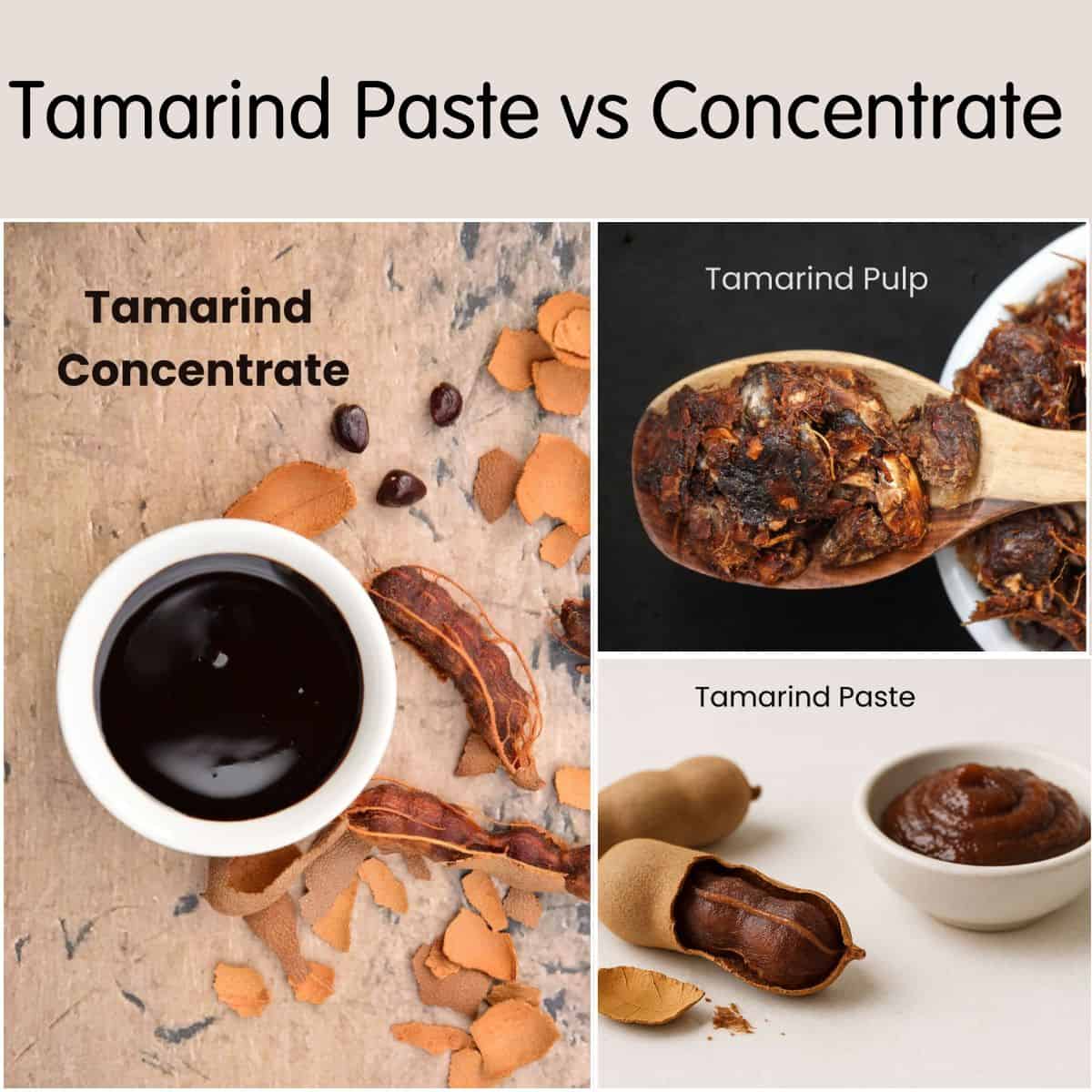
Defining the trio: Pulp vs Paste vs Concentrate
As I mentioned in my tamarind paste recipe post, these terms can be quite confusing. Hence, this quick guide.
Tamarind pulp: The "raw" block (with seeds and fiber). It needs soaking before use.
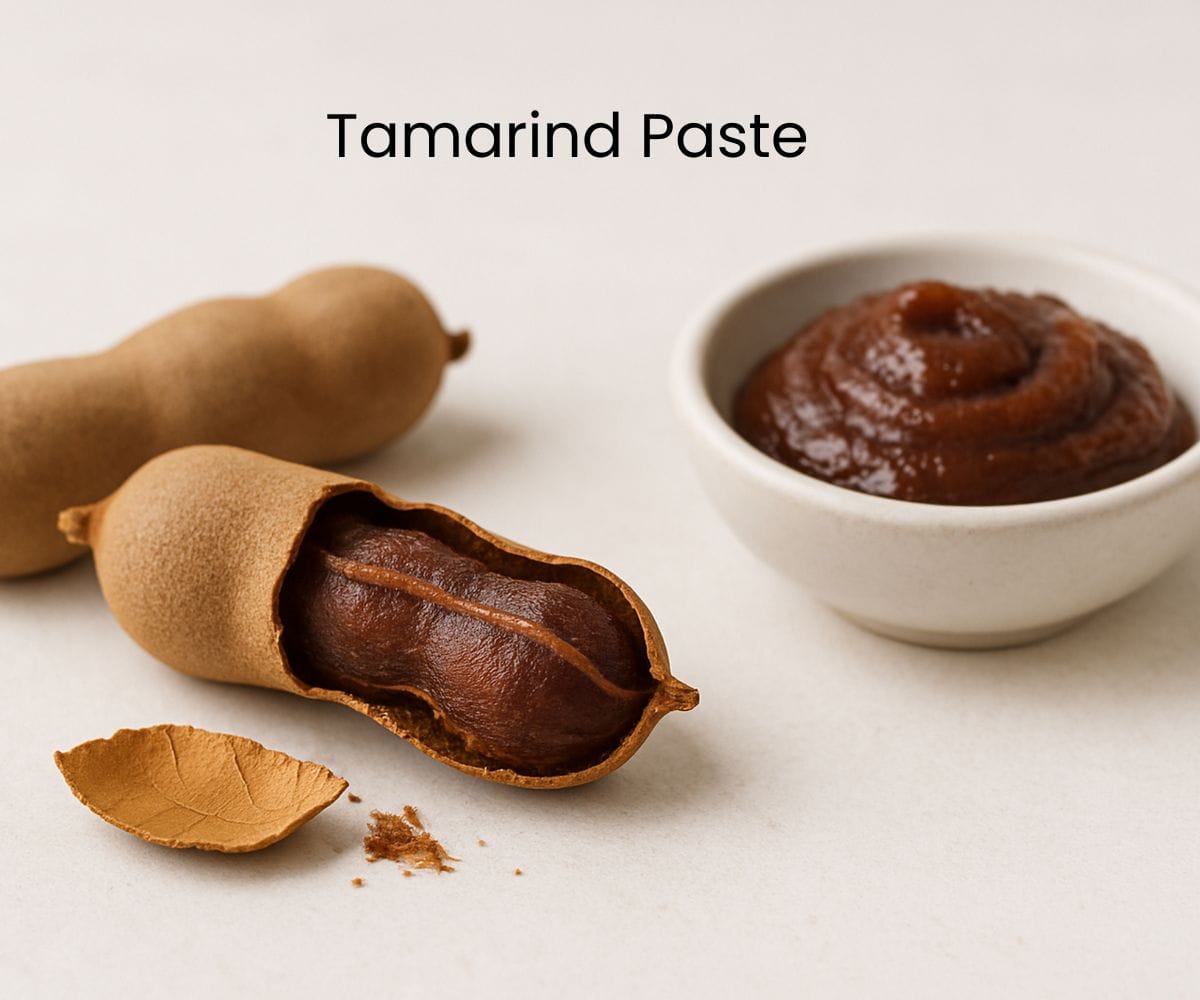
Tamarind Paste: Sometimes referred to as puree, this is the smooth, pourable extract. This is often what you make at home and is free of additives.
Tamarind Concentrate: A cooked-down, shelf-stable, intensely sour version.
Tamarind Concentrate vs Paste: A Comparison
| Tamarind Paste | Tamarind Concentrate | |
|---|---|---|
| Consistency | Ketchup-like | Molasses-like |
| Flavor Profile | Fresh, fruity, sweet-tart | Intense, deep, slightly metallic |
| Ingredients | Just tamarind and water | Often contains preservatives or salt |
How to tell: Indian vs Thai Tamarind Concentrate
Thai or Vietnamese style: Usually lighter in color, more liquid, and milder. Often used for Pad Thai.
Indian style: Dark, nearly black, with a very strong flavor.
When using Indian concentrate in a Thai recipe, remember to dilute it. Otherwise, your dish may look too dark and taste aggressively sour.

How to substitute (the magic ratios)
Depending on the brand, tamarind concentrate is roughly 3 times stronger than tamarind paste (puree).
The ratio of tamarind paste to concentrate is 3:1. That means you will need three times the amount of paste to match the sourness of the concentrate.
Tamarind paste substitute: If a recipe calls for 1 tablespoon of tamarind paste, mix 1 teaspoon of tamarind concentrate with 2 teaspoons of water.
Tamarind concentrate substitute: If a recipe calls for 1 tablespoon of concentrate, use 3 tablespoons of tamarind paste for a similar level of sourness.
Pro-tip: Brands vary! Always start with half the calculated amount of concentrate, taste your dish, and add more until the "zing" is just right.
Tamarind conversion cheat sheet:
The golden rule: 3 to 1 ratio
| If the recipe calls for: | Use this instead: |
| 1 tablespoon tamarind paste | 1 teaspoon concentrate + 2 teaspoons water |
| 1 tablespoon concentrate | 3 tablespoons tamarind paste |
Where to use which
How to use tamarind concentrate:
Use it in recipes that have a lot of body, such as stews (mukkala pulusu), curries (especially vindaloo), sambar, marinades, chutneys (like my caramelized onion chutney), or anytime you want a strong sour punch without adding extra liquid.
How to use tamarind paste:
Tamarind paste works best in lighter recipes such as rasam, soups, pani puri, my delicious tamarind sauce, Asian salad dressings, and even in this punchy dosakaya pachadi.
Padma's tip: While concentrate is a great shortcut, nothing beats the fresh, fruity flavor of homemade tamarind extract.
FAQs
Because of its high acidity and salt content, store-bought tamarind concentrate keeps well for a long time, often six months to a year in the refrigerator. That said, always give it a quick check before using it. If you notice any mold or an unpleasant metallic smell, it is best to discard it.
Yes, in a pinch, you can. The flavor profiles are different. Lime is brighter, while tamarind has a deeper, earthier sourness. However, both provide the acidity to your dish.
Don't worry! The dark, almost black color of Indian tamarind concentrate is completely normal. It comes from the cooking and reduction process. Thai versions, on the other hand, are processed a little differently, which is why they tend to stay a lighter reddish-brown color.
I'd love to know what you think of this article! Leave any questions or comments below. You can also connect with me on Facebook and Instagram. And don't forget to subscribe to my newsletter, where I share free recipes, tips, and more!


Comments
No Comments