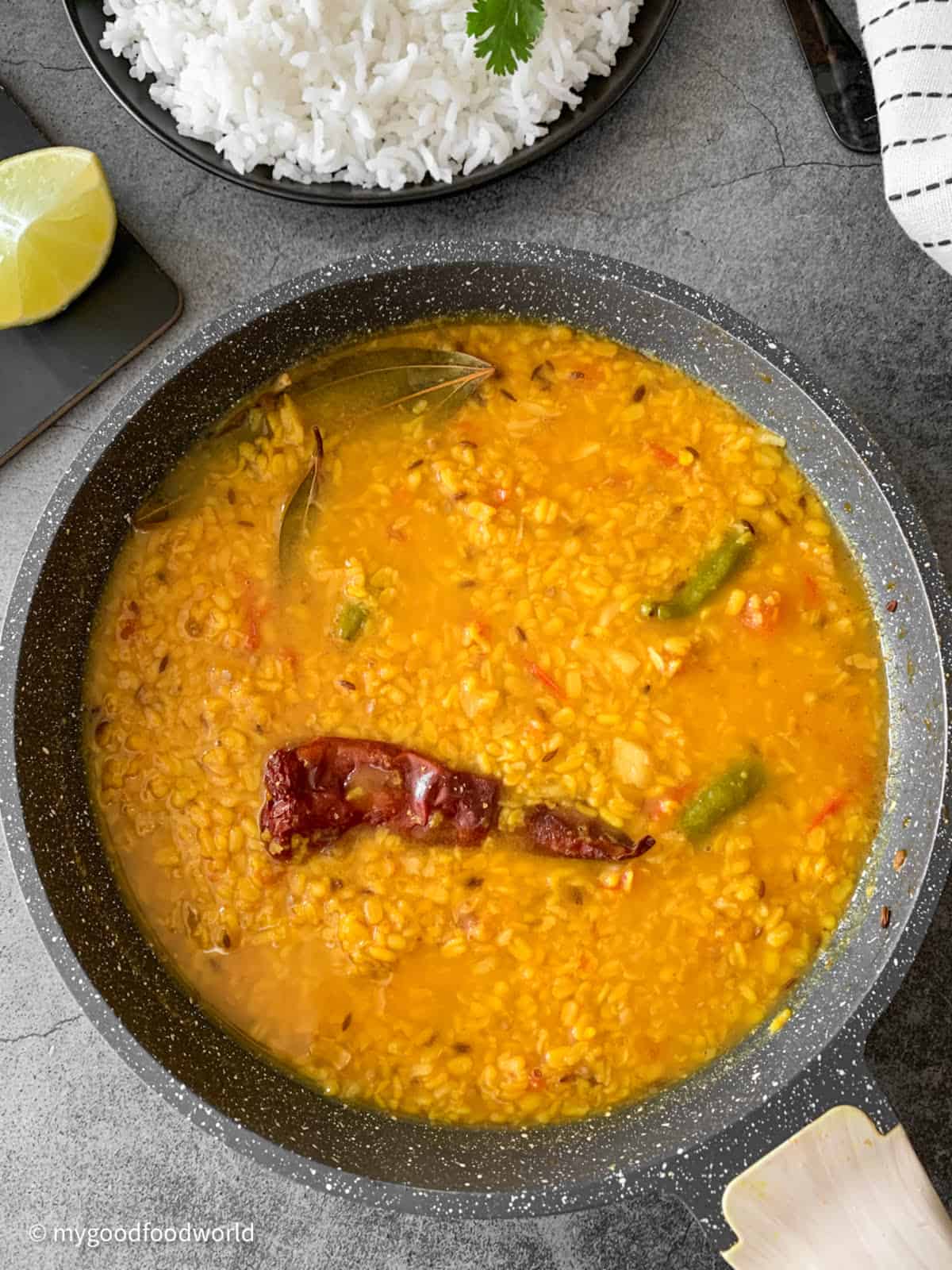
This bhaja muger dal is more than just a lentil dish. It's a Bengali comfort classic made without onion or garlic. The slow-roasted yellow lentils are simmered with simple spices until perfectly cooked, yet still hold their shape.
Save This Recipe
Enter your email & I'll send it to your inbox.
By submitting this form, you consent to receive emails from MyGoodFoodWorld
This Bengali Moong Dal Recipe was so delicious and easy to prepare. We ate it with rice, and it got so much of flavor! The bowl was empty afterward (and that certainly is a good sign)! Thank you for sharing!
Growing up, I had quite a few Bengali friends. And, being me, I often found myself spending more time with their moms, picking up tips and tricks for those authentic flavors.
So naturally, I have fond memories of enjoying this dish as part of a comforting Bengali meal of dal bhat: lentils with rice, bitter gourd bhaja, and aloo posto. That said, I love to amp things up with some buttered rice.
You might also see bhaja muger dal referred to as bhaja moong-er daal, Bengali sona muger dal, bhaja moong dal, or simply Bengali moong dal. I'll be using these names throughout this post.
In this post, I'll show you how to make it the authentic way, on the stovetop, as well as the "seal-it-and-forget-it" method in the Instant Pot & pressure cooker. Whichever route you choose, this recipe comes together in under 30 minutes.
Plus, I've included my 'last mile freshness' meal prep shortcut. This technique keeps the flavor vibrant even if you're cooking on a busy weeknight.
What is moong dal called in English? Moong dal is known as yellow lentils. They are the split and hulled version of mung beans, as I explained in my mung beans vs lentils post.
This post includes helpful tips, but if you're in a hurry, use the "Jump to Recipe" or section links to skip ahead.
Bhaja moong dal is a Bengali dish made with roasted yellow lentils. "Bhaja" means roasted, and "moong dal" or "muger dal" refers to yellow split lentils.
The secret to its flavor: This dish is all about simple techniques and a handful of spices coming together to create something deeply comforting.
The magic lies in dry-roasting the raw mung dal. As I've mentioned in my kitchari recipe, this step transforms the lentils, bringing out a deeper color and that signature nutty aroma.
Roasting also reduces the starchiness of the lentils. This means the dal cooks up soft but not mushy, and the grains hold their shape beautifully.
How do you know the dal is roasted?
You don't need a timer here; your senses will tell you.
You'll notice a warm, nutty aroma
The lentils will deepen evenly in color
Once you see and smell these signs, your dal is ready for simmering.
Which moong dalshould you use? Use sona moong dal, a smaller, golden variety of yellow lentils traditionally used in this dish. If unavailable, regular mung dal works just as well.
Ingredients & Substitutions
Refer to the recipe card for quantities.
Moong dal: Split yellow lentils, also known as moog daal in Bengali.
Whole spices (Phoron): Cumin seeds, dried red chili, and bay leaves.
Ghee: This dal is traditionally made with ghee, which adds a rich, comforting flavor.
You can swap it with any good-quality neutral oil.
Ginger: I prefer using fresh ginger, crushed in a mortar and pestle.
Refer to the recipe card below for detailed instructions, exact quantities, and the step-by-step video.
This warming Bengali moong dal can be made on the stovetop, in the Instant Pot, or in a pressure cooker. You'll also find a helpful meal prep shortcut further down.
Step 1: Prep the ingredients
Dice the tomatoes.
Chop the green chilies into 2 or 3 pieces.
Crush, grate, or mince the fresh ginger.
Stovetop bhaja muger dal
Step 2: Roast the moong daal
Place the lentils in a pan over medium heat. Dry roast, stirring often, until evenly golden.
As they roast, you'll notice a warm, nutty aroma. That's your cue, they're ready.
Transfer to a bowl. Rinse, drain, and set aside.
Step 3: Cook the dal
In the same pan over medium-high heat, add the roasted dal and water. Stir in turmeric and green chilies.
Bring to a boil and cook until the lentils are soft but still hold their shape.
Partially cover with a lid to speed things up. Do not fully cover, or the water may boil over.
Padma's pro tip: The lentils are ready when they split slightly along the sides. Give them a few more minutes to turn soft and creamy.
Step 4: Make the tadka
While the dal cooks, heat ghee in a small skillet over medium heat.
Add cumin seeds and bay leaf. Let them sizzle until fragrant and slightly darker.
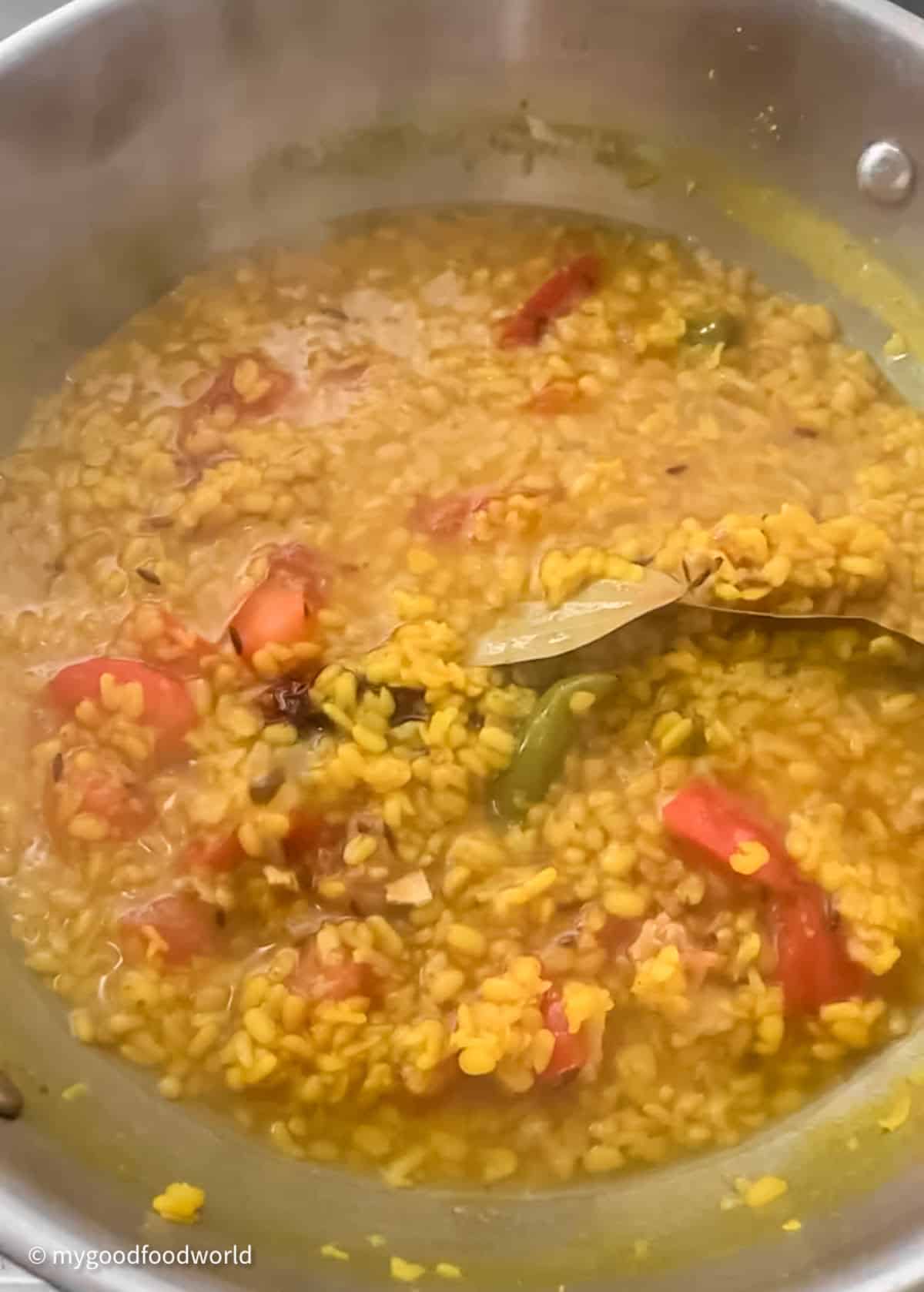
Add ginger, tomatoes, and salt. Cook until the tomatoes soften but still hold some texture.
Pour this tadka into the simmering dal. Mix well and cook for a few more minutes.
Adjust salt as needed. If the dal is too thick, add up to ½ cup water.
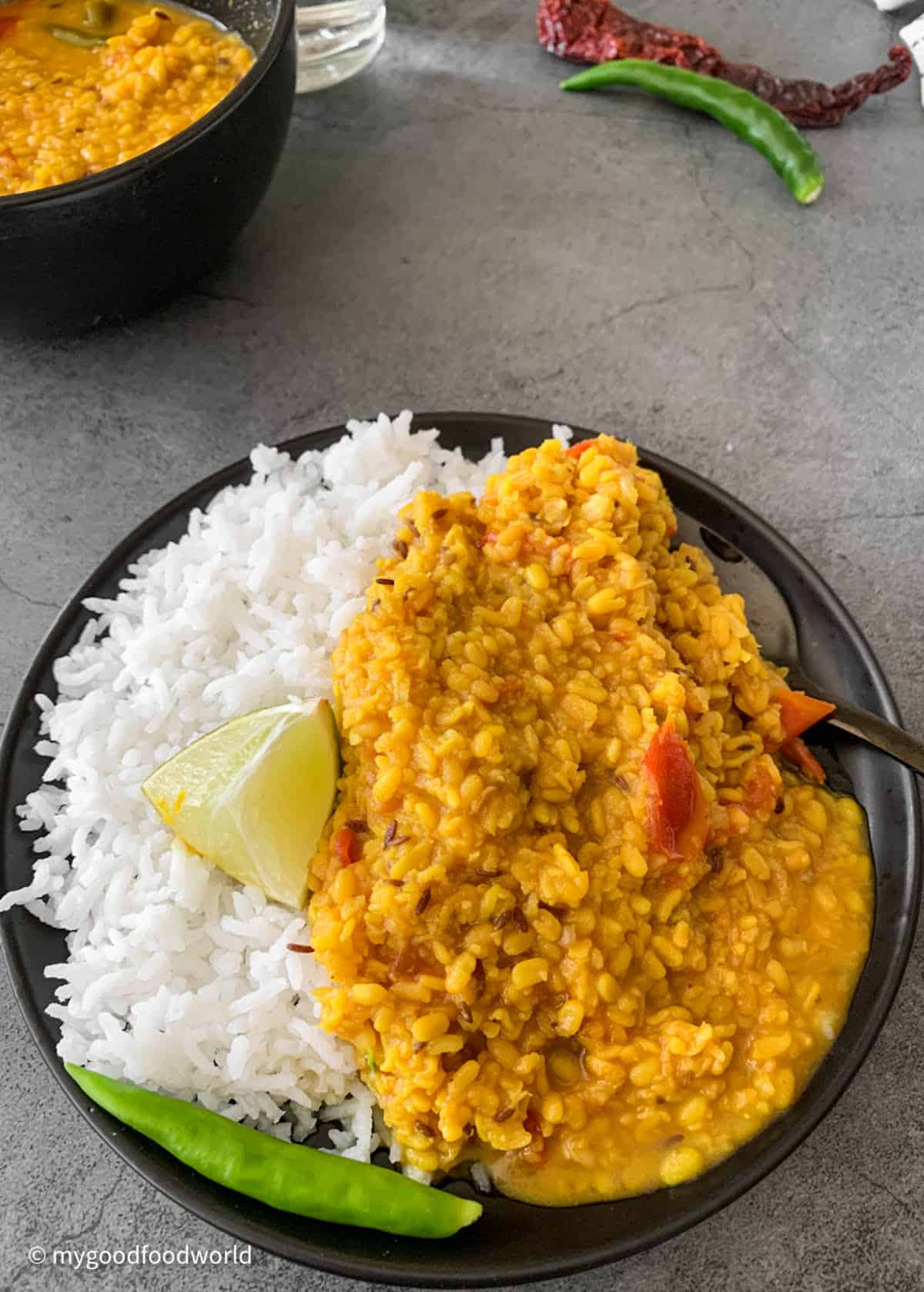
Finish with your choice of garnishes. Serve warm with rice or roti.
Instant Pot Method
Set the Instant Pot to sauté (high) and dry roast the dal until aromatic and lightly golden.
Add water, turmeric, and green chilies. Cancel the sauté mode.
Close the lid and pressure cook on high for 1 minute. Manually release the pressure.
Prepare the tadka as above. Open the lid, add it to the dal, mix, and garnish.
Note: You can make the tadka first, then add everything and pressure cook. This "set-it-and-forget-it" method works well, but you lose the crunchiness of the fresh tadka.
Pressure Cooker Method
Follow the stovetop steps to roast and prep the dal.
Close the lid and cook for 1 whistle (about 3 to 4 minutes) on high heat. Manually release the pressure.
Open the lid, add the prepared tadka, then cover again for a few minutes to let the flavors come together.
Tips to avoid common mistakes
Why is my bhaja muger dal mushy? This usually comes down to one of these:
The dal wasn't roasted enough. Dry roasting helps the lentils cook through while still holding their shape.
It's overcooked in the Instant Pot or pressure cooker. Cook for just a couple of minutes and release the pressure manually to avoid mushiness.
Why does my dal smell burnt? If the lentils are roasted too long and turn dark brown, they've burned. Unfortunately, there's no fixing this. Burnt lentils will give the dal an unpleasant, smoky taste, so it's best to start fresh.
Why is my dal boiling over? This happens when the pot is fully covered while cooking. Lentils release starch as they cook, which creates foam that rises quickly and spills over.
The fix: Keep the pot uncovered or partially covered with the lid slightly tilted. This allows steam to escape and prevents a messy cleanup.
Variations
There are plenty of ways to switch things up with this Bengali moong dal. Here are a few easy ideas:
Add seasonal vegetables: In winter, add cauliflower, carrots, and fresh peas to make shobji diye bhaja moong dal. In summer, try diced bottle gourd for a comforting lau diye bhaja muger dal.
Chop the vegetables into small, even pieces. The vegetables should also be cooked well, but not mushy. Therefore, add the carrots first, and then the cauliflower and the peas go in last.
Amp up the flavor: For a deeper, warming finish, add a pinch of garam masala and an extra drizzle of ghee at the end.
Make it creamy: Stir in freshly grated coconut toward the end of cooking. Mix well and turn off the heat for a subtle, creamy texture.
Try peas and panch phoron: If you enjoy green peas, make motorshuti diye bhaja moong dal with tender peas. For the tadka, use panch phoron to bring in that unmistakable Bengali flavor.
Add a hint of sweetness (traditional touch): Some Bengali versions of bhaja muger dal have a very subtle sweetness that balances the nutty, savory flavors. You can add a small pinch of sugar or a few raisins while the dal is simmering. It shouldn't taste sweet, just gently rounded and more complex.
Any doubts or questions? Feel free to ask via the comments below. I will try my best to answer them for you. - Padma
Storage, Reheating & Meal Prep
This is a great make-ahead dal that stores and reheats beautifully.
Storage
In the fridge: Store cooled dal in an airtight container for up to 3 days.
In the freezer: Freeze in portion-sized containers or bags for up to 2 months.
Reheating
Bhaja moong dal tastes best served warm. For best results, reheat on the stovetop. Add a splash of hot water to loosen the dal and help it heat evenly.
Warm on medium-low heat, stirring occasionally so the heat reaches through evenly and nothing sticks to the bottom.
Last Mile Freshness
You can prepare the base dal ahead of time by roasting and cooking it with turmeric and green chilies, much like you would when learning how to cook red lentils on stove.
Let it cool, then refrigerate or freeze. When ready to serve, reheat and finish with your choice of tadka and variations. Think of it as a blank canvas, ready to turn into a fresh, flavorful meal in minutes.
Serving Suggestions
Have it on its own: If you've tried my yellow lentil soup, you'll know exactly what I mean. This dal can easily be a comforting, meal-in-a-bowl.
A wholesome Bengali meal: Pair it with veg pulao, jhuri aloo bhaja, sweet and tangy tomato chutney, and a wedge of lime. Simple, balanced, and deeply satisfying.
My favorite pairing: Pour this dal generously over hot jeera rice and serve it with sweet and sour bitter melon curry, and a green chili on the side. It's a beautiful coming together of flavors from different parts of India.
If you are new to cooking with mung beans, I recommend starting with this mung bean curry. It uses whole green mung beans rather than split lentils, and the result is heartier and more textured.
For something in between, this mung bean soup is another allium-free option that comes together in under 30 minutes.
FAQ
Should moong dal be soaked before cooking?
No, moong dal does not need to be soaked before cooking. It cooks quickly and is one of the easiest lentils to prepare.
Is moong dal light or heavy?
Moong dal is considered a light lentil. They are the easiest of all lentils to digest and are often preferred for simple, nourishing meals.
What vegetables go best in Bengali style moong dal?
The best vegetables for Bengali moong dal (shobji diye) are cauliflower florets, carrots, and green peas. For the best texture, sauté them until 70% cooked before adding them to the simmering lentils to ensure they stay distinct and colorful.
Can I use oil instead of ghee?
Yes, you can replace ghee with any neutral cooking oil or vegan ghee. The flavor will be slightly different but still delicious.
Made this recipe? I'd love to know what you think! Leave a ★★★★★ rating and a review below; it motivates me to create more great content for you. You can also connect with me on Facebook and Instagram. And don't forget to subscribe to my newsletter, where I share free recipes, tips, and more!
Bhaja Muger Dal: Bengali-Style Roasted Moong Dal Recipe
5 from 39 votes
This bhaja muger dal recipe is a quick and comforting Bengali dish made with roasted moong dal and simple spices. This recipe is made without onion or garlic. Easy to make, this dal is light, nourishing, and full of that signature nutty flavor. Serve it with rice for an easy everyday meal, or pair it with my buttered rice for something extra cozy.Also see the video below.
Add the lentils to the pan on medium heat. Roast them till they are golden brown. Stir and keep an eye on them to ensure that they are evenly colored.
Tip the roasted lentils to a bowl. Wash , drain and keep aside.
Chop the chili peppers into 2-3 pieces, each. Dice the tomatoes.
Measure the rest of the ingredients.
Make the moong dal
Place the pan back on medium-high heat, add the lentils and water. Add the turmeric and chopped chili peppers. Stir and cook until the lentils are soft and still hold their shape. Cover with a lid, partially, to speed up the cooking. If you cover the pan fully with the lid, the water will boil over.
½ cup moong dal (yellow lentils), 3 and ½ cups water, ½ teaspoon turmeric, 2 green chili peppers
Temper the spices
While the lentils are cooking, place a skillet on medium heat. Add the ghee and whole spices. Fry till the cumin become darker in color and the bay leaves are aromatic.
1 teaspoon ghee, ½ teaspoon cumin seeds, 1 or 2 bay leaves, 1 dried red chili
Add the crushed ginger, chopped tomatoes and salt. Cook for a few minutes until the tomatoes soften, but don't turn mushy.You can tell that the lentils are cooked when they split on their sides. They need just a few more minutes to become soft and creamy.
1 tablespoon crushed or minced ginger, ¾ teaspoon salt, 1 medium sized (~80g) tomato
Add these spices to the lentils as they cook. Mix well. Cook for a few more minutes, letting the flavours blend and the lentils finish cooking.Check for salt and add more if required. If the dal is too thick, add ½ cup more water.
Finish off with garnishes, if using.
½ teaspoon ghee, ½ teaspoon bhuna jeera, 1 or 2 teaspoons chopped cilantro (coriander), ½ teaspoon grated ginger
The nutritional information is calculated using an online calculator and is based on available ingredients and preparation. It should not be considered a substitute for a professional nutritionists' advice. Changing the quantities and cooking technique will alter the nutritional calculations.
Video
Notes
No moong lentils? You can make this recipe with red lentils (masoor dal).
Can you skip roasting the dal? Yes, you can make this recipe without roasting the lentils. But I suggest roasting them as it brings out the flavor of the dish.
Onion and garlic: This recipe is traditionally made without onion and garlic. If you prefer, you can add some finely chopped onion and garlic when you temper the spices. Fry them for a couple of minutes after adding the whole spices. Then add the ginger and tomatoes.
Make it vegan: Use any neutral oil instead of ghee.
Scaling the recipe
Alternative quantities provided in the recipe card are for 1x only.
Allergens Disclaimer
Our content aims to be informative and educational, but it should not replace professional medical advice. Since manufacturing processes can vary and cross-contamination is possible, it's essential to verify product labels and allergen information. Make sure all ingredients align with your specific allergies. As readers, you bear the responsibility for ensuring allergen safety when buying or consuming foods.
Delicious! Finding great, no-onion recipes can be challenging. This is an easy winner, made with ingredients already in our pantry. Served with basmati rice, it made a wonderful weeknight meal! Thank you!
This looks amazing and is an easy to follow recipe. I love the obvious health benefits of the ingredients. I can't wait to try this Bengali moong dal recipe. I know my whole family will love it!
This Bengali Moong Dal Recipe was so delicious and easy to prepare. We ate it with rice, and it got so much of flavor! The bowl was empty afterward (and that certainly is a good sign)! Thank you for sharing!






Sharon says
Delicious! Finding great, no-onion recipes can be challenging. This is an easy winner, made with ingredients already in our pantry. Served with basmati rice, it made a wonderful weeknight meal! Thank you!
Padma Kumar says
Happy cooking Sharon, hope you enjoy the dal as much as we do!
Dina and Bruce says
So happy to have found this recipe. Had something like this years ago while traveling. Making this today!
Laura Levitan says
This looks amazing and is an easy to follow recipe. I love the obvious health benefits of the ingredients. I can't wait to try this Bengali moong dal recipe. I know my whole family will love it!
Andréa says
This Bengali Moong Dal Recipe was so delicious and easy to prepare. We ate it with rice, and it got so much of flavor! The bowl was empty afterward (and that certainly is a good sign)! Thank you for sharing!
Padma Kumar says
Yay! So happy to read this!
Shadi Hasanzadenemati says
Love how easy this recipe is. Can’t wait to try it this weekend. Thank you for the recipe!
Shelby says
This is an amazingly flavorful dish! I've never tried roasting the dal before and it made all the difference.
MM says
Made this using some leftover lentils I found in the pastry. The flavors were fabulous! Great recipe.
Sabine says
This Dahl was so good. I followed the recipe step by step, but just used butter instead of ghee. It worked out really well and it was delicious.
Padma Kumar says
So happy to read this Sabine. Thank you sharing your feedback.
Anjali says
This dal recipe brought me back to my childhood! It was comforting and flavorful - the perfect easy dinner with some brown rice on the side!
Padma Kumar says
Glad that it hit a chord with you!
Sheenia Denae | Lifestyle Blogger says
I don’t eat lentils much, but this recipe looks and sounds delicious.
Elisa says
Love this Simple Bengali Moong Dal Recipe, definitely will make it soon, never tried it before. Looks delicious and easy to make. Thanks for sharing 🙂