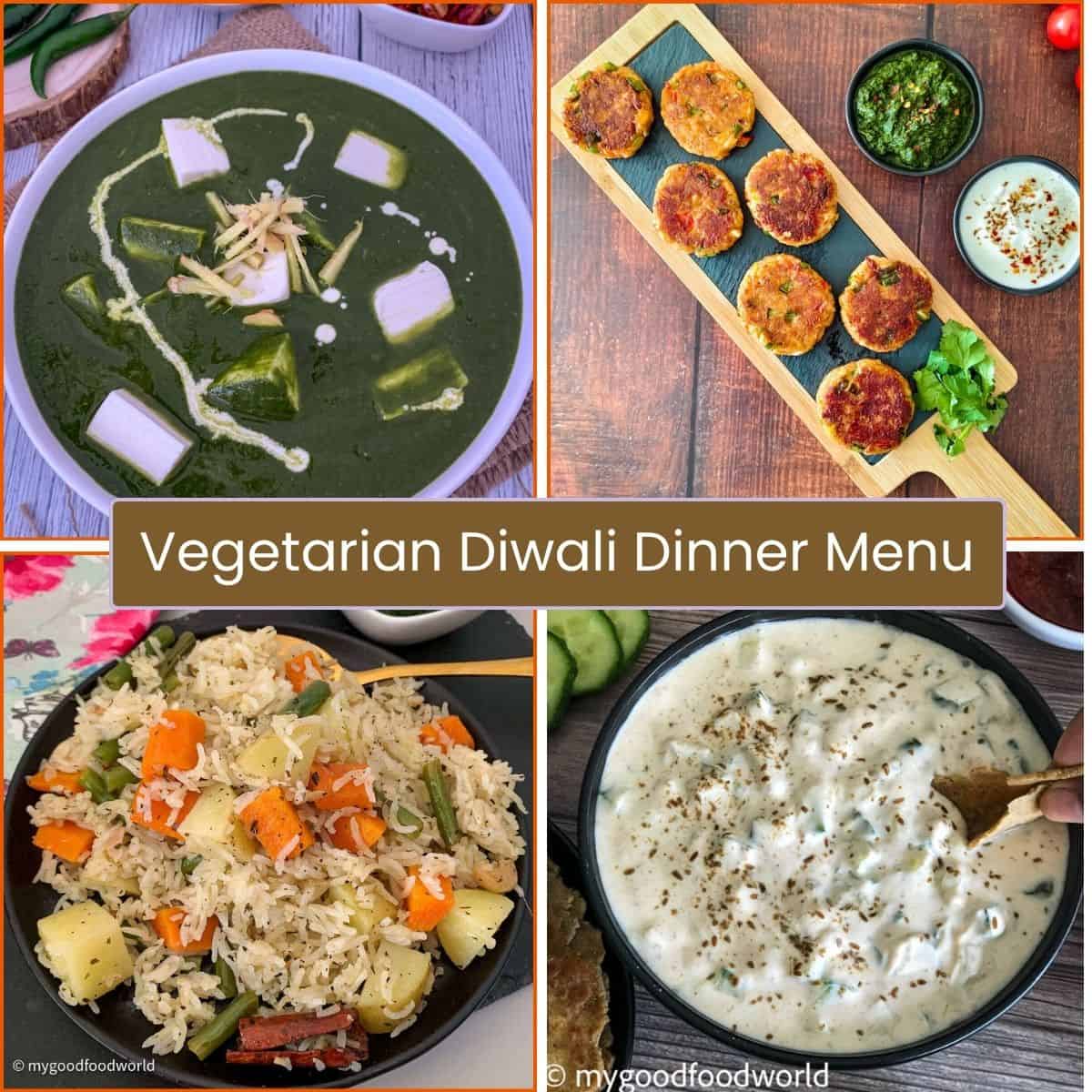
A Diwali dinner menu is a spread of vegetarian dishes, usually including a paneer main, dal, a vegetable dish, rice, bread, and a few cooling sides, served on or around Diwali night. This one gives you two menus (a classic version and one made without onion or garlic), plus a make-ahead plan, so you're not still stirring a curry when the first guest rings the bell.
Save This Recipe
Enter your email & I'll send it to your inbox.
By submitting this form, you consent to receive emails from MyGoodFoodWorld
Jump to:
How many dishes for a Diwali dinner?
Five to seven savory dishes, plus a sweet, is plenty. More than that, and you'll spend the evening in the kitchen (and nobody finishes seven curries anyway). Here's the formula I use:
- One starter: something crisp that guests can nibble on while everyone arrives.
- One paneer main: the dish that says "it's a celebration."
- One dal: the comfort dish. It also stretches the meal.
- One vegetable: dry or lightly gravy, so it doesn't compete with the paneer.
- Rice: a pulao makes it feel like a feast without extra effort.
- Bread: naan or roti, bought or homemade.
- Something cooling: raita, a crunchy onion salad, or a chutney or two.
- One sweet: a Diwali table feels incomplete without it. Make a pot of rice pudding, or buy good mithai (no shame).
Pick one dish for each slot, and you've got a balanced table. Skip a savory slot (no starter, say) if you're short on time. Nobody will notice. Skip the sweet, and they will.
what to cook for a VEGETARIAN Diwali dinner?
For a vegetarian Diwali dinner, cook one dish for each slot: a starter, a paneer main, a dal, a vegetable, rice, bread, a cooling side, and a sweet.
I've also included an allium-free menu, just in case you're hosting someone who prefers to avoid onion and garlic.
Here are both menus side by side.
| Course | Classic Menu | No Onion, No Garlic Menu |
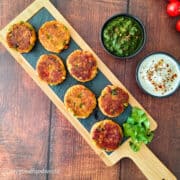
| Starter | Walnut paneer cutlet or Zucchini boats | Walnut paneer cutlet |
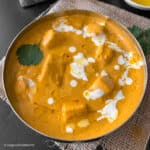
| Paneer Main | Palak paneer, dhaba style | Shahi paneer |
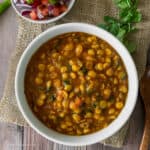
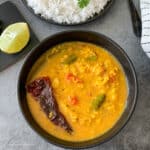
| Dal | Chana dal fry | Bhaja muger dal |
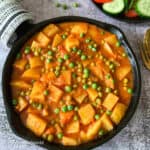
| Vegetable | Bhindi masala or Aloo gobi | Aloo matar |
| Rice | Vegetable pulao | Jeera rice |
| Bread | Bullet naan | Turmeric roti or Buckwheat naan |
| Cooling Side | Cucumber raita | Tomato raita or Beetroot raita |
| Chutney & Pickle | Spiced onion salad & Green chutney | Imli chutney & Quick pickled carrots |
| Dessert | Instant Pot rice pudding | Easy banana pudding |
Here's an article I wrote to understand the difference between roti and naan.
Note for the no-onion, no-garlic column: a few photos show an onion or shallot as a prop. The recipes themselves are made without onion or garlic.
The classic Diwali dinner menu
This is the menu I'd cook if you came over tomorrow. It has everything you expect on a Diwali table, and nothing that needs a last-minute fuss.


Notes:
- If making zucchini boats, prep the zucchini and make the filling a day or two ahead.
- Vegetable pulao, bullet naan, cucumber raita, and spiced onion salad. These are the supporting cast. The pulao is mildly spiced, so it sits happily next to the bolder curries. The raita and onion salad cool things down between bites. Add the green chutney, and the table looks (and tastes) like a celebration.
Padma's top tip: vary your bases. If the paneer is creamy, make the dal tangy and the vegetable dry.
A Diwali dinner menu without onion or garlic
Many families avoid onion and garlic during festivals, and I agree that it can be challenging to find recipes that work well without them.
Good news: this one doesn't feel like a compromise. All the recipes below are made without onion or garlic.
Walnut paneer cutlet (starter). Same as the classic menu; no changes needed. The zucchini boats work here too, since the recipe has no onion or garlic.

Notes:
- Buckwheat naan. Soft, pliable, and no garlic in the dough. Swap in the turmeric roti if you'd rather keep it simple.
- Tomato or beetroot raita, plus quick pickled carrots and radish. Cooling, tangy, and crunchy. They stand in for the onion salad without anyone missing it.
- Simple banana pudding (dessert). No-bake, ready in about 10 minutes, and better after a night in the fridge. It isn't a traditional Diwali sweet (it's American, Southern style), but it's creamy, kid-friendly, and one less thing to cook on the day.
Padma's top tip: Toast your whole spices, add a pinch of asafoetida if your family uses it, and don't skimp on ginger and fresh tomatoes. That's where the depth comes from.
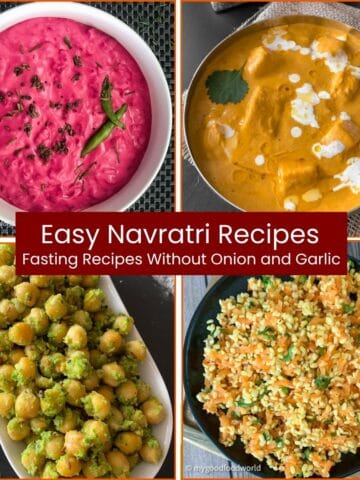
Want more ideas? Browse the no-onion, no-garlic recipe collection.
Make-ahead plan for your Diwali dinner
This is the part most menus miss, and it's the part that saves your evening. Work backwards from dinner, and the day itself feels calm.
- Two days before: shop, make both chutneys, and shape the cutlets. Keep everything covered in the fridge.
- The day before: cook the palak paneer (or shahi paneer) and the dal. Both taste better after a night in the fridge. Prep the vegetables, make the raita base, and cook the rice pudding (or assemble the banana pudding).
- The morning of: make the bhindi or aloo gobi if you like it fresh, set the table, and set out your serving dishes. Label them with sticky notes so that you're not guessing at 6 p.m.
- The last hour: reheat the paneer and dal gently, cook the pulao or the jeera rice, fry or bake the cutlets (or bake the zucchini boats), and make the naan or roti. Stir the raita, slice the onion salad, and you're done.
Padma's top tip: reheat curries on low heat with a splash of water, covered. High heat splits creamy gravies, and that's a heartbreak you don't need on Diwali.
Cooking for 4, 8, or 12
You don't need to triple everything. Here's how I scale:
- 4 guests: make the whole menu as written, but skip the starter or the vegetable. Five dishes is plenty.
- 8 guests: double the paneer and dal; make one vegetable. Make the chutney and pickle, and add a second chutney or pickle. Cook the rice in one big pot.
- 12 guests: double the paneer and dal, make two vegetables, and cook the pulao in two batches. Buy the naan (no shame, it's Diwali) and spend your energy on the curries.
Rule of thumb: for a crowd, scale the dal and rice up, and the rich dishes down. Rich food fills people fast, and dal and rice are what stretch the meal.
sweets and drinks
I'll be honest: my only dessert here is the Instant Pot rice pudding. It's the closest thing I have to kheer, and it's hands-off, so it fits a busy Diwali. For everything else, do what plenty of Indian hosts do and buy good mithai from a shop you trust. Nobody has ever judged a Diwali table for that.
In the no-onion, no-garlic menu, I've gone with a simple banana pudding instead: no-bake and best made the night before.
For drinks, keep it simple: sweet or salted lassi, or a lime and mint soda. Both cool down a spicy meal.
Mistakes to avoid when planning a Diwali dinner
- Cooking everything on the day. Make the curries and dal ahead. They improve overnight.
- Too many dishes. Five to seven savory dishes are plenty. More items on the table means more dishes to wash.
- Three curries on the same base. Vary the texture and flavor: one creamy, one tangy, one dry.
- Making naan at the last minute for a crowd. Buy it, or switch to roti, which you can make in batches.
- Forgetting the cooling sides. A good raita and a crunchy salad make the whole meal feel balanced.
FAQs
The best Diwali dinner menu is a balanced one: a starter, a paneer main, a dal, a vegetable, rice, bread, a cooling side, and a sweet. The classic menu above covers every slot, and there's a no onion no garlic version too.
It varies by region and family, but most Diwali tables have sweets (mithai like ladoo, barfi, and gulab jamun), fried snacks like samosas and chakli, and a festive meal of paneer, dal, vegetables, rice, and puri or naan.
Five to seven savory dishes, plus a sweet, is enough for most gatherings. Pick one from each slot (starter, paneer, dal, vegetable, rice, bread, cooling side, sweet) and you have a balanced table.
Shahi paneer, bhaja muger dal, aloo matar, jeera rice, and a raita make a full menu without onion or garlic. Every recipe in the second menu above is made without them.
Chutneys, cutlets (shaped, not cooked), paneer curries, dal, and rice pudding all keep well. Make them a day or two ahead, and reheat gently.
Diwali is about the people around the table, not a perfect spread. Pick one dish per slot, do the cooking ahead, and let the day be calm.
If you'd like more ideas, browse my curries and gravies, lentils and beans, and rice and grain dishes collections.
Happy Diwali, and happy cooking!
Comments
No Comments